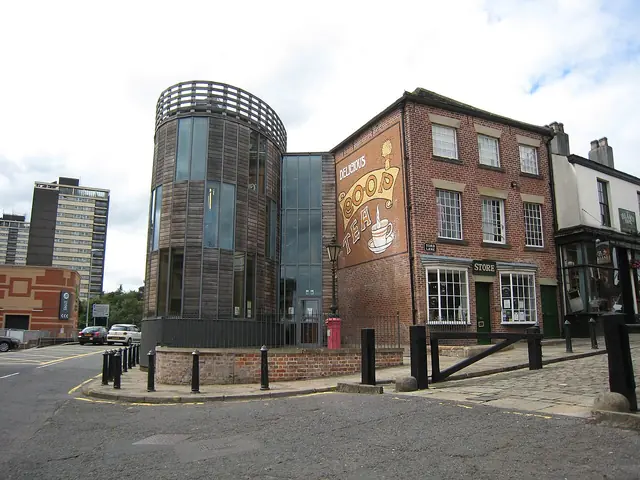
Bacup Museum
Volunteer-run museum in Bacup with local history, military, geology and natural history collections, a Home Front diorama and a 1917 shop and parlour.
Have only individual sections read aloud
About the museum
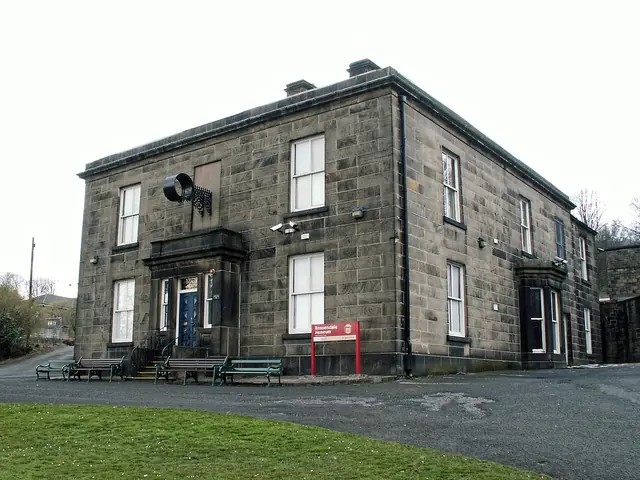
Bacup Museum, long known as the “Nat”, grew out of a field naturalists’ society founded in the late 1870s. Members collected fossils, flints and natural history specimens on their rambles, and the society opened its first museum room at 6 Yorkshire Street in 1889. After moves to other premises, it bought the former Hare and Hounds public house at 24 Yorkshire Street, where it has been based since the late 1940s.
The collection has gradually widened from natural history to the local history of Bacup and the surrounding valley. It includes the largest display of flint tools in the north-west of England, a geological staircase tracing the history of life on Earth, mining and industrial material, and medals and keepsakes from the two world wars.
Since the Covid-19 pandemic the displays have been refreshed. The society has adopted the simpler name Bacup Museum. It is run by volunteers as a registered charity, and also keeps a library and archive on the town.
Highlights
- Largest display of flint tools in north-west England
- Geological staircase with fossils
- Home Front kitchen diorama
- Mrs Ibbitts’ 1917 shop and parlour
- Military collection with medals awarded to local people
- Library and archive on Bacup
Permanent exhibitions
- Flints, fossils and minerals – Flint tools from the Mesolithic to the Early Bronze Age and a geological staircase tracing the history of fossils.
- Military collection – Over 50 medals awarded to local people in both world wars, together with wartime keepsakes.
- Home Front diorama and Mrs Ibbitts’ 1917 shop and parlour – Recreated rooms showing everyday life in Bacup during the First and Second World Wars.
- Founded
- 1878
- Operated by
- Bacup Natural History Society
Admission & discounts
| Adults | £5 |
|---|---|
| Children & teens | freefree up to age 15 · Children under 16 are admitted free. |
| Groups | £5 per personFree-roam group visit; groups of more than 10 should book in advance. Members and children free. |
| Group visit with welcome talk (per person) | £815-minute introductory talk, then a self-guided visit; members and children free. |
| Group guided tour (per person) | £9Guided tour of about 75 minutes; members and children free. |
| Annual adult membership | £25Free entry for 12 months; children of members go free. |
Members enter free. Annual membership costs £25 per adult.
Accessibility
- Wheelchair accessible: no information
- Elevator: no information
- Accessible restroom: no information
- Accessible parking: no information
- Service dogs welcome: no information
- Tactile models & exhibits: no information
- Sign language tours: no information
- Easy-to-read materials: no information
- Audio description: no information
One-hour quiet sessions for autistic children and young people can be booked on Thursday afternoons.
Kids & families
Great for kids & families
| Kids’ admission | free up to age 15 |
|---|
- Family tours & workshops
- Activity booklet, scavenger hunt or kids’ audio guide
The museum describes itself as family-friendly. Children can use a scavenger hunt, quizzes and information sheets, and craft activities run in the school holidays.
Getting there & parking
The museum hasn’t published any information on this.
Amenities & dining
- Museum shop
Tea and coffee are served for a small charge. Local history books, calendars and gifts are sold in the museum shop.
Events & venue rental
The museum hasn’t published any information on this.
Plan your visit
| Guided tours | yes · approx. 75 min |
|---|---|
| School programs | yes |
| Good to know | Group visits can include a welcome talk or a guided tour with time for questions and a look at the library and archive. School visits are charged at £40 per hour, and heritage loan boxes can be borrowed for classroom use. |