Beaminster Museum
Free, volunteer-run museum of rural West Dorset in a converted chapel, with fossils, prehistoric finds and displays on flax and sailcloth.
Have only individual sections read aloud
About the museum
Beaminster Museum tells the story of the market town of Beaminster and the surrounding West Dorset parishes, from the Stone Age to the present. It is run entirely by volunteers and has been honoured with the Queen's Award for Voluntary Service.
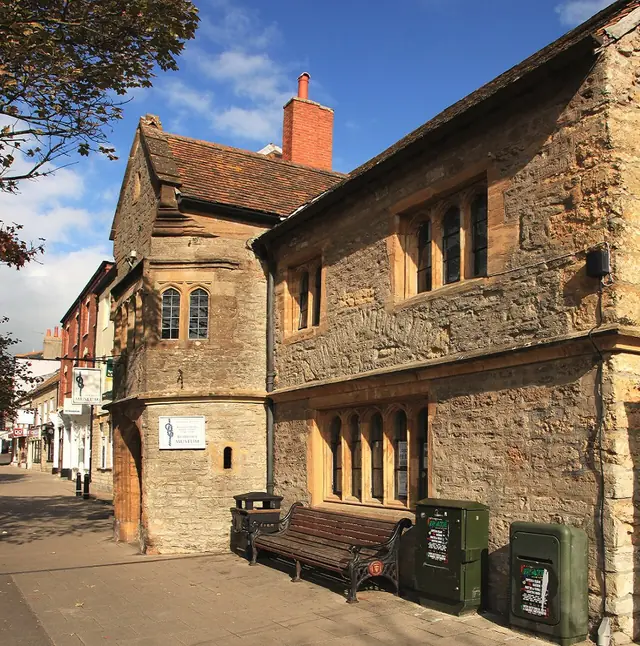
The museum is housed in a former Congregational chapel, a fine example of a non-conformist chapel which was converted for museum use in 1990. It shows how a listed building can be adapted to present-day needs. In 2020 a two-storey extension was added at the rear, paid for with a National Lottery grant of £99,000, which gave the museum more display space and room for visiting groups. The chapel's 19th-century chamber organ has been restored and is still played regularly.
The displays begin with ancient times, with a large fossil collection linked to Horn Park Quarry, local Stone Age hand axes, Bronze Age gold and finds from a Roman villa at Halstock and from Waddon Hill Roman Fort. Other sections cover farming, with a barn full of old implements, and the flax and sailcloth industry that employed many people in the 18th and 19th centuries and supplied the Navy. A research room and a family history service help visitors with local enquiries.
Highlights
- Fossils from Horn Park Quarry, including Brasilia gigantea
- Stone Age hand axes over 250,000 years old
- Bronze Age gold from Broadwindsor and a Roman bronze bust from Rampisham
- Flax and sailcloth exhibition
- Agriculture Corner and a restored 19th-century chamber organ
Permanent exhibitions
- Geology and pre-history – Fossils from Horn Park Quarry, Stone Age hand axes, Bronze Age gold and Roman finds from the surrounding area.
- Flax and sailcloth – A study of the local industry, from growing the crop to weaving linen for canvas, nets, smocks and sailcloth.
- Agriculture Corner – A recreated barn with farm implements and objects from the worlds of sheep, milk and arable farming.
- Founded
- 1987
Admission & discounts
Admission is free.
Admission is free; as a volunteer-run charity the museum welcomes donations towards its running costs. Children under 16 must be accompanied by an adult. Friends of the Museum pay £7 (individual) or £10 (family) a year. Payment is by cash or contactless card.
Accessibility
- Wheelchair accessible
- Elevator: no information
- Accessible restroom
- Accessible parking: no information
- Service dogs welcome: no information
- Tactile models & exhibits: no information
- Sign language tours: no information
- Easy-to-read materials: no information
- Audio description: no information
The ground floor and the toilet are wheelchair accessible via a ramp at the entrance. The upper gallery has a stairlift, and a wheelchair is provided for use there. Visitors for whom access is important are asked to contact the museum beforehand.
Kids & families
Great for kids & families
The museum describes itself as having something for all the family. Children under 16 must be accompanied by an adult.
Getting there & parking
By car
Parking available
There is limited parking close to the museum. Public parking is available in The Square (up to two hours) or at Yarn Barton (DT8 3EF).
From the A3066 between Bridport and Yeovil, turn onto the B3163 Whitcombe Road towards Evershot and Dorchester; the museum is 20 metres on the left. The postcode is DT8 3NB.
Get directionsAmenities & dining
- Museum shop
The museum shop sells gifts, books and publications with a local flavour, many of them exclusive to the museum.
Events & venue rental
The museum hasn’t published any information on this.
Plan your visit
| Guided tours | yes |
|---|---|
| School programs | yes |
| Good to know | Group visits must be booked in advance, and out-of-hours visits are welcome; groups and schools can ask for specialist tours. Schools and groups in West Dorset can borrow themed loan boxes (fossils, early history, Tudors, flax and hemp, Victorians, the 20th century) for £10 for up to six weeks. Horn Park Quarry can be visited by prior arrangement through the museum. |