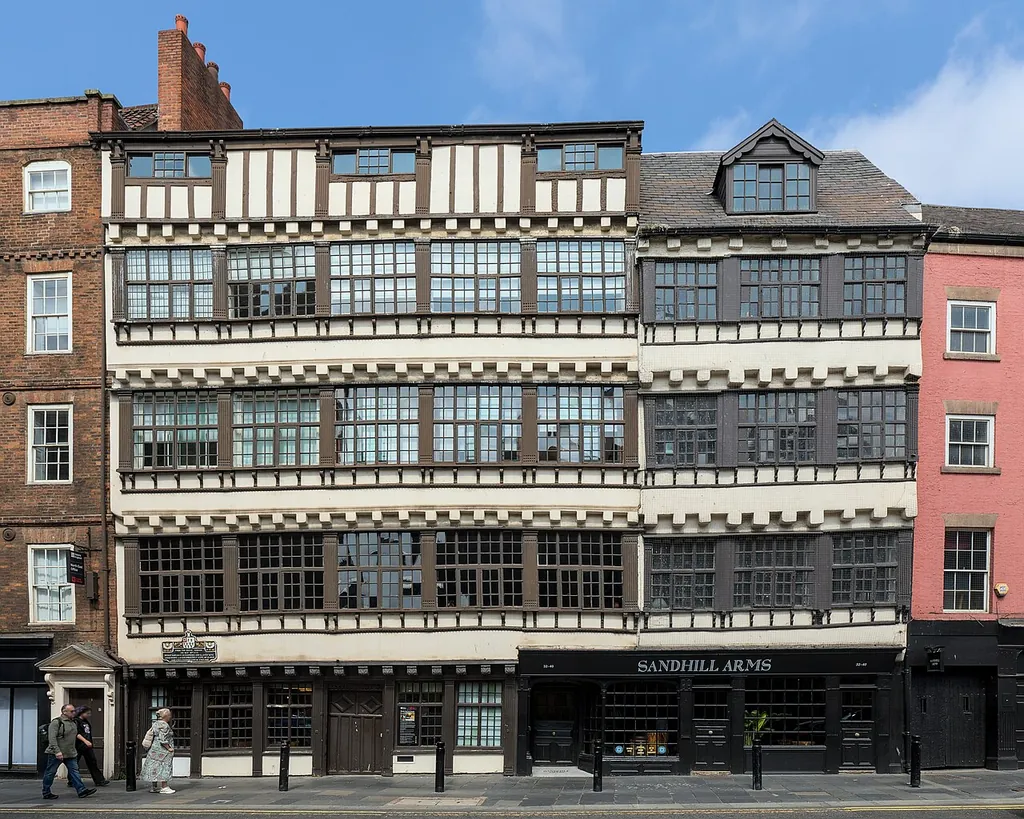
Bessie Surtees House
Grade I listed pair of Jacobean merchants' houses on Newcastle's Quayside, open on selected dates for free guided tours and known for a famous elopement.
Have only individual sections read aloud
About the museum
Bessie Surtees House is a pair of merchants' houses on Sandhill, close to the River Tyne in Newcastle upon Tyne, dating from the 16th and 17th centuries. The timber-framed frontage with its overhanging upper storeys is a rare surviving example of Jacobean town architecture in the city, and the buildings are Grade I listed. The earliest record of the site is a sale in 1465. Next door, the former timber-framed Milbank House was given a brick Georgian front in 1741 and served as a coffee house for some years.
The house is named after Bessie Surtees, who eloped from the house in 1772 with John Scott, later Lord Chancellor of England. During the 18th and 19th centuries the buildings were divided and sublet, and John Clayton bought them in 1880. They were restored in 1930, when 17th-century fittings salvaged from demolished buildings were installed.
Newcastle City Council bought the property in 1978 and leased it to English Heritage in 1989, and Historic England took over the lease in 2015. The buildings now house Historic England's North East regional office, and a first-floor exhibition tells the story of the houses. The public can see them on selected dates through booked guided tours.
Highlights
- Grade I listed Jacobean merchants' houses with a timber-framed frontage
- Setting of the 1772 elopement of Bessie Surtees and John Scott
- Exhibition on the history of the buildings
- Free guided tours on selected dates, with donations welcome
Permanent exhibition
- History of Bessie Surtees House – A first-floor exhibition explains the history of the two merchants' houses and the people who lived in them.
- Operated by
- Historic England
Admission & discounts
Admission is free.
Guided tours are free, but visitors are asked to make a donation towards the care of the building. A booking is still required.
Accessibility
- Wheelchair accessible: no information
- Elevator: no information
- Accessible restroom: not available
- Accessible parking: no information
- Service dogs welcome
- Tactile models & exhibits: not available
- Sign language tours: not available
- Easy-to-read materials: no information
- Audio description: no information
Assistance dogs are welcome. The access page lists no accessible toilets, wheelchair or scooter loan, handrails, Braille guides or BSL tours at this site. Information about steps and step-free routes is not published, so visitors who need step-free access should contact English Heritage before booking.
Kids & families
The museum hasn’t published any information on this.
Getting there & parking
By public transit
Sandhill
Newcastle railway station is about half a mile from the house. Buses 21, 28, 29, 47 and 53 pass near Sandhill.
By car
No on-site parking at the museum.
There is no parking at the site. Public car parks in Newcastle city centre are not managed by English Heritage.
The house is on Sandhill, off the B1600 in central Newcastle.
Get directionsAmenities & dining
- Café: not available
- Restaurant: not available
Male and female toilets are available on site.
Events & venue rental
The museum hasn’t published any information on this.
Plan your visit
| Guided tours | yes |
|---|---|
| Photography | Photography is welcome. Some English Heritage sites have restrictions, so visitors whose main aim is photography are advised to call ahead. |
| Good to know | The house can only be seen on a booked guided tour. Only assistance dogs are allowed. Smoking, vaping and naked flames are not permitted, and drones may not be flown from or over the site. |
Museums nearby
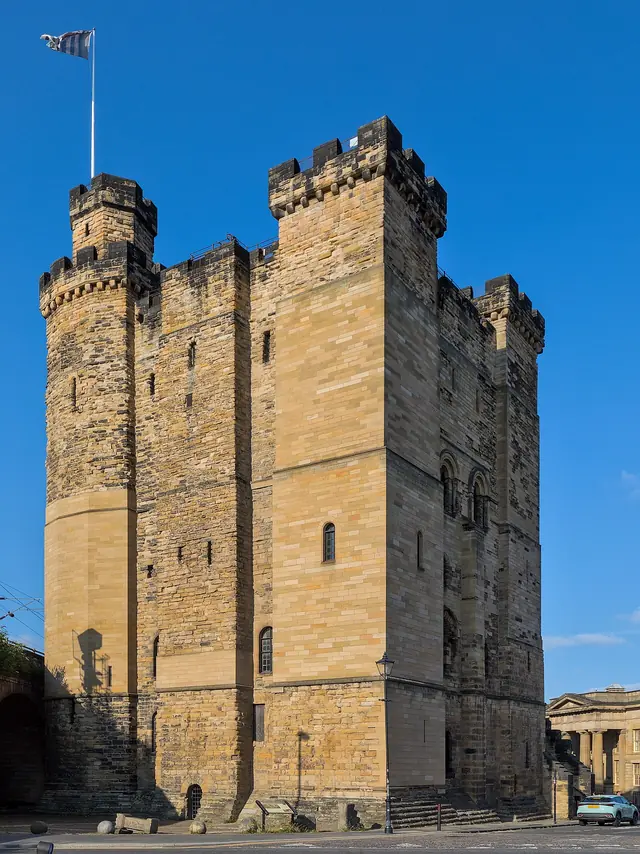
Newcastle Castle
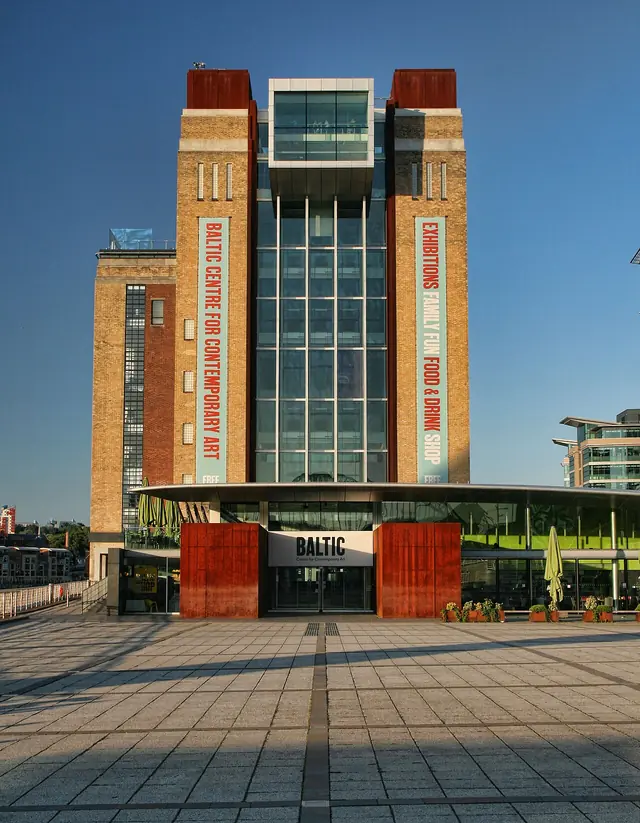
Baltic Centre for Contemporary Art
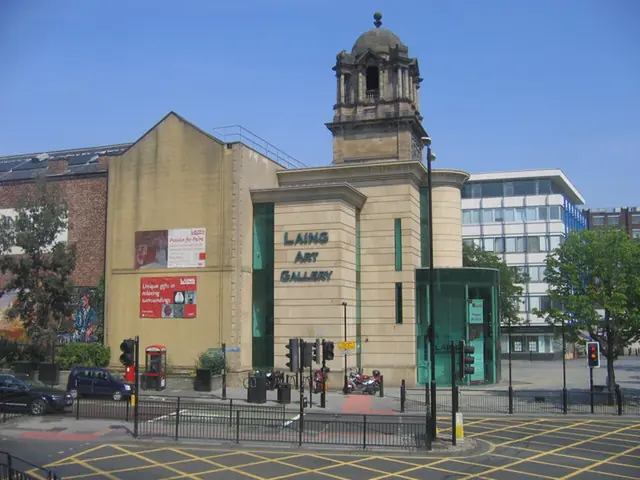
Laing Art Gallery
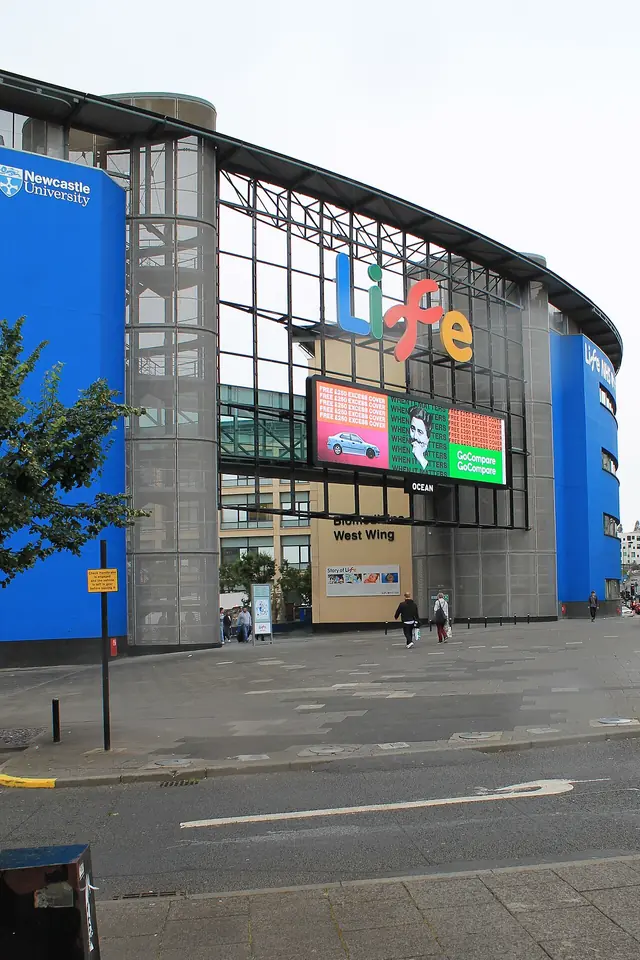
Life Science Centre
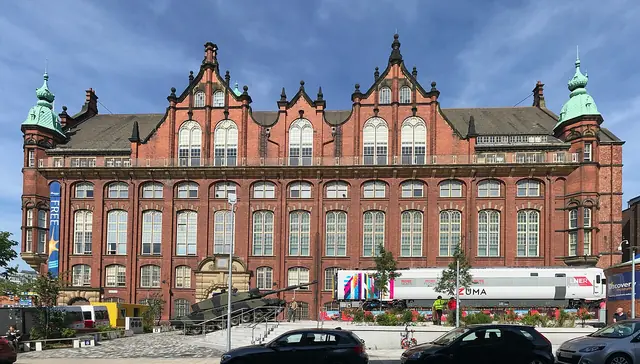
Discovery Museum
Hatton Gallery
All 7 museums in Newcastle upon Tyne All museums in North East England