Dartmouth Museum
Volunteer-run museum in the 17th-century Butterwalk in Dartmouth, with maritime history, Newcomen engine models and a Victorian study.
Have only individual sections read aloud
About the museum
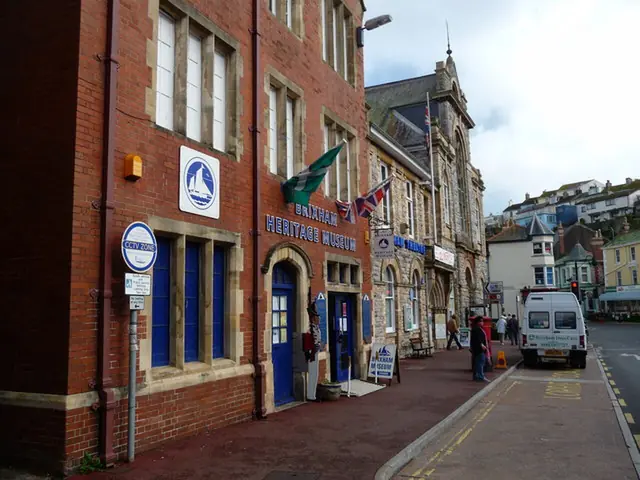
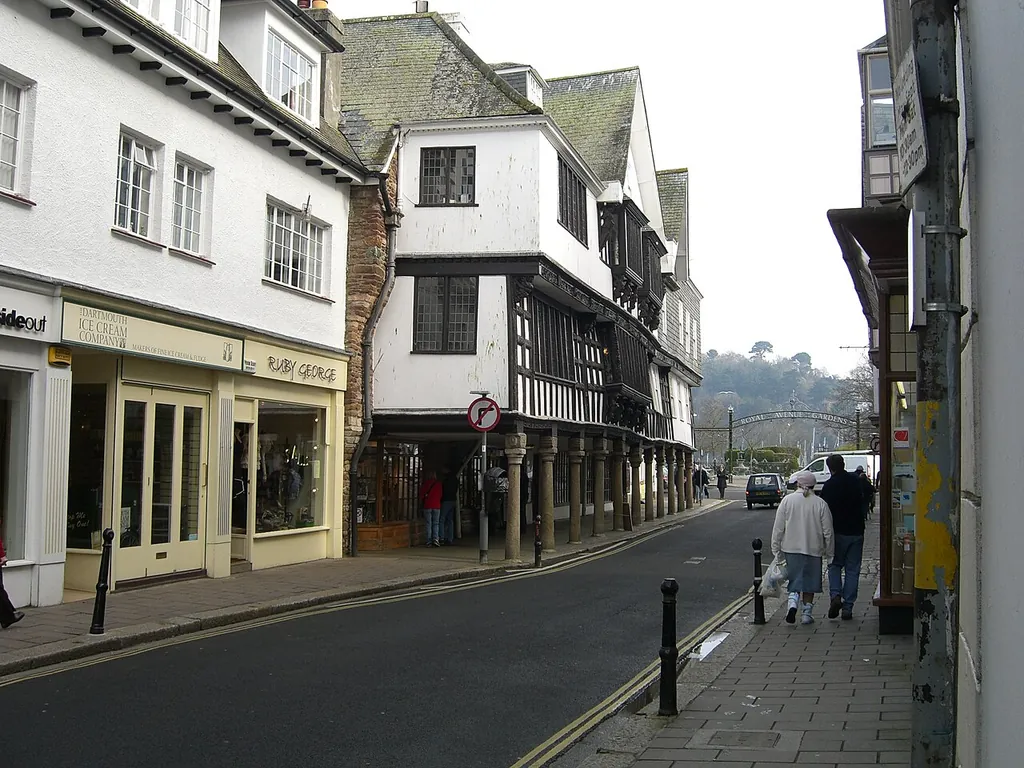
Dartmouth Museum was founded in 1949 by the town authorities in the former library on Newcomen Road, with the local historian Percy Russell as its driving force. In 1954 it moved to the Butterwalk, a terrace of four merchants' houses built around 1640 that originally stood on the quayside. Because the houses were built over river mud, the building has settled and twisted over the centuries, so that no floor is level and no wall is truly vertical. Russell also led the restoration of the Butterwalk after wartime damage.
In 1976 a museum on Anzac Street that held the collection of a late Victorian ironmonger, William Henley, closed, and its collection was passed to Dartmouth Museum. The Henley material is now shown as a re-created Victorian study.
The museum is a registered charity run by around sixty volunteer stewards under a board of trustees, and it has been an Accredited Museum since 2018. Its rooms present the maritime history of the port with ship models, including models in bottles, and a collection of working model steam engines connected with Thomas Newcomen, the engineer born in Dartmouth. Other displays cover the Mayflower, Dartmouth in the two world wars and its part in the D-Day landings in 1944. The Jesse Room has an unusual high-relief plaster ceiling showing the family tree of Jesus. Children can try the stocks, use microscopes and open drawers beneath the displays to find more objects.
Highlights
- Maritime collection with ship models, including models in bottles
- Model steam engines linked to Thomas Newcomen, born in Dartmouth
- Re-created Victorian study with the Henley collection
- The Jesse Room with its high-relief plaster ceiling
- Dartmouth and D-Day, with a tapestry and film
- Hands-on corners for children, including the stocks
Permanent exhibitions
- Maritime collection and ship models – Ship models, some in bottles, and displays on the maritime history of Dartmouth, including the Mayflower.
- Newcomen and the David Hulse collection – Working model steam engines with a focus on Thomas Newcomen, the engineer born in Dartmouth.
- Dartmouth at war and D-Day – Displays on the town in wartime, including its part in the D-Day landings in 1944, with a tapestry and a film.
- Founded
- 1949
- Operated by
- Dartmouth Museum (registered charity)
Admission & discounts
| Adults | £5 |
|---|---|
| Reduced | £4.50Concession for visitors over 66 |
| Children & teens | freefree up to age 15 · Under-16s are admitted free. |
| Seniors | £4.50Over 66. |
Museum members are admitted free. Annual membership costs £15 for one person and £20 for a couple.
Accessibility
- Wheelchair accessible: not available
- Elevator: no information
- Accessible restroom: no information
- Accessible parking: no information
- Service dogs welcome: no information
- Tactile models & exhibits: no information
- Sign language tours: no information
- Easy-to-read materials: no information
- Audio description: no information
Because of the historic building, wheelchair access is limited to the narrow street-level entrance lobby, where some objects are displayed. A virtual tour is announced as coming soon. Access questions can be sent through the contact page.
Kids & families
Great for kids & families
| Kids’ admission | free up to age 15 |
|---|
- Activity booklet, scavenger hunt or kids’ audio guide
- Hands-on stations
Children can sit in the stocks, answer questionnaires, look through microscopes and open drawers beneath the displays to find extra objects.
Getting there & parking
By car
Parking in town can be difficult outside winter. The museum recommends the Park and Ride at the top of the town off the A3122 towards Totnes, or the main car park at Mayor's Avenue.
The museum is in the Butterwalk on Duke Street in the town centre.
Get directionsAmenities & dining
The museum hasn’t published any information on this.
Events & venue rental
The museum hasn’t published any information on this.
Plan your visit
| School programs | yes |
|---|---|
| Good to know | School parties are welcome. About 60 volunteer stewards greet visitors on all but three days of the year. |