Furness Abbey
Ruins of a wealthy Cistercian abbey near Barrow-in-Furness, run by English Heritage, with a visitor centre museum of medieval stone carvings and effigies.
Have only individual sections read aloud
About the museum
Furness Abbey traces its origins to 1124, when a community of monks settled at Tulketh near Preston under the patronage of Stephen, then Count of Boulogne and later King of England. In 1127 the monks moved to a sheltered valley on the Furness peninsula, which had fresh water, building stone and timber and access to the sea. They belonged to the Savigniac order, and in 1147 the abbey was absorbed into the Cistercian order.
The abbey grew into one of the largest and wealthiest monasteries in the north-west of England. It founded several daughter houses, including Rushen on the Isle of Man and others in Ireland, and its landowning role gave the abbot an important place in the administration of the region. Local nobles chose to be buried in its church, and some of their carved effigies survive. The monastery was at its largest in the 13th century, when it housed about 100 monks and many lay brothers. Monks lived here from the 12th to the early 16th century.
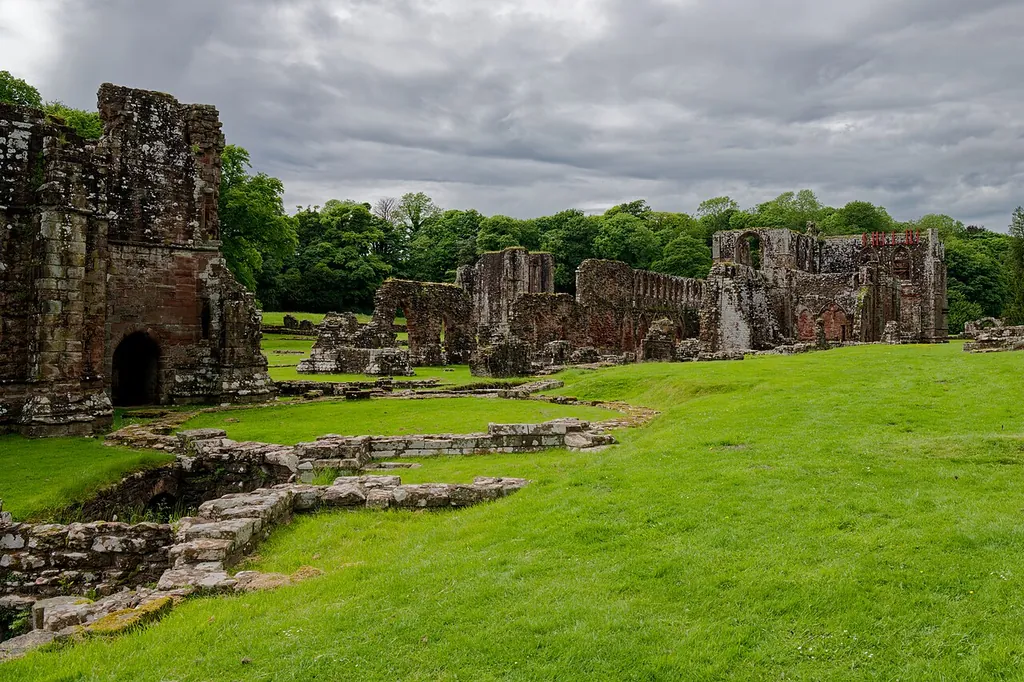
Today the red sandstone ruins include the tower and east end of the great church, the chapter house and the east range of the cloister. English Heritage cares for the site. The visitor centre museum shows carved stones and effigies from the abbey and the silver-gilt Furness Crozier, an abbot's staff found in a grave.
Highlights
- Ruins of the great church, chapter house and cloister range
- Furness Crozier, a medieval silver-gilt abbot's staff
- Knight and other funerary effigies in the visitor centre
- Reconstructed night stair with an observation platform
- Touching stone for visitors in the museum area
Permanent exhibition
- Visitor centre museum – Medieval stone carvings, knight effigies, the silver-gilt Furness Crozier and a gemstone ring from an abbot's grave, shown in the visitor centre.
- Operated by
- English Heritage
Admission & discounts
| Adults | £7.65 |
|---|---|
| Reduced | £6.88Concession tickets |
| Children & teens | £3.82Child tickets are for ages 5 to 17. |
| Families | £19.29Two adults and up to three children. A family ticket for one adult and up to three children costs £11.56. |
| Family ticket, one adult and up to three children | £11.56Advance online, off-peak rate. |
Prices shown are the lowest advance online rates (weekday off-peak) without the voluntary Gift Aid donation. Tickets booked online by midnight the day before are 15% cheaper than on the day. Prices rise at weekends (standard adult £8.50) and at peak times (adult £9.26), and gate prices are £9.00 to £10.90 for an adult. Free for English Heritage members, and up to six children go free with each adult member. UK schools and eligible learning groups can visit for free.
Accessibility
- Partially wheelchair accessible
- Elevator: not available
- Accessible restroom
- Accessible parking: not available
- Service dogs welcome
- Tactile models & exhibits
- Sign language tours: no information
- Easy-to-read materials: no information
- Audio description: no information
A ramp at the back of the visitor centre gives wheelchair access to the site and the museum area, which is easy to reach for visitors with limited mobility. Most of the site is fairly flat but uneven and grassy, with some steep slopes, and the ground can become soft in wet weather, which is difficult for heavy electric wheelchairs. There are no marked disabled parking bays, but all parking is very close to the visitor centre, with a drop-off point outside it. There is an induction loop at the shop counter, an adult changing area, a touching stone in the museum area and a dog water bowl at the rear porch of the visitor centre.
Kids & families
Great for kids & families
| Time needed | approx. 60 min |
|---|---|
| Family ticket | £19.29 · Two adults and up to three children. A family ticket for one adult and up to three children costs £11.56. |
- Activity booklet, scavenger hunt or kids’ audio guide
- Playground / play area: not available
Plenty of open grass for children to run around, but no playground. A World Builder Challenge city trail for families is offered on site. Pushchairs are allowed, but parts of the site are uneven and an all-terrain pushchair may suit better.
Getting there & parking
By public transit
Stagecoach in Cumbria services 6 and X6 stop within ¾ mile. The nearest railway stations are Dalton and Roose and Barrow-in-Furness, each 2 miles away.
By car
Free parking
Free car park next to the visitor centre entrance for 20 to 30 cars, secured when the site is closed. There is space for 2 to 3 coaches (call ahead). More parking is at Abbey Mill café at the far end of the site.
- Accessible parking: not available
The site is 1½ miles north of Barrow-in-Furness, off the A590. Sat-nav postcode LA13 0PJ. Cyclists can find routes on the National Cycle Network.
Get directionsAmenities & dining
- Café: not available
- Restaurant: not available
- Museum shop
No café on site, but a vending machine sells tea, coffee and hot chocolate, and ice creams and pre-packed snacks are available. A café not run by English Heritage, Abbey Mill, is close by. The shop sells gifts, books, toys, drinks and local wines and liqueurs. Picnics are welcome, with picnic benches outside the visitor centre. Male, female and accessible toilets are on site.
Events & venue rental
The museum hasn’t published any information on this.
Plan your visit
| Audio guide | no |
|---|---|
| School programs | yes |
| Photography | Amateur photography is welcome. Drones are not allowed, and commercial photography or filming needs permission from English Heritage. |
| Good to know | Dogs on a lead are welcome. School groups can book an education room in advance. Group visits of 15 or more paying visitors receive a 10% discount. |