Highland Folk Museum
Open-air museum at Newtonmore with more than 35 historic buildings showing Highland life from the 1700s to the mid-1900s; free entry.
Have only individual sections read aloud
About the museum
The Highland Folk Museum was founded in 1936 by Dr Isabel F. Grant on the island of Iona. She called it Am Fasgadh, Gaelic for “the shelter”, and began collecting objects from a way of life that was fast disappearing. In 1939 the collection moved to a disused church in Laggan, and in 1944 it opened to the public at a site in Kingussie. Over the years she added replica buildings such as a Hebridean blackhouse and Highland cottages, and the museum is regarded as the first open-air museum on mainland Britain.
A trust formed by the four ancient Scottish universities took over the museum in 1954, and Highland Regional Council became the owner in 1975. A larger site was then acquired at Newtonmore and laid out in distinct areas: Aultlarie Croft, a 1930s working farm; Balameanach, a village of relocated buildings; the Pinewoods; and Baile Gean, a reconstruction of an early 1700s Highland township. The Newtonmore site opened in 1987, and the Kingussie site closed in 2007.
In 2013 a purpose-built collections store, also called Am Fasgadh, was completed and the remaining collection was moved there. It holds more than 10,000 recorded items together with a conservation laboratory and research rooms. The museum received Recognised status for its entire holdings in 2015 and is an accredited museum run by High Life Highland.
Highlights
- More than 35 historic buildings across a one-mile site
- Baile Gean, a reconstructed early 18th-century Highland township
- Aultlarie Croft, a working farm of the 1930s
- Costumed interpreters and heritage demonstration days
- Collections store Am Fasgadh with weekly store tours
- Café, gift shop and old-fashioned sweet shop
Permanent exhibitions
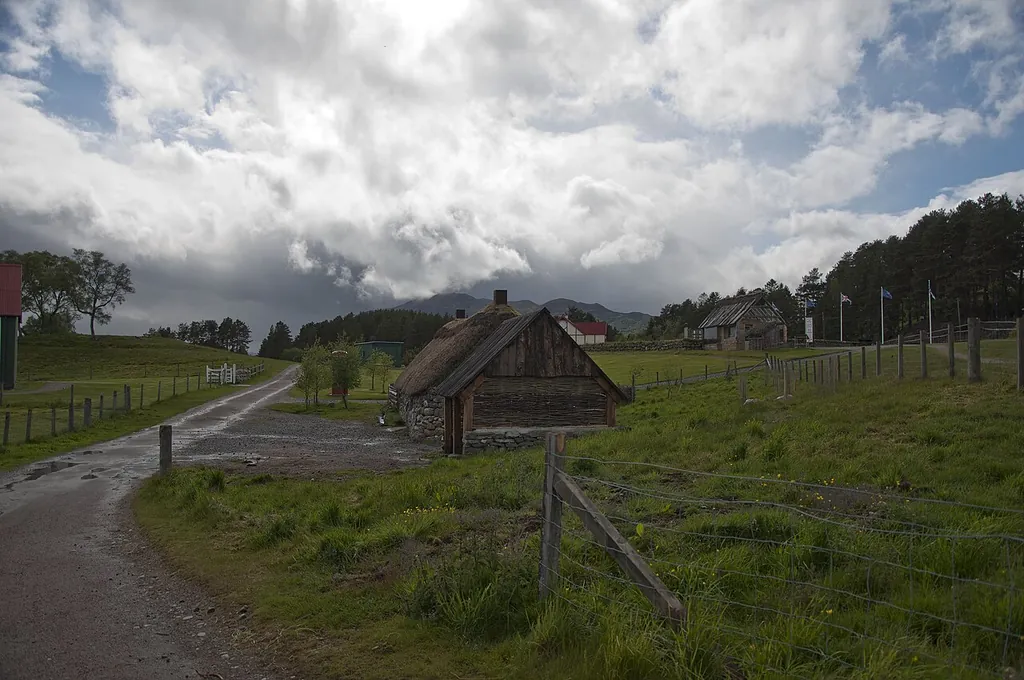
- Baile Gean and the Pinewoods – A reconstruction of an early 1700s Highland township set in a forest area, showing houses and daily work of the period.
- Balameanach (Middle Village) – A community of relocated historic buildings that shows village life in the Highlands.
- Aultlarie Croft – A working farm of the 1930s.
- Founded
- 1936
- Operated by
- High Life Highland (on behalf of The Highland Council)
Admission & discounts
Admission is free.
Entry is free and donations are welcome. Pre-booking is only needed for groups. Parking is charged: £3 for cars, £6 for motorhomes and minibuses and £10 for coaches.
Accessibility
- Partially wheelchair accessible
- Elevator: no information
- Accessible restroom
- Accessible parking
- Service dogs welcome
- Tactile models & exhibits: no information
- Sign language tours: no information
- Easy-to-read materials: no information
- Audio description: no information
The site includes indoor and outdoor spaces, historic buildings and natural ground. The listing gives level access from the entrance to reception, to the main entrance and to the café, with partial access for wheelchair users and visitors with limited mobility. Surfaces are uneven, many buildings have low doorways and some interiors are dark or smoky. Detailed access guides for the museum and for Am Fasgadh are published on AccessAble. Assistance dogs are welcome everywhere.
Kids & families
Great for kids & families
- Family tours & workshops
- Playground / play area
The museum describes itself as a full day out for all the family. Events include heritage days, craft demonstrations and family trails, and there is a play park next to a picnic area. Children should be supervised near water and around moving farm vehicles.
Getting there & parking
By public transit
Regular bus and train services run to Newtonmore; timetables are available from Scottish Citylink, National Express and ScotRail. The museum is a short walk from the village.
By car
Paid parking
On-site car park with pay machines (card or contactless): £3 for cars, £6 for motorhomes and minibuses, £10 for coaches. Cycle racks are in the car park. Groups and coach companies should book by phone or email.
- Accessible parking
The museum is at the north end of Newtonmore, easily reached from the A9 by following the signs for Newtonmore. It lies on National Cycle Route 7.
Get directionsAmenities & dining
- Café
- Museum shop
The café is open daily with a takeaway menu and limited indoor seating, serving soup, sandwiches, cakes and hot and cold drinks. Kirk’s Store Sweetie Shop sells traditional sweets, and there is a gift shop. Two picnic areas are available, one beside the play park and one with a covered space below reception.
Events & venue rental
- Spaces for rent
Am Fasgadh, the collections building, has meeting and conference rooms that can be hired for meetings, conferences and courses.
Plan your visit
| Guided tours | yes · approx. 60 min |
|---|---|
| Good to know | Store tours of the collections building Am Fasgadh run every Wednesday from 6 May, 2pm to 3pm. Fires may be lit in some township buildings, so interiors can be smoky. Dogs on a short lead are welcome in outdoor areas but not inside buildings, shops, the café or toilets; assistance dogs are welcome everywhere. Smoking and vaping are not allowed on site. |