HMS Ganges Museum
Free volunteer-run museum at Shotley Marina on the history of the Royal Navy training establishment HMS Ganges, with photographs, medals and archive material.
Have only individual sections read aloud
About the museum
HMS Ganges was a Royal Navy boys’ training establishment at Shotley, on the peninsula between the rivers Stour and Orwell. From 1905 until it closed in 1976 about 160,000 boys trained there to become sailors. The museum honours these “Ganges boys” and was started by a few former trainees who found a space and collected the first artefacts.
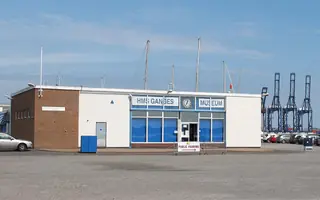
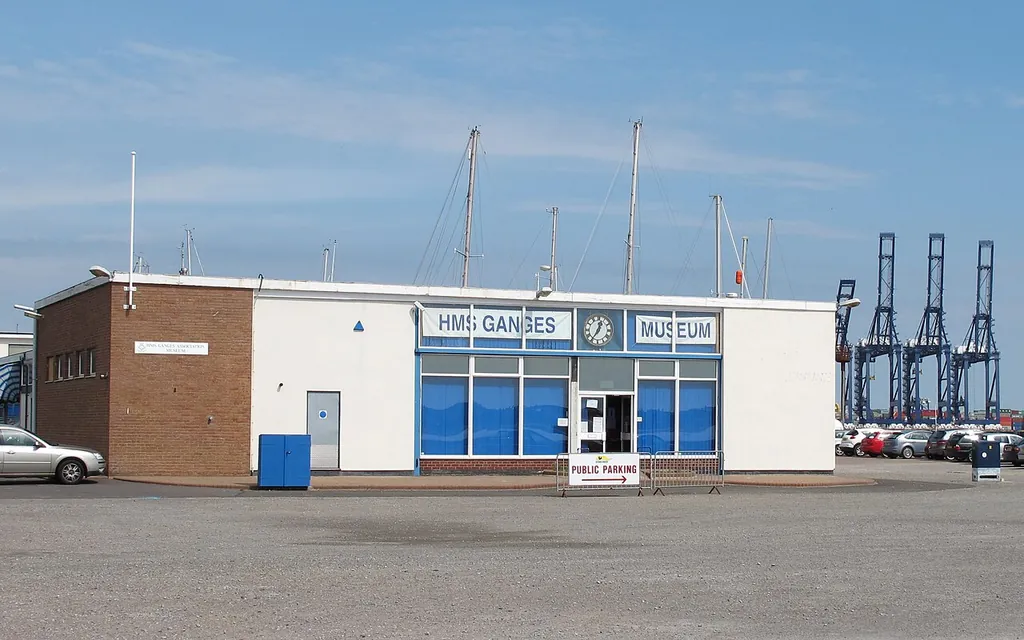
It is housed in a former Ganges building, now part of Shotley Marina, and is run entirely by volunteers, many of them former trainees. It is a fully accredited museum and a registered charity (number 1214711).
The collection of more than 10,000 artefacts, photographs and documents has been donated by former trainees, instructors, staff and their families. Displays include ship models and a figurehead in the entrance, the Honour Board brought from the Royal Navy Museum in Portsmouth, photographs and the refurbished “Faith, Hope & Charity” exhibit. Volunteers also help people to research relatives who trained at Ganges, using the museum’s archive.
Highlights
- Honour Board brought from the Royal Navy Museum in Portsmouth
- Figurehead and ship models in the entrance
- More than 10,000 artefacts, photographs and documents from former trainees
- Archive help for family research
- Former Ganges boys among the volunteers
Permanent exhibition
- HMS Ganges collection – Artefacts, photographs, medals and documents on the history of the Royal Navy training establishment, with the Honour Board and a refurbished exhibit on Faith, Hope & Charity.
- Founded
- 1988
- Operated by
- HMS Ganges Museum (registered charity 1214711)
Admission & discounts
Admission is free.
| Groups | –A donation of at least £5 per person is suggested for pre-booked group visits. |
|---|
The museum is free to enter; donations are welcome at reception, in the donation boxes or online. No booking is needed on Saturdays and Sundays.
Accessibility
- Wheelchair accessible
- Elevator: no information
- Accessible restroom: no information
- Accessible parking: no information
- Service dogs welcome
- Tactile models & exhibits: no information
- Sign language tours: no information
- Easy-to-read materials: no information
- Audio description: no information
The museum is on one level with no steps inside, a small kerb outside and a short ramp into the building. A wheelchair and a walking frame are available and volunteers can help. The museum has no toilets of its own; the Shipwreck Bar and Restaurant next door has accessible facilities. Well-behaved dogs on a lead are welcome.
Kids & families
Great for kids & families
- Activity booklet, scavenger hunt or kids’ audio guide
Well-behaved children of all ages are welcome with a responsible adult. The Children’s Corner has picture colouring and a knot-tying activity.
Getting there & parking
By car
Paid parking
Shotley Marina is a controlled parking zone with 24-hour number plate recognition. Register the car and pay at a machine on arrival or online; bays are in front of the museum and along the sea wall. A purchase of at least £2 at the Shipwreck Bar and Restaurant allows three hours of validated parking. Parking is run by the marina, not by the museum.
From Ipswich follow the B1456 for about 10 miles to Shotley; at the Barrelman’s Point roundabout take Bristol Hill, then King Edward VII Drive to Shotley Marina. The museum is straight ahead from the marina car park.
Get directionsAmenities & dining
- Museum shop
Souvenirs are sold at the reception counter. There are no toilets in the museum; visitors can use the Shipwreck Bar and Restaurant next door. The Bristol Arms and the Shotley Rose pubs are nearby.
Events & venue rental
The museum hasn’t published any information on this.
Plan your visit
| School programs | yes |
|---|---|
| Good to know | Volunteers can help with family-history searches on open days or by arrangement, and school and group visits are possible on Wednesdays. Volunteers can also give talks to clubs, schools and organisations. |