Kingston Lacy
Seventeenth-century Dorset country house remodelled in Venetian style, with an Old Master art collection, Egyptian antiquities and large estate.
Have only individual sections read aloud
About the museum
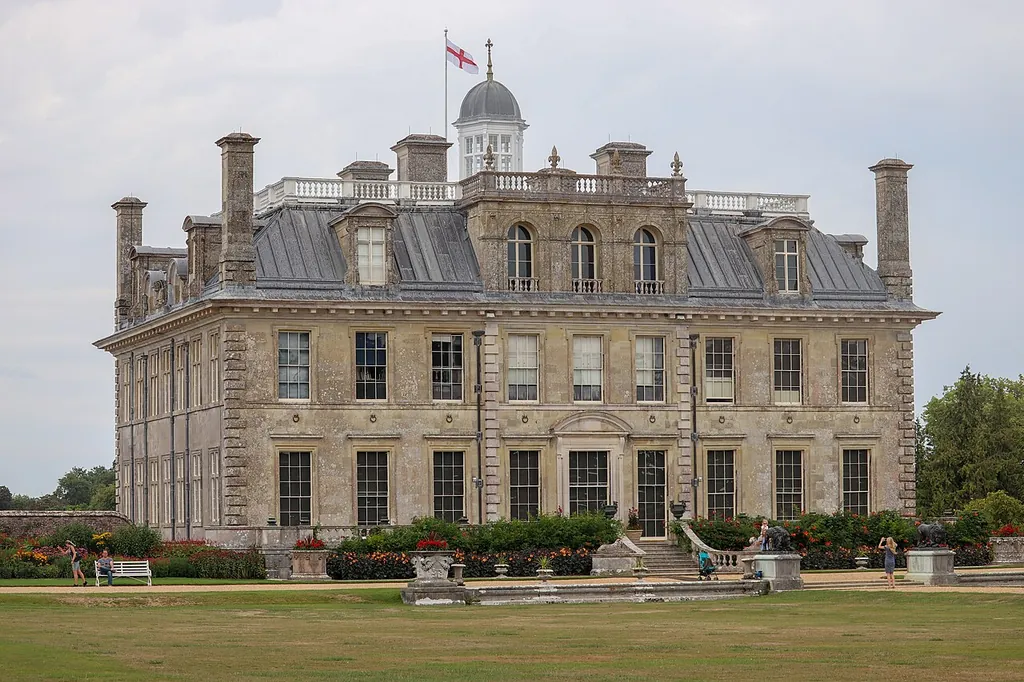
Kingston Lacy was built in the 1660s for Sir Ralph Bankes, whose family had bought the estate in 1636. The architect was Sir Roger Pratt, and John Webb carried out the interiors. The Bankes family had earlier lost Corfe Castle in the Civil War, and the new house in the Dorset countryside replaced a medieval hunting lodge. Over the following two centuries the family added wings, remodelled rooms and shaped the surrounding parkland.
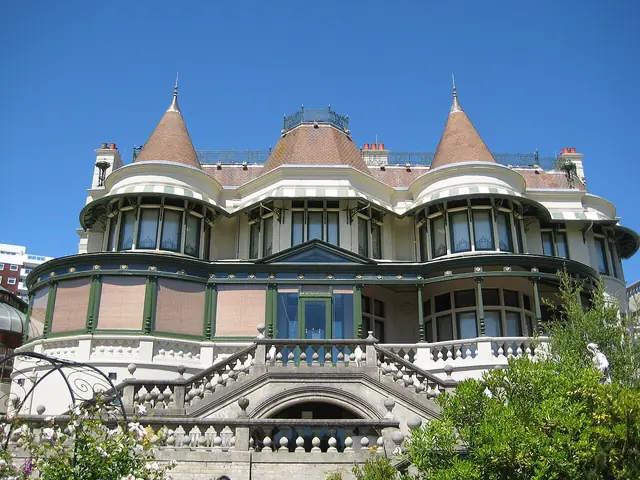
The house owes its present look to William John Bankes, who rebuilt and redecorated it between 1834 and his death in 1855. After he was forced into exile abroad, he directed the work remotely from Venice, sending home Italian marble, paintings and furnishings. The architect Charles Barry encased the older brick in stone and reshaped the interior. The result is a palace-like house with richly decorated rooms such as the Spanish Room, with its gilded leather walls and Spanish paintings.
The collection includes works by Rubens, Titian, Van Dyck and Brueghel, so the house is sometimes described as a small national gallery. William John Bankes also brought the obelisk from Philae in Egypt to the grounds, and the family's Egyptian antiquities form one of the largest private collections of their kind in the United Kingdom. Ralph Bankes died in 1981 and left the house and about 8,500 acres to the National Trust, which accepted the bequest in 1982.
Highlights
- Spanish Room with gilded leather walls and Spanish paintings
- Old Master paintings including works by Rubens, Titian and Van Dyck
- Collection of ancient Egyptian artefacts, among the largest private collections in the UK
- Philae obelisk standing in the grounds
- Japanese Garden and Kitchen Garden within an estate of about 8,500 acres
Permanent exhibition
- The house and its collections – The Bankes family rooms, including the Spanish Room, the library and picture galleries with works by Rubens, Titian and Van Dyck, and the Egyptian collection.
- Founded
- 1665
- Operated by
- National Trust
- Visitors per year
- approx. 410,000 (2019)
Admission & discounts
| Adults | £23 |
|---|---|
| Children & teens | £11.50free up to age 4 · Child ticket for ages 5 to 17; under-5s enter free. |
| Visitors with disabilities | –companion free · Carers and companions can come in free of charge, with or without an Essential Companion card. |
| Groups | £21.85 per personGroup price per adult; the group price per child aged 5 to 17 is £10.93. |
| Families | £57.50Family ticket for 2 adults and up to 3 children; 1 adult and up to 3 children costs £34.50. |
| Family ticket, 1 adult and up to 3 children | £34.50 |
Prices are for the house, garden and parkland, without Gift Aid (adult £25.30 with Gift Aid). National Trust members enter free. The Badbury Rings car park on the wider estate charges non-members £1.60 for one hour, £3.20 for up to four hours or £6.40 for the day.
Accessibility
- Partially wheelchair accessible
- Elevator: not available
- Accessible restroom
- Accessible parking
- Service dogs welcome
- Tactile models & exhibits: no information
- Sign language tours: no information
- Easy-to-read materials: no information
- Audio description: no information
The house entrance is up four steps and the upper floors are reached by staircases; wheelchair users have level access to three rooms in the basement only, one of which shows a virtual tour of the house. Garden paths are mainly gravel. There are 14 Blue Badge spaces on gravel, about 119 metres from Visitor Reception. Two accessible toilets in Laundry Courtyard include a Changing Places unit with hoist. Induction loops are at Visitor Reception and in the shop. Three all-terrain wheelchairs, three manual wheelchairs and four powered mobility vehicles can be borrowed (pre-booking advised). Braille and large-print guides are available at the main entrance. Assistance dogs are welcome everywhere.
Kids & families
Great for kids & families
| Kids’ admission | free up to age 4 |
|---|---|
| Family ticket | £57.50 · Family ticket for 2 adults and up to 3 children; 1 adult and up to 3 children costs £34.50. |
- Family tours & workshops
- Baby changing facilities
- Playground / play area
There are two play areas, one with natural play in the woodland and one in the Kitchen Garden, both with accessible features. Family toilets with baby changing are in Laundry Courtyard, and the café offers a children's lunchbox. In autumn 2026 a Pikachu-themed art trail for families runs at no extra cost.
Getting there & parking
By public transit
Wimborne Square
Bus services run from Bournemouth and Poole to Wimborne Minster; alight at Wimborne Square. Kingston Lacy is about 3 miles away, so a taxi is advised. On Tuesdays, Thursdays and Fridays bus 88 runs from Wimborne to the Kingston Lacy car park. The nearest stations are Poole (about 10 miles) and Bournemouth (about 12 miles).
By car
Free parking
The main car park is a quarter of a mile down a tarmac drive from the main road and has a tarmac and gravel surface; parking is free for all visitors. There are five electric vehicle charging points.
- Accessible parking
The entrance is on the B3082 between Blandford and Wimborne; satellite navigation is unreliable, so follow the brown signs. Visitors who arrive by bus get a free hot drink. Cycle parking is at Visitor Reception, and a woodland cycle track runs through the estate.
Get directionsAmenities & dining
- Café
- Museum shop
- Coat check
The Stables Café serves soup, sandwiches, hot dishes and cream teas with indoor and outdoor seating; a kiosk operates in the Kitchen Garden. The shop and plant shop are in Laundry Courtyard, with a second-hand bookshop opposite. A free bag store for rucksacks is in Laundry Courtyard. Dogs on a lead are welcome in the car park, woodland, parkland and Stables courtyard, but not in the formal garden or the house.
Events & venue rental
The museum hasn’t published any information on this.
Plan your visit
| Guided tours | yes |
|---|---|
| Good to know | Volunteer-led tours of the garden are offered. Group visits can be booked through the National Trust. |