Lindisfarne Castle
Tudor fort on a rocky crag of Holy Island, turned into an Arts and Crafts holiday home by Edwin Lutyens and run by the National Trust.
Have only individual sections read aloud
About the museum
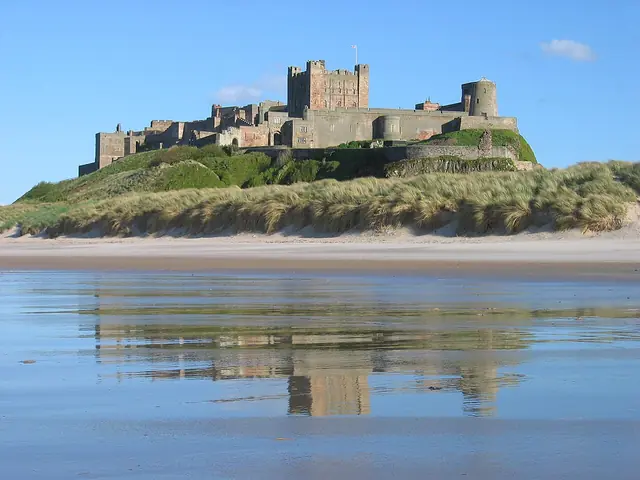
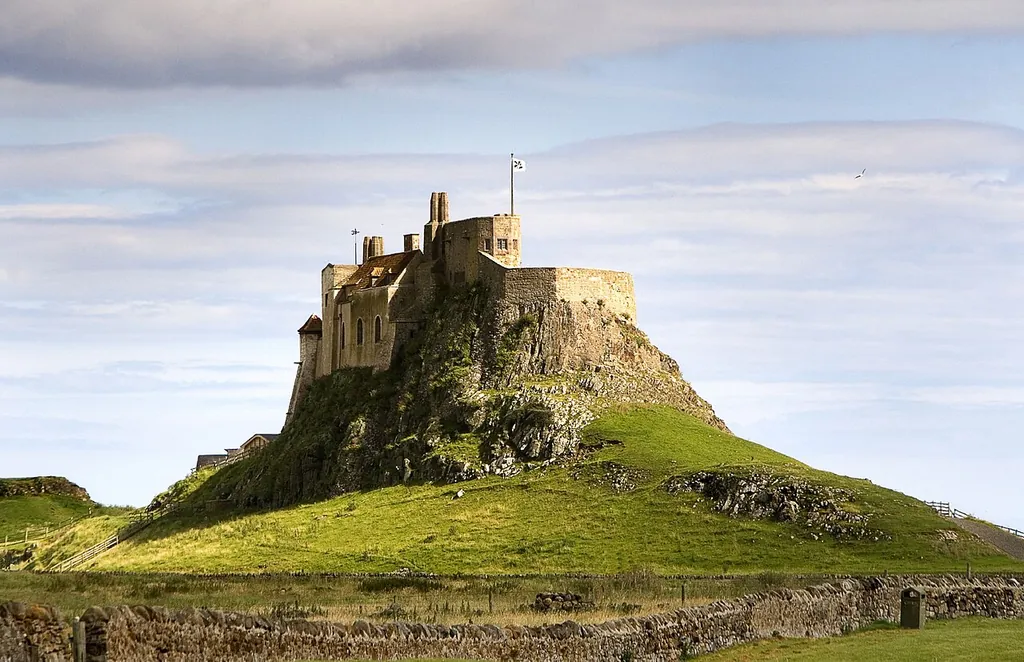
Lindisfarne Castle stands on Beblowe Crag, the highest point of Holy Island. After the nearby priory was closed in the 1530s, Henry VIII ordered the island to be fortified against a possible Scottish invasion, and a small fort was built there in 1549. It was strengthened under Elizabeth I, but its military use faded after the English and Scottish crowns were united in the early 17th century. In the 18th century Jacobite rebels briefly held the fort before soldiers from Berwick took it back.
In 1901 the owner of Country Life magazine, Edward Hudson, bought the ruined fort and asked the architect Edwin Lutyens to convert it into a holiday home in the Arts and Crafts style. Lutyens kept the Tudor character, adding a long gallery and fitting new rooms into the old fortifications. The walled garden was laid out by Gertrude Jekyll between 1906 and 1912 and has since been restored to her planting plan.
After Hudson, the castle passed through several private owners, and the National Trust has looked after it, together with the garden and the old lime kilns, since 1944. A major restoration closed it from 2016 to 2018. Visiting means a walk of about a mile from the island's car park, and the castle's opening hours follow the tides.
Highlights
- Lutyens interiors in a Tudor fort, including the long gallery
- Upper and lower batteries with views over the sea
- Walled garden designed by Gertrude Jekyll
- Historic lime kilns and the castle headland
- Boatshed Books and free family trail
Permanent exhibition
- Lutyens interiors – Rooms in the Tudor fort converted in the early 20th century, including the long gallery, dining room, batteries and gardens.
- Founded
- 1550
- Operated by
- National Trust
Admission & discounts
| Adults | £13 |
|---|---|
| Children & teens | £6.50free up to age 4 · Ages 5 to 17; under 5s enter free |
| Groups | £12.35 per personAdult price per person; group child price £6.18 |
| Families | £32.502 adults and up to 3 children |
| Family (1 adult and up to 3 children) | £19.50 |
Prices are the standard admission without Gift Aid; paying with Gift Aid adds about 10% (adult £14.30, child £7.20, family £35.80). National Trust members enter free. Visitors who arrive car-free (by bus, train, bicycle or boat) get 10% off admission, or a free guidebook for National Trust members.
Accessibility
- Partially wheelchair accessible
- Elevator: no information
- Accessible restroom: no information
- Accessible parking
- Service dogs welcome
- Tactile models & exhibits: no information
- Sign language tours: no information
- Easy-to-read materials: no information
- Audio description: no information
The castle is a one-mile walk each way from the visitor car park, with a drop-off point just outside the gate to the castle field. Access to the castle is on foot up a steep cobbled ramp and steps, and some spaces inside are dark and narrow. There is an induction loop at the admission point, window seats along the galleries and batteries, and one toilet at the castle. A 360-degree virtual tour and an access statement are available online. A Blue Badge car park is signposted in the village.
Kids & families
Great for kids & families
| Kids’ admission | free up to age 4 |
|---|---|
| Family ticket | £32.50 · 2 adults and up to 3 children |
- Family tours & workshops
- Activity booklet, scavenger hunt or kids’ audio guide
A free family trail is available on request. There is a space to leave buggies and large bags at the castle.
Getting there & parking
By public transit
Holy Island (bus 477)
Borders Buses service 477 runs from Berwick-upon-Tweed to Holy Island via Beal. The X15 and X18 run from Newcastle and Berwick-upon-Tweed to Beal, near the causeway, with local and seasonal connections onto the island; all timetables depend on the tides. The nearest railway station, Berwick-upon-Tweed, is 10 miles from the causeway.
By car
Paid parking
Visitors are asked to use the main island car park, a pay and display car park (card and pay by phone, run separately from the National Trust), signposted before the village. It is a one-mile walk each way to the castle. A Blue Badge car park and a coach park are signposted in the village.
- Accessible parking
The island is 5 miles east of the A1 across a tidal causeway that the sea covers twice a day, so safe crossing times must be checked before travelling. About three miles of road can be covered by the tide. The Pilgrims Way across the sands is marked by wooden posts. Cycle racks are by the gate to the castle field, and the Coast and Castles route (NCN1) passes nearby.
Get directionsAmenities & dining
- Museum shop
A National Trust shop and plant shop are in the village. Boatshed Books, a second-hand bookshop in the third boatshed by the admission point, opens when the castle is open. There is a picnic area with a few tables and deckchairs.
Events & venue rental
The museum hasn’t published any information on this.
Plan your visit
| Good to know | Volunteers on the upper battery help visitors spot seals through a telescope. Dogs on short leads are allowed in the grounds, but not inside the castle; there are ground-nesting birds and livestock near the lime kilns. |
|---|