March and District Museum
Free volunteer-run museum in a Victorian former girls’ school in March, with period rooms, railway history and a Fenland cottage and forge.
Have only individual sections read aloud
About the museum
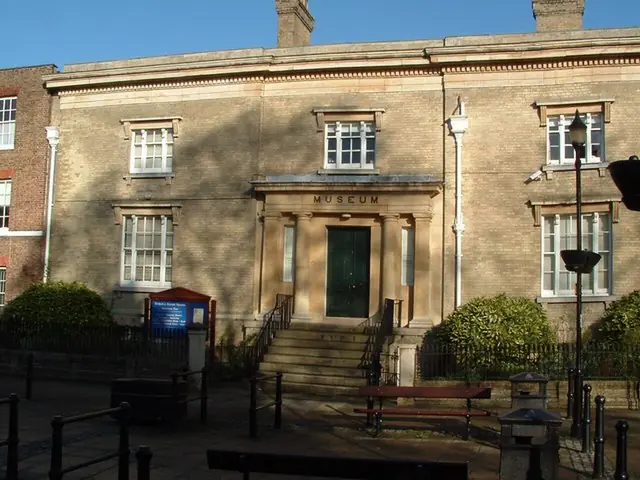
The museum occupies a building put up in 1851 by March Consolidated Charities as the South District Girls’ School. London architects W. G. and E. Habershon designed it in Carr stone. Later it also took boys and served as a junior school, until the infants’ school there closed in 1976.
The museum itself goes back to 1971, when a small group of local enthusiasts formed the March and District Historical Collection Society to save objects, photographs, documents and memories at risk of being lost. At its first annual meeting in 1972 it was renamed the March and District Museum Society. In 1976 March Town Council rented the former school and sub-let it to the society, which gave the collection its first permanent home.
The building became Grade II listed in 1985, and the town council completed its purchase in 1988. Today the museum is an independent charity run by volunteers. It gets an annual grant from the town council and relies largely on grants, fundraising, sales and donations, and entry is free.
Highlights
- Victorian kitchen, parlour and nursery room settings
- Railway memorabilia and the story of the 1944 Soham rail disaster
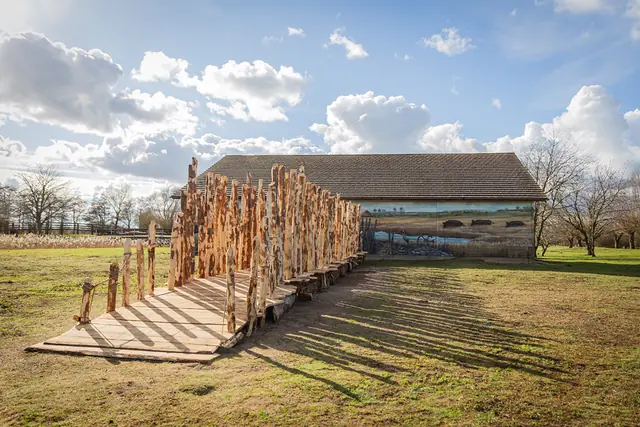
- Fenland cottage and traditional forge in the grounds
- Victorian washday equipment
- Grade II listed former girls’ school of 1851
Permanent exhibitions
- Haylock Room – Victorian kitchen, parlour and nursery settings, railway memorabilia and objects about March railwaymen Benjamin Gimbert and James Nightall, who helped limit the 1944 Soham rail disaster.
- Outside the museum – A Fenland cottage, a traditional forge and other historic artefacts in the grounds.
- Founded
- 1976
- Operated by
- March and District Museum Society (registered charity)
Admission & discounts
Admission is free.
Entry is free; donations are welcome.
Accessibility
- Wheelchair accessible
- Elevator: no information
- Accessible restroom
- Accessible parking: no information
- Service dogs welcome: no information
- Tactile models & exhibits: no information
- Sign language tours: no information
- Easy-to-read materials: no information
- Audio description: no information
There is level access to the main museum areas, an accessible toilet and a manual wheelchair that visitors can borrow. The building is historic, so some spaces are tighter than others; visitors with specific access needs are invited to get in touch.
Kids & families
School and youth group visits are offered and can be tailored to what a class is studying.
Getting there & parking
By public transit
March station
March railway station is just over a mile from the museum, and the town centre is within easy walking distance.
By car
Free parking
Free parking at City Road Car Park, a short walk from the museum.
The what3words address of the museum is keepers.regrowth.swim.
Get directionsAmenities & dining
A toilet is available on the ground floor, as well as an accessible toilet. No café is listed for regular opening.
Events & venue rental
The museum hasn’t published any information on this.
Plan your visit
| School programs | yes |
|---|---|
| Good to know | School and youth groups can book visits by form, email or phone; usually one class visits at a time and can be split into smaller groups. Groups can explore the forge, the Fenland cottage with its outside privy, Victorian washday equipment, the kitchen, parlour and nursery. |