October 6, 2026 – January 17, 2027
A Life of Poetry: The Peter Robinson Archive
Notebooks, drafts, correspondence and translations from the archive of poet and professor Peter Robinson show how poetry is written, revised, translated and published.

University museum in a Victorian house in Reading with England's largest collection on farming, food and the countryside, plus a Ladybird Books gallery.
October 6, 2026 – January 17, 2027
Notebooks, drafts, correspondence and translations from the archive of poet and professor Peter Robinson show how poetry is written, revised, translated and published.
October 6, 2026 – January 17, 2027
The display introduces a time capsule buried in the museum garden this summer and invites visitors to think about the next hundred years of farming.
September 8, 2026 – September 5, 2027
Following a curious hamster, the display shows how a Ladybird book is made from first ideas to publication and how Hannibal Hamster became a Ladybird series.
June 9, 2026 – January 17, 2027
A display of prints by early twentieth-century women artists from the University of Reading's School of Art, drawn from the University's art collections. It highlights their experimental approach to printmaking.
The Museum of English Rural Life, usually called The MERL, was founded in 1951 by academics in the Department of Agriculture at the University of Reading. Their aim was to record and collect the objects, tools and skills of a countryside that was changing quickly after the Second World War. The museum is owned and run by the university.
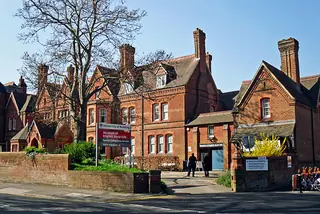
It is housed on Redlands Road in a building designed by Alfred Waterhouse in 1880 for the local businessman Alfred Palmer of the Huntley & Palmer biscuit company. The house became a hall of residence, St Andrews Hall, in 1911, and a modern extension was added for the museum in 2005. A grant of 1.8 million pounds from the Heritage Lottery Fund in 2014 paid for the redevelopment of the galleries, which reopened in October 2016.
Today the museum describes its collection of objects, books and archives on the history of food, farming and the countryside as the most comprehensive of its kind in England. The galleries cover farm work, rural crafts, wagons and carts, and changing ideas of country life. The Ladybird Gallery is a permanent display of original illustrations from Ladybird Books. The museum works in partnership with Reading Museum as Museums Partnership Reading.
Admission is free.
| Groups (10+ people) | –Groups of up to 30 people are welcome. Groups of 10 or more must book at least two weeks ahead and wait for confirmation. A donation of 5 pounds per person is suggested. |
|---|
Entry to the galleries is free, with a suggested donation of 5 pounds; no booking is needed for individual visitors.
The main entrance is step-free with a push-button door, and lifts and level access serve all public spaces including the galleries, shop and café. There are two disabled parking bays in front of the museum and three in the neighbouring university car park on Acacia Road. A wheelchair-accessible toilet with baby-changing facilities is in the galleries. Foldaway stools are available throughout. Garden paths are partly gravel and the lawn and woodland can be muddy in bad weather. Service animals are welcome, large-print guides to the permanent displays are available on request, and hearing support is offered at talks and events. A sensory map, a social story and sensory backpacks are available, and the Museums, My Way programme is run with Autism Berkshire for neurodivergent visitors. Visitors are asked to phone ahead to discuss support.
Great for kids & families
Families can use hands-on activities and interactives, changing trails for children (including the Rat Trail) and seasonal activity packs sold in the shop. The enclosed garden has trails, a shepherd's hut full of knitted toys, a wooden play-on tractor and a chicken coop. Friday Fledglings is a weekly outdoor session for preschoolers in term time, and Green Explorers is a monthly nature session for children aged 5 and over. Holiday activities are listed in the events programme. The museum does not host parties.
Crown Place Passage / Royal Berkshire Hospital (Reading Buses) · 200 m
Reading station has frequent services from London Paddington, including the Elizabeth line, and direct links from Bristol, Oxford, Birmingham and Bournemouth. From the station, Reading Buses 21 and 21a (stop EK on Blagrave Street) go to Crown Place Passage, and routes 3, 9 and 19 (stop SA on Station Road) go to the Royal Berkshire Hospital main entrance, about 200 m from the museum. A taxi rank is outside the station.
Free parking
A small free car park in front of the museum has limited spaces. Visitors may also park at the University of Reading on Acacia Road with a temporary permit from reception. Redlands Road has limited paid street parking (maximum two hours), and the nearest multi-storey is Queens Road car park, about a 10-minute walk.
The museum is a 15 to 20 minute walk from Reading station and has a secure bike rack by the main entrance. The museum encourages visitors to use public transport.
Get directionsThe small café serves hot and cold drinks, cakes, sandwiches, snacks, soup and ice cream, with indoor seating and tables on the patio and lawn; it opens during museum hours and tables cannot be reserved. The gift shop opens during museum hours, and there is an online shop. Visitors may picnic on the lawn or at the picnic benches.
Up to 35 guests.
Three meeting rooms in the Grade II listed building can be hired for meetings and corporate events from Monday to Friday, 09:00 to 17:00: a conference room for up to 35 people theatre style, a seminar room for 10 and a room for 8. The museum does not host parties.
Inquiries & details| School programs | yes |
|---|---|
| Good to know | Groups can ask for a free introduction of about 30 minutes from a volunteer welcome host when booking. School visits can be booked through the museum. |
Loading experiences …