Cole Museum of Zoology
Free zoology museum of the University of Reading with about 400 specimens on display, including an elephant skeleton, a false killer whale and a python.
Have only individual sections read aloud
About the museum
The Cole Museum of Zoology was founded in 1906 by Francis J. Cole, who was Professor of Zoology at Reading from 1907 to 1939. It is owned by the University of Reading and is maintained and managed by staff of its School of Biological Sciences. The collection was first kept at the London Road campus and was moved to the Whiteknights campus in the early 1970s.
In 2021 the museum moved again, to a new location on the ground floor of the Health and Life Sciences building on Whiteknights campus, where it sits within a three-storey atrium. The collection holds some 3,500 specimens, including skeletons, taxidermy, fossils, historic models and a large fluid collection, of which about 400 are on display at any one time.
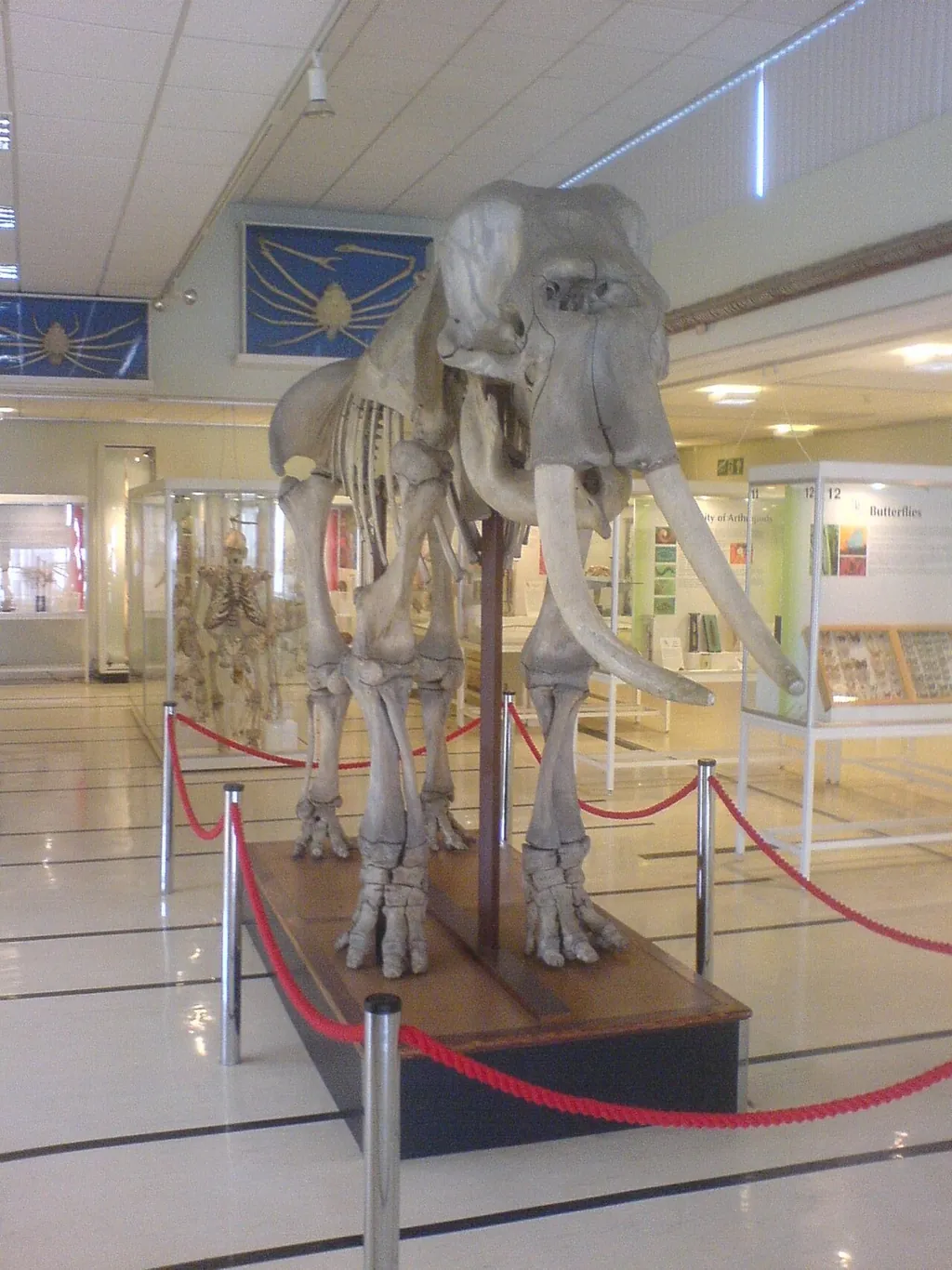
The specimens are arranged in taxonomic order, so that a visit gives a complete tour of the diversity of the animal kingdom and shows how animals evolve and adapt to pressures such as predation, parasitism and competition for food and mates. Highlights include complete skeletons of a male Indian elephant and a false killer whale, a five-metre reticulated python and a pair of giant spider crabs. The museum asks visitors to treat it as a quiet space, similar to a library, because it is in a working university building.
Highlights
- Complete skeleton of a male Indian elephant, known as Norman
- Skeleton of a false killer whale beside the entrance seating area
- Five-metre reticulated python and giant spider crabs
- Specimens arranged in taxonomic order for a tour of the animal kingdom
- Free self-guided activity sheets for children
Permanent exhibition
- Animal kingdom collection – About 400 of the museum's 3,500 specimens are displayed in taxonomic order, from invertebrates to mammals, including skeletons, taxidermy, fossils and models.
- Founded
- 1906
- Operated by
- University of Reading
Admission & discounts
Admission is free.
| Groups (10+ people) | –Groups of 10 or more must book in advance; the maximum group size is 20. A donation of 1 pound per person or 25 pounds per group is suggested. |
|---|
Admission is free. Donations can be made online to help keep the museum free for everyone.
Accessibility
- Wheelchair accessible
- Elevator: no information
- Accessible restroom
- Accessible parking
- Service dogs welcome
- Tactile models & exhibits: no information
- Sign language tours: no information
- Easy-to-read materials: no information
- Audio description: no information
The museum is on the ground floor with step-free access and an automatic entrance door. Four accessible parking bays are at the front of the building in car park P12. There is one wheelchair-accessible, gender-neutral toilet with baby changing, a hoist-equipped toilet on request, and semi-accessible toilets with grab rails. Assistance animals are welcome. There is no hearing loop, and the exhibits have no sound, video or interactive displays. Light levels vary, and the atrium can occasionally be noisy.
Kids & families
Great for kids & families
- Activity booklet, scavenger hunt or kids’ audio guide
- Hands-on stations: not available
- Stroller-friendly: not available
- Baby changing facilities
Printable activity sheets and colouring sheets are designed for an adult leading a small group of children, and the museum is popular with local primary and secondary schools. Prams and buggies must be left outside the building or next to the café kiosk, and baby changing is available in the accessible toilet.
Getting there & parking
By public transit
Pepper Lane
Reading Buses routes Claret 21 and 21A leave from the railway station, stop EJ; the closest stop to the museum is Pepper Lane, just outside the campus. Reading station is about a 45-minute walk away.
By car
Paid parking
Pay and display at Car Park 1A (1.50 pounds per hour or 10 pounds all day) at the Shinfield Road entrance of the campus, address Queen's Drive, Reading, RG2 7BW; it is a 10 to 15-minute walk to the museum. Four accessible bays are in car park P12 at the front of the building (sat nav RG6 6EX).
- Accessible parking
The museum is on the ground floor of the Health and Life Sciences building on Whiteknights campus; follow signs for Health and Life Sciences, as the museum itself is not signed. The what3words location is juices.spill.gloves. There are bike stands near the main entrance.
Get directionsAmenities & dining
Visitors can bring refreshments and use the seating area at the entrance, below the false killer whale skeleton. Only water is allowed in the museum itself. Cafes and a Co-op supermarket are elsewhere on campus.
Events & venue rental
The museum hasn’t published any information on this.
Plan your visit
| Guided tours | no |
|---|---|
| School programs | yes |
| Good to know | Group visits are self-led and the museum does not currently offer guided tours; it provides printable worksheets, and visitors should bring their own stationery. Schools are welcome, but bookings for Years 1 and 2 cannot be accepted and evening bookings are not available. Prams, buggies and scooters cannot be taken into the museum. |