Porthmadog Maritime Museum
Volunteer-run museum in the last remaining slate shed on Porthmadog harbour, telling the story of the port, its schooners and its seafarers.
Have only individual sections read aloud
About the museum
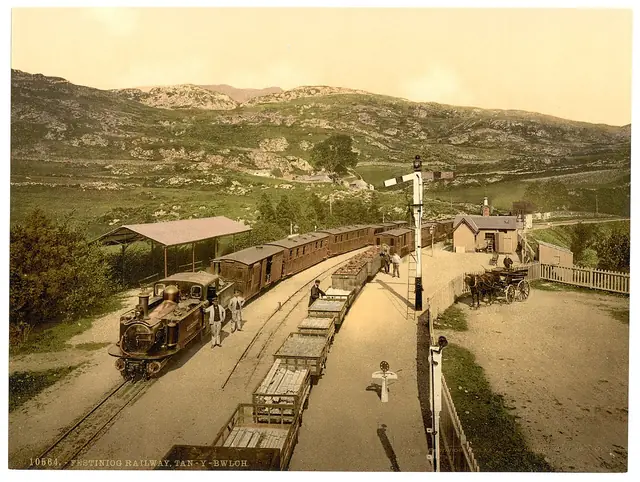
Porthmadog did not exist before 1811, when William Madocks built the sea wall known as the Cob to reclaim land from the sea. The river Glaslyn then scoured out a new natural harbour, and the first wharves were built in 1825. High-quality roofing slate was brought down from the quarries by tramway, and later by the Ffestiniog Railway, which opened in 1836, to supply the growing cities of England and northern Europe. Nearly three hundred ships were built around the estuary, among them the well-known Western Ocean Yachts, and local seamen sailed on deep-sea voyages, including the salt cod trade with Newfoundland and Labrador. The last cargo of slate left in 1947, and ships still called at the port until the 1980s.
The museum is housed in a long, low slate warehouse of the mid nineteenth century on Oakeley's Wharf, the last remaining slate shed on the harbour. Its collection includes ship models, pictures, documents, tools and other equipment that show the importance of shipbuilding and the slate trade. The displays are arranged by theme, with sections on the development of the port, shipbuilding, deep-sea sail, slates to the sea, heavy loads shipped for the Trawsfynydd power station, the steamship Florence Cooke, the salt cod trade and Ballast Island. Interpretation is in Welsh and English, and the museum also has a children's activity and education area.
The museum is run by a group of volunteers, who received the Queen's Award for Voluntary Service in 2019.
Highlights
- Last remaining slate shed on Porthmadog harbour
- Ship models, tools, documents and pictures
- Sections on shipbuilding, deep-sea sail and the salt cod trade
- Story of heavy loads shipped for the Trawsfynydd power station
- Children's activity and education area
Permanent exhibitions
- The port and shipbuilding – The development of Porthmadog harbour from 1825 and the more than three hundred ships built in the district, with ship models, tools and pictures.
- Deep sea sail and the salt cod trade – The part played by local seamen in deep-sea sailing and in the salt cod trade with Newfoundland and Labrador.
- Slates to the sea and heavy loads – The export of slate from the harbour, the steamship Florence Cooke and the heavy equipment shipped for the Trawsfynydd power station.
- Operated by
- Trustees of the Porthmadog Maritime Museum
Admission & discounts
| Adults | £2 |
|---|---|
| Families | £4 |
Admission is £2.00 per adult and £4.00 for a family ticket.
Accessibility
- Wheelchair accessible
- Elevator: no information
- Accessible restroom: no information
- Accessible parking: no information
- Service dogs welcome: no information
- Tactile models & exhibits: no information
- Sign language tours: no information
- Easy-to-read materials: no information
- Audio description: no information
There are two small steps to the main door, with a wheelchair ramp to the side entrance. Inside there is a short slope at one end of the building. The museum's access policy states that wheelchair users have easy access and room to move around, and that the interpretation is in Welsh and English.
Kids & families
Great for kids & families
| Family ticket | £4 |
|---|
- Playground / play area
A special area with activities lets children play and learn.
Getting there & parking
The museum is in the last remaining slate shed on Porthmadog harbour, at Oakley Wharf.
Get directionsAmenities & dining
The museum hasn’t published any information on this.
Events & venue rental
The museum hasn’t published any information on this.
Plan your visit
| School programs | yes |
|---|---|
| Good to know | Teachers' notes are available for school visits. Displays are bilingual in Welsh and English. |