St Andrews Cathedral Museum
Museum in the medieval priory buildings at St Andrews Cathedral, showing Pictish and medieval carved stones, among them the St Andrews Sarcophagus.
Have only individual sections read aloud
About the museum
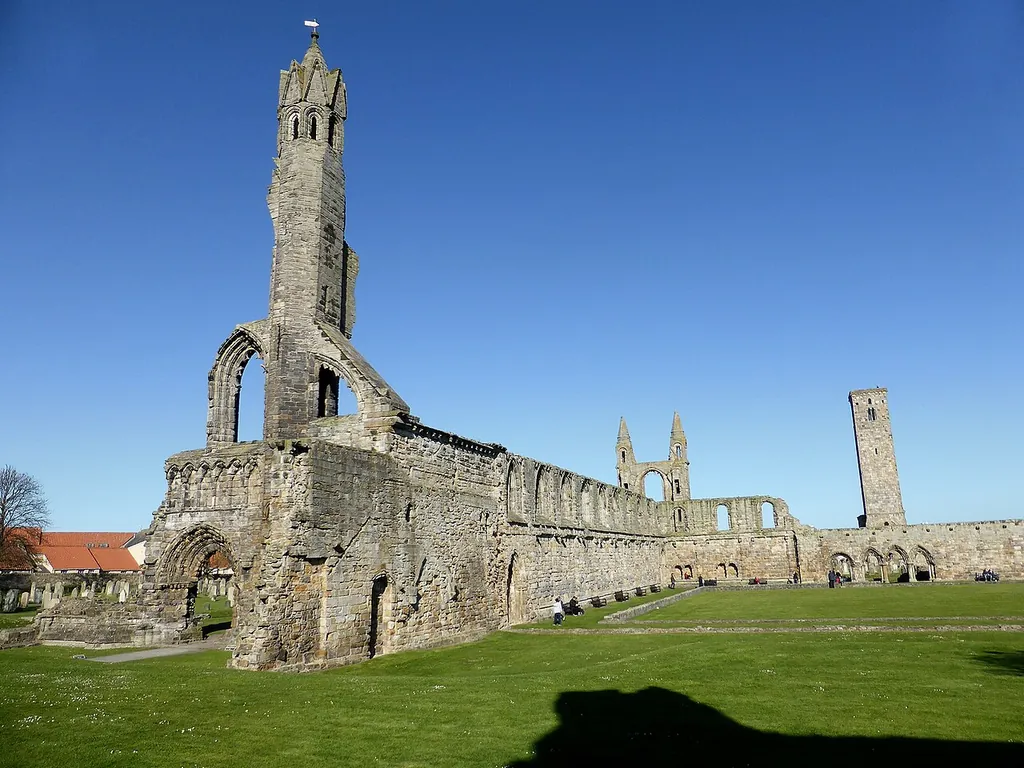
St Andrews Cathedral was once the largest church in Scotland. A monastery stood on the site from the eighth century, and the tower of St Rule's church was probably built around 1130. Work on the much larger cathedral began in the 1160s and the building was dedicated in 1318 in the presence of King Robert I. The cathedral and the surrounding precinct are now cared for by Historic Environment Scotland.
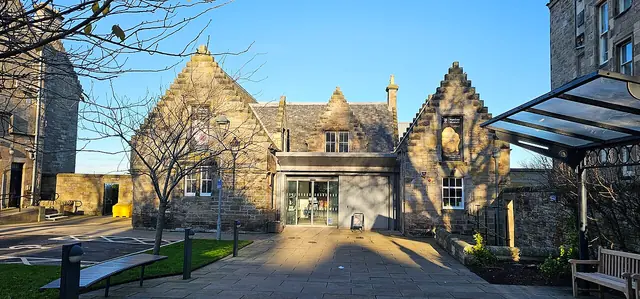
The museum occupies parts of the east and south ranges of the former Augustinian priory, where the canons once lived. It shows carved stone found in and around the cathedral, covering the period from the Pictish era through the Middle Ages to the Reformation of 1560 and later. Visitors can see fragments of Pictish slabs and crosses, architectural pieces from the cathedral itself, medieval grave effigies and casts of the seals used by the bishops of St Andrews. Gravestones from after the Reformation are carved with skulls, hourglasses and winged angels' heads.
The best-known object is the St Andrews Sarcophagus. Its first fragments were found in 1833 during the digging of a grave near St Rule's Tower. Art historians date the carved stone coffin to the middle of the eighth century and regard it as one of the finest early medieval sculptures in Europe. The museum and its shop are currently closed, while the cathedral grounds remain open to visitors.
Highlights
- St Andrews Sarcophagus, an eighth-century Pictish carved stone coffin
- Pictish slabs and cross fragments found at the cathedral
- Medieval grave effigies, including that of Bishop Henry Wardlaw
- Casts of the seals of the bishops of St Andrews
- Carved gravestones from after the Reformation
Permanent exhibition
- Carved stones and the St Andrews Sarcophagus – Pictish and medieval stonework from the cathedral and priory, including the St Andrews Sarcophagus, effigies and later gravestones. The display is currently closed.
- Founded
- 1908
- Operated by
- Historic Environment Scotland
Admission & discounts
The museum is currently closed; the cathedral grounds are open free of charge.
Accessibility
- Wheelchair accessible: no information
- Elevator: no information
- Accessible restroom: no information
- Accessible parking: no information
- Service dogs welcome
- Tactile models & exhibits: no information
- Sign language tours: no information
- Easy-to-read materials: no information
- Audio description: no information
Assistance dogs are permitted at all Historic Environment Scotland sites. Visitors enter the grounds through the memorial gate, which gives level access to a compacted gravel path running the length of the site. The grounds have numerous steps and raised thresholds, and gravestones and other trip hazards lie close to the main paths. Access to the museum itself is not described while it is closed.
Kids & families
The museum is currently closed; the cathedral grounds are open free of charge.
Getting there & parking
By public transit
Journeys can be planned with Traveline Scotland; the site page names no specific services.
By car
On-street parking is available nearby.
The cathedral lies on the eastern side of St Andrews, close to the university and the castle. Visitors can be dropped off in front of the war memorial at the top of North Street. Cyclists can plan routes with the Walk Wheel Cycle Trust.
Get directionsAmenities & dining
- Museum shop
The museum shop is closed together with the museum.
Events & venue rental
The museum is currently closed; the cathedral grounds are open free of charge.
Plan your visit
| Guided tours | yes |
|---|---|
| Good to know | Free guided tours are offered, with the chance to climb St Rule's Tower at the end. Donations are welcome. Tour times are given on request by email. |