Sunnycroft
A rare Victorian suburban villa in Wellington with an Edwardian interior, a listed conservatory and a small estate garden, cared for by the National Trust.
Have only individual sections read aloud
About the museum
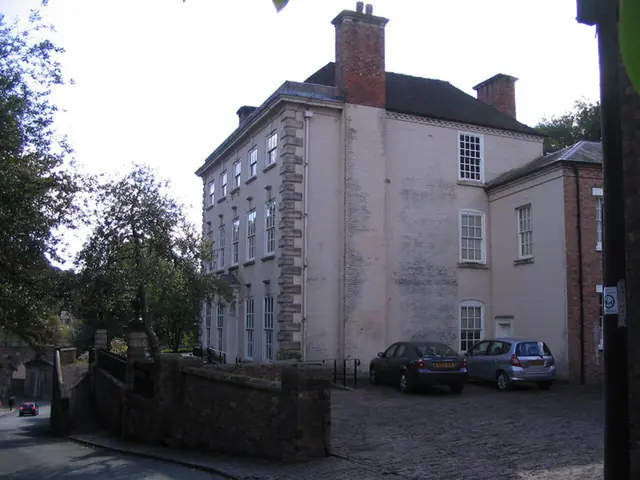
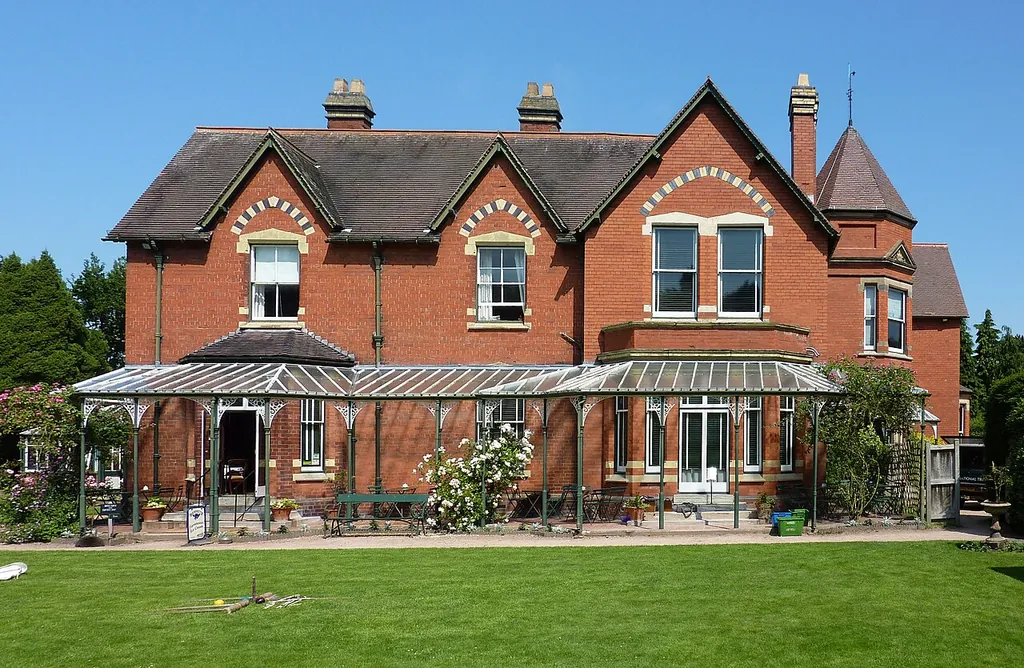
Sunnycroft is a suburban villa on the Holyhead Road in Wellington, on the edge of Telford. A brewer, J. G. Wackrill, built the first house on about three acres of land in 1879, on a fairly modest scale. Villas like this belonged to the new middle class of the industrial age, whose owners copied the style of country houses and estates in miniature.
In the 1890s a local wine and spirit merchant, Mary Jane Slaney, bought the property and the land around it. She had the architect Alfred Roper double the size of the house, adding a larger entrance, a grand staircase, a billiard room, a formal dining room and guest rooms. She also created an estate in miniature, with a lodge, a coach house and stables, kennels, glasshouses and a conservatory. Her interiors followed the latest fashion and included indoor bathrooms, hot running water and central heating.
The Lander family bought the house in 1912 and lived there until 1997, when it was bequeathed to the National Trust. Apart from the installation of electricity, very little changed, and almost nothing was thrown away. The house therefore holds more than 12,000 everyday objects, from domestic appliances to a cabinet of last-century remedies, as well as the original Maw & Co. tiles, fireplaces, radiators and wallpapers. Visitors usually see it on a pre-booked, person-led tour.
Highlights
- Almost unaltered Victorian and Edwardian interior with original tiles, fireplaces and fittings
- Conservatory of about 1899 by R. Halliday & Co., Grade II listed
- More than 12,000 everyday objects left behind by the Lander family
- Estate in miniature with an avenue of Wellingtonia trees, orchard, glasshouses and stables
- Domestic life of a middle-class family from 1880 to 1997
Permanent exhibition
- Sunnycroft villa and household collection – Rooms of a Victorian and Edwardian villa still furnished with original wallpapers, tiles and fittings and thousands of everyday items from the families who lived here.
- Founded
- 1880
- Operated by
- National Trust
Admission & discounts
| Adults | £10 |
|---|---|
| Children & teens | £5free up to age 4 · Ages 5 to 17; under 5s are free. |
| Families | £252 adults and up to 3 children. |
| Family ticket (1 adult and 3 children) | £15 |
Prices are standard admission without Gift Aid; paying with Gift Aid adds about 10 percent (adult £11, child £5.50, family £27.50, one adult with three children £16.50). National Trust members enter free. Visits to the house must be booked in advance. Exclusive-access visits are charged for everyone, including members.
Accessibility
- Partially wheelchair accessible
- Elevator: no information
- Accessible restroom
- Accessible parking
- Service dogs welcome
- Tactile models & exhibits: no information
- Sign language tours: no information
- Easy-to-read materials: no information
- Audio description: no information
The gardens are mostly flat with paths of compacted gravel, brick and grass, although some paths are narrow, and the glasshouses and stables can be reached without steps from the car park. There is no level access to the house: every entrance has three uneven steps, and there is no space for ramps. Powered wheelchairs, mobility vehicles and pushchairs cannot be taken into the house, and the upper floor is reached by two staircases. Three designated accessible parking spaces are next to the house. The one gender-neutral accessible toilet has baby changing; there is no Changing Places toilet. Assistance dogs are welcome everywhere. A virtual tour of the house is available online. Light levels are low in some rooms.
Kids & families
| Kids’ admission | free up to age 4 |
|---|---|
| Family ticket | £25 · 2 adults and up to 3 children. |
- Family tours & workshops
- Stroller-friendly: not available
- Baby changing facilities
A family ticket is available. Pushchairs and prams cannot be taken into the house because of tight spaces and historic floors. A baby changing facility is in the accessible toilet. Seasonal family events include a Wind in the Willows themed Father Christmas visit in December. Other dogs are welcome in the grounds on a lead.
Getting there & parking
By public transit
Wellington station
Wellington railway station is about ½ mile away on foot, uphill, and the main bus station is next to it. A bus stop is close to the driveway entrance. National Cycle Network route 81 passes about 1 mile away.
By car
Parking available
The small on-site car park, in the orchard about 150 yards from the house, has space for 30 to 35 cars; three accessible spaces are next to the house. Additional free parking, not run by the National Trust, is in the Wrekin Road car park in Wellington, about ½ mile downhill. Coaches cannot be accommodated.
- Accessible parking
From junction 7 of the M54, follow the B5061 towards Wellington. The entrance is on the left, 100 yards after the Wickets Inn. For satnav use postcode TF1 2DP.
Get directionsAmenities & dining
Visitor toilets are in converted outbuildings in the back yard. Large bags and backpacks may not be taken into the house. Mobile phone signal is good.
Events & venue rental
The museum hasn’t published any information on this.
Plan your visit
| Guided tours | yes |
|---|---|
| Good to know | House visits are person-led tours that must be booked in advance on open weekends. A virtual tour of the house is available on the National Trust website. Light levels vary from room to room, and some rooms are dim for conservation reasons. Group visits are by arrangement; at least two hours are recommended, and coaches cannot be parked. |