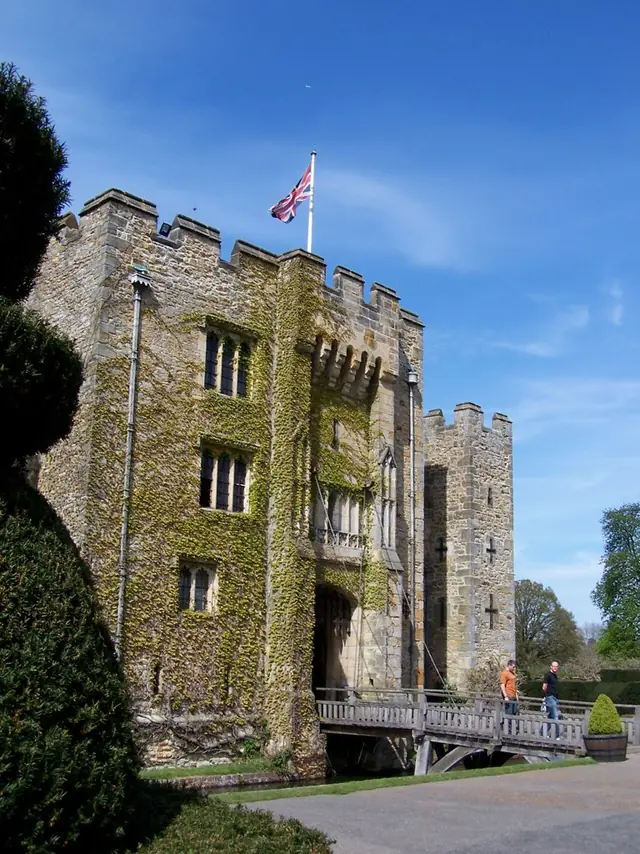
The Amelia Scott
Free museum with about 60,000 objects on Tunbridge Wells and the High Weald, in a civic building that also holds the town library and a café.
Have only individual sections read aloud
About the museum
The museum was founded in 1885 by Dr George Abbott as part of the Tunbridge Wells Natural History and Philosophical Society, and its first home was on the Pantiles. Tunbridge Wells Borough Council took over the collection in 1918, and the museum moved into the new civic centre on Mount Pleasant in 1955. It was long known as Tunbridge Wells Museum and Art Gallery.
In April 2022 the museum, the library and adult education were brought together under one roof for the first time as The Amelia Scott, named after the local social reformer and suffrage campaigner who had argued for a town museum and library. The project was a partnership between the borough council and Kent County Council, supported by the National Lottery Heritage Fund and Arts Council England. Two listed buildings are joined by a barrel-vaulted atrium, with a new wing for temporary exhibitions, local studies and archives.
Around 60,000 objects cover local and natural history, archaeology, fine and decorative arts and everyday life. Permanent galleries include the Story of the Wells and the Georgian Spa. The Amelia has won a Sandford Award for heritage education.
Highlights
- Story of the Wells gallery on the spa town, from the 1606 spring to the town council
- Georgian Spa gallery with 18th-century dress and the Camden Portrait Collection
- Displays on the invention of Subbuteo and on notable local women
- Around 60,000 objects on Tunbridge Wells and the High Weald
- Free entry to the museum collections, with a library and café in the same building
Permanent exhibitions
- Story of the Wells – Follows the town from the discovery of the mineral spring in 1606 through its rise as a Georgian spa, with displays on Decimus Burton, notable local women, Subbuteo and local theatre.
- Georgian Spa – Eighteenth-century dress and accessories alongside the Camden Portrait Collection of oil and pastel paintings of an influential local family.
- Founded
- 1885
- Operated by
- Tunbridge Wells Borough Council
Admission & discounts
Admission is free.
Entry to the museum collections is free.
Accessibility
- Wheelchair accessible
- Elevator
- Accessible restroom
- Accessible parking: no information
- Service dogs welcome
- Tactile models & exhibits
- Sign language tours: no information
- Easy-to-read materials: no information
- Audio description: no information
A local access guide lists accessible entrances, lifts and accessible toilets, tactile exhibits, some audio displays, and a step-free café; assistance dogs are welcome. The council says hearing loops are available in all meeting rooms and that a British Sign Language interpreter can be arranged if requested before a visit. Information can be supplied in large print and other alternative formats on request.
Kids & families
Great for kids & families
- Family tours & workshops
The Amelia was shortlisted for the Kids in Museums Family Friendly Museum Award. Rhyme Time sessions for children under 4 and their carers run on Tuesdays and Thursdays, and family activities and workshops are part of the regular programme.
Getting there & parking
The Amelia Scott is on Mount Pleasant Road in the centre of Royal Tunbridge Wells. The website gives no public transport or parking details.
Get directionsAmenities & dining
- Café
The Fine Grind café is at the centre of the building. The building also houses the library and a tourist information centre.
Events & venue rental
- Spaces for rent
- Private parties
- Corporate events
Flexible rooms are available for meetings, celebrations and conferences, with layouts for events of any size. Enquiries go through the contact form or the general email and telephone number.
Inquiries & detailsPlan your visit
| School programs | yes |
|---|---|
| Good to know | School visits and group bookings can be requested through the contact form. The Amelia has won a Sandford Award for its heritage education programmes. |