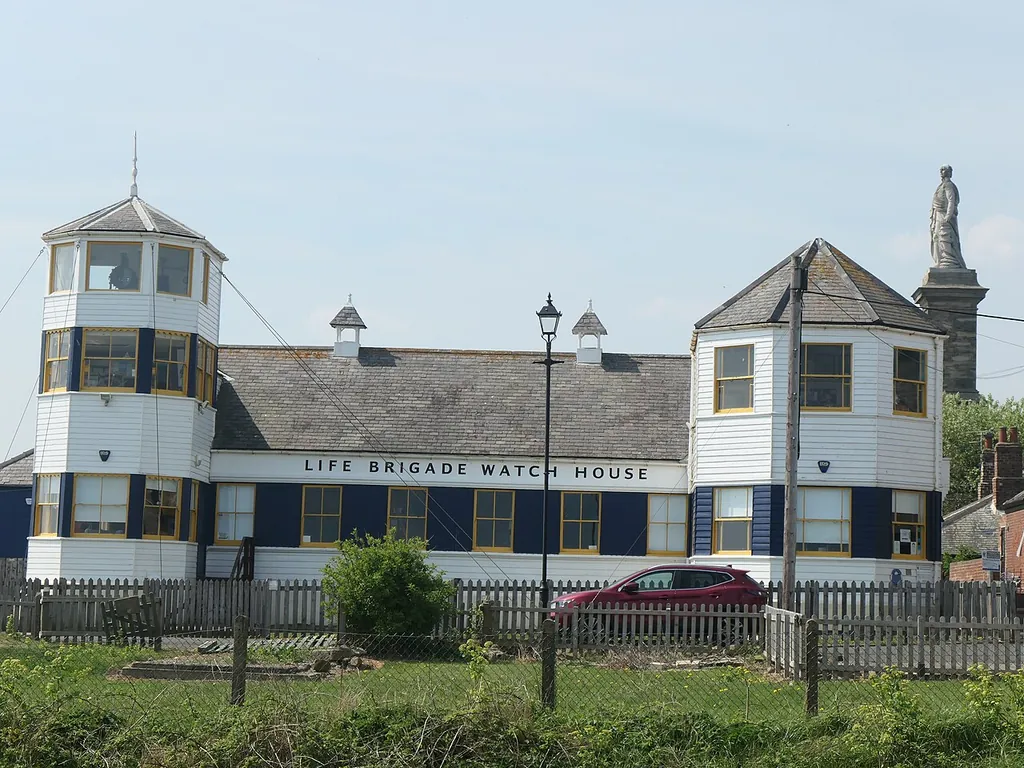
Tynemouth Volunteer Life Brigade Watch House Museum
Free museum in the Brigade Watch House at the mouth of the Tyne, telling the story of volunteer coastal life-saving since 1864.
Have only individual sections read aloud
About the museum
The Tynemouth Volunteer Life Brigade was formed after a disaster on 24 November 1864, when 32 people died in the wrecks of the steamship Stanley and the schooner Friendship on the Black Middens rocks, within sight of onlookers who could not help. John Morrison, a volunteer officer, argued that trained volunteers could have helped the Coastguard with breeches buoy rescues. At a public meeting at North Shields Town Hall on 5 December 1864, more than 100 men signed up, and the Board of Trade later adopted the model. The Brigade is the oldest of the three volunteer life brigades still active in the United Kingdom.
The Brigade is now a registered charity. Besides its coastal rescue work, it aims to conserve the Watch House and its heritage and to promote water safety. The museum in the Watch House at the Spanish Battery shows the history of life-saving on the Tynemouth coast since 1864.
The displays include early photographs, documents, paintings and objects connected with the Brigade, a working three-quarter-size breeches buoy rescue apparatus, and items from local shipwrecks such as ships' bells and figureheads.
Highlights
- Working three-quarter-size breeches buoy rescue apparatus
- Ships' bells and figureheads from local shipwrecks
- Early photographs, documents and paintings of the Brigade
- Story of the 1864 Black Middens disaster that led to the Brigade's founding
- Panoramic views of the Tyne entrance from the south tower
Permanent exhibition
- Watch House Museum collection – Artefacts, photographs, paintings and relics from old shipwrecks tracing life-saving on the Tynemouth coast since 1864, including a working breeches buoy apparatus.
- Founded
- 1887
- Operated by
- Tynemouth Volunteer Life Brigade
Admission & discounts
Admission is free.
Standard entry is free and donations are welcome. Large organised groups may be asked for a recommended donation, and guided visits or tours may carry an admission charge or recommended donation; contact the team for details.
Accessibility
- Partially wheelchair accessible
- Elevator: no information
- Accessible restroom: no information
- Accessible parking: no information
- Service dogs welcome: no information
- Tactile models & exhibits: no information
- Sign language tours: no information
- Easy-to-read materials: no information
- Audio description: no information
Disabled access is available to the ground floor only. Toilet facilities are on site.
Kids & families
The museum hasn’t published any information on this.
Getting there & parking
By public transit
Tynemouth Metro station · 1 km
Tynemouth Metro station is about 1 km away. The 306 bus (Newcastle to Whitley Bay) stops on Front Street, about 500 m away, and the 1/1A bus (Gateshead to Whitley Bay) stops on Allendale Place, about 750 m away.
By car
Parking available
There are public car parks on Pier Road, just past the small bridge on the right, and a public car park on the Spanish Battery next to the museum.
By car, turn onto Pier Road from Front Street and cross the small bridge; the museum is on the right at the top of the bank.
Get directionsAmenities & dining
The museum hasn’t published any information on this.
Events & venue rental
The museum hasn’t published any information on this.
Plan your visit
| Guided tours | yes |
|---|---|
| Good to know | Private and group visits and talks about the Brigade can be arranged all year by email. The museum page describes panoramic views over the Tyne entrance, the piers, Black Middens rocks, South Shields and Tynemouth Castle and Priory from the top of the south tower, without saying how visitors reach it. |