West Kirby Museum
Volunteer-run museum beside St Bridget’s Church in West Kirby, showing carved stones and finds from a thousand years of the church’s history.
Have only individual sections read aloud
About the museum
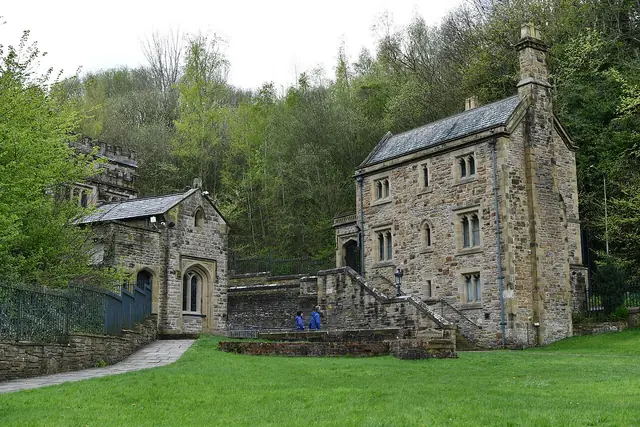
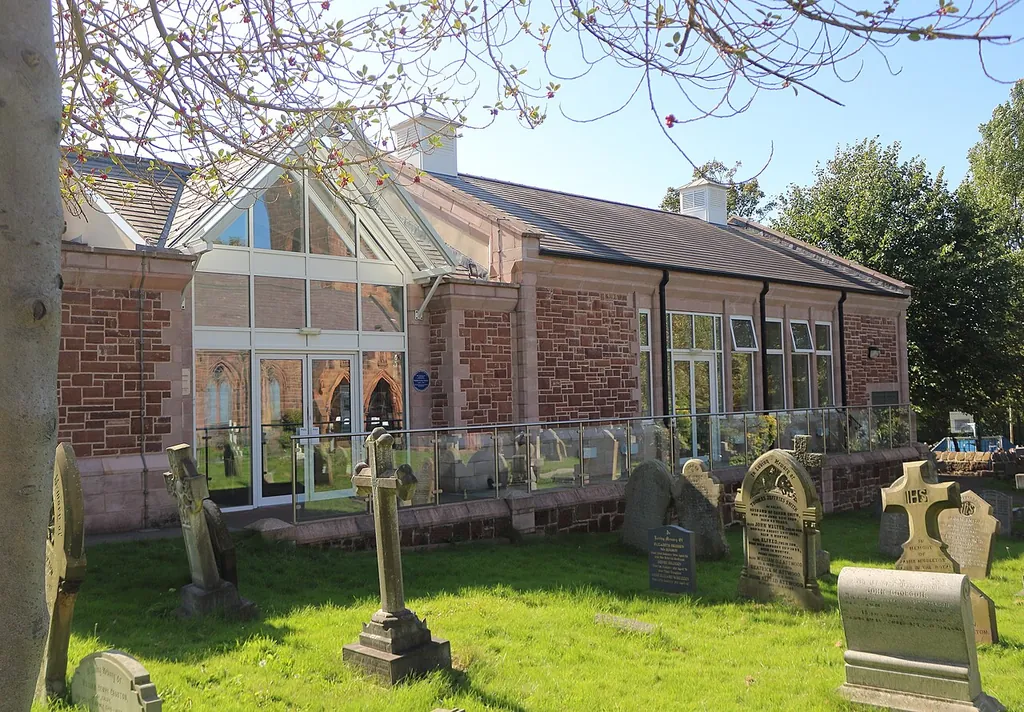
West Kirby Museum, also known as the Charles Dawson Brown Museum, was founded in 1892 in memory of Charles Dawson Brown, a churchwarden at St Bridget’s Church. During extensive building work on the church between 1869 and 1871, carved stones and other objects came to light. Brown, a local historian, recognised their importance in time to stop the builders carting them away. After his death a public subscription paid for a memorial, and the Hearse House next to the old school room was converted into a museum to hold the rescued items.
For decades the collection saw limited use and was open only by appointment or on special days such as the church summer fair. When St Bridget’s Centre was redeveloped, reopening the museum became part of the plan, and in 2013 it gained regular opening hours for the first time.
The objects all come from the church or its surroundings and help to date five periods of building on the site, from a wooden church of about AD 900 to the present building of 1869. They include parts of two 10th-century crosses, masonry and grave markers from the Norman period, a 12th-century child’s stone coffin, a footbath and 13th-century grave slabs. The oldest and best-known item, an Anglo-Norse hogback stone of the 10th century, is kept in the church rather than the museum. The museum is independent and run entirely by volunteers.
Highlights
- Stone fragments from the 10th-century crosses
- Norman masonry and grave markers from the second church
- A child’s stone coffin from the 12th century and a stone footbath
- Three 13th-century carved grave slabs
- Anglo-Norse hogback stone of the 10th century, kept in the church next door
Permanent exhibitions
- Stone artefacts from St Bridget’s Church – Carved stones, masonry and grave markers from the church, each helping to date one of five building phases on the site.
- Reserve collection – Further objects kept in store for research, which can be browsed online.
- Founded
- 1892
- Operated by
- Independent, volunteer-run
Admission & discounts
Admission is free.
| Groups | £2 per personFrom £2 per person for pre-booked groups of up to 20, with two weeks’ notice. |
|---|
Entry is free for individual visitors. The museum is supported entirely by donations.
Accessibility
- Wheelchair accessible
- Elevator: no information
- Accessible restroom
- Accessible parking: no information
- Service dogs welcome: no information
- Tactile models & exhibits: no information
- Sign language tours: no information
- Easy-to-read materials: no information
- Audio description: no information
The museum has a step-free entrance and wheelchair access throughout, and St Bridget’s Centre has wheelchair-accessible toilets.
Kids & families
The museum hasn’t published any information on this.
Getting there & parking
By car
Parking available
A small car park very close to the entrance can be used by museum visitors, reached from St Bridget’s Lane off Village Road.
The museum is about five minutes from the village centre, in St Bridget’s Centre next to St Bridget’s Church.
Get directionsAmenities & dining
The museum hasn’t published any information on this.
Events & venue rental
The museum hasn’t published any information on this.
Plan your visit
| Photography | Visitors may take non-commercial snapshots for personal enjoyment; tripods and flash are not allowed. Commercial photography needs written agreement in advance. |
|---|---|
| Good to know | Groups must be pre-booked, with a maximum of 20 people and two weeks’ notice. The church next door is open most weekday afternoons from 14:30 to 16:30, and visitors who ask when booking can see the hogback stone there. |