Woolsthorpe Manor
Seventeenth-century farmhouse in Lincolnshire where Isaac Newton was born, with his apple tree, a hands-on science centre and rooms set as in 1665.
Have only individual sections read aloud
About the museum
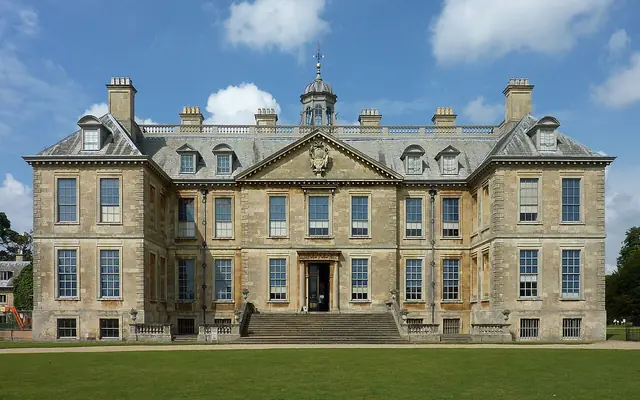
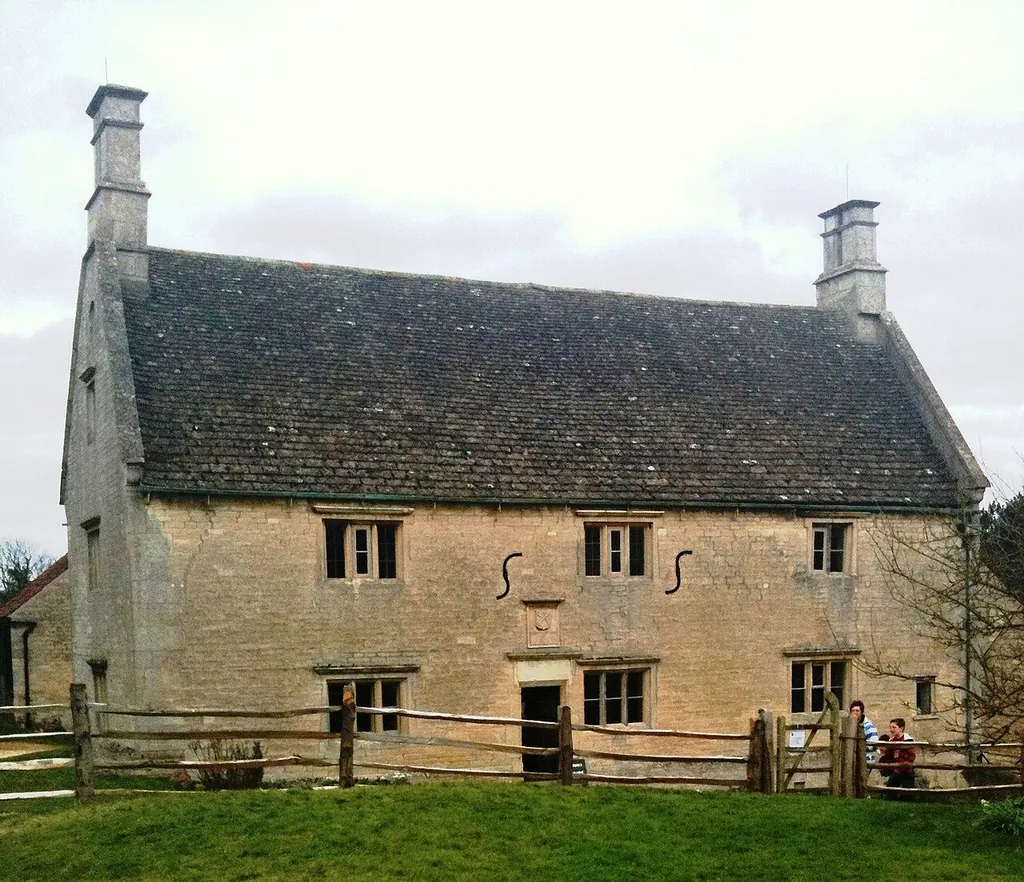
Woolsthorpe Manor is a small T-shaped farmhouse of local limestone near Colsterworth in Lincolnshire. The Newton family bought the manor in 1623, and the main part of the present house dates from around that time. Isaac Newton was born here on Christmas Day 1642, three months after the death of his father, into a family of well-off farmers.
Newton grew up at Woolsthorpe, made models and drew on the walls, and later attended school in nearby Grantham. In 1665, when plague closed Cambridge University, he returned to the manor and spent about two years working here. This period is known as his Year of Wonders. He is said to have used a prism to split light into colours and developed ideas about gravity, calculus and motion. According to the story Newton told himself, an apple falling in the orchard set him thinking about gravity.
Today the house is in the care of the National Trust. Newton's Chamber is arranged to look as it might have in 1665 to 1666. The orchard contains a Flower of Kent apple tree said to be the one that inspired him, and a science centre in the farm buildings lets visitors try experiments about light, forces and gravity.
Highlights
- Birthplace and family home of Isaac Newton
- Newton's Chamber, set up as in 1665 to 1666
- The apple tree in the orchard linked to his ideas on gravity
- Hands-on science centre with experiments on light and gravity
- 3D scan of Newton's death mask for touch
Permanent exhibitions
- Manor House and Newton's Chamber – The farmhouse where Newton was born, with a room set up as it might have looked in his Year of Wonders and a display about the apple tree in the hayloft.
- Science Discovery Centre – A hands-on centre where visitors try experiments on light, forces and gravity based on Newton's work.
- Operated by
- National Trust
Admission & discounts
| Adults | £15 |
|---|---|
| Children & teens | £7.50free up to age 4 · Children aged 5 to 17; under 5s are free. |
| Groups | £14.25 per personGroup rate per adult; group children £7.13. |
| Families | £37.50Two adults and up to three children. One adult with up to three children costs £22.50. |
Prices are without Gift Aid; with a voluntary Gift Aid donation an adult ticket costs £16.50 and a child ticket £8.30. National Trust members enter free (both cards are needed for family or joint membership). Parking is included in the entry fee. School groups pay £6 per child in addition to admission.
Accessibility
- Partially wheelchair accessible
- Elevator: not available
- Accessible restroom
- Accessible parking
- Service dogs welcome
- Tactile models & exhibits
- Sign language tours: no information
- Easy-to-read materials: no information
- Audio description: no information
The grounds are uneven and sloping with gravel paths, and there is a fairly steep climb from the ticket office to the orchard. Access to the Manor House is up a slope and over a raised door frame; a ramp and removable ramps inside are available on request, but the house has low doorways, narrow rooms and a staircase to the first floor. Mobility scooters can be used on the site but visitors need to transfer to a manual wheelchair to enter the house. One wheelchair can be borrowed and should be booked ahead. The science centre has level access and the coffee shop has a ramped entrance. An accessible toilet is in the lower courtyard near the ticket office. Accessible parking is near the ticket office and a drop-off near the house can be arranged. A braille guide, a photograph album of the first floor, a 3D scan of Newton's death mask for touch and an induction loop are listed. Assistance dogs are welcome everywhere.
Kids & families
Great for kids & families
| Kids’ admission | free up to age 4 |
|---|---|
| Family ticket | £37.50 · Two adults and up to three children. One adult with up to three children costs £22.50. |
- Family tours & workshops
- Activity booklet, scavenger hunt or kids’ audio guide
- Hands-on stations
- Stroller-friendly: not available
- Baby changing facilities
The science centre invites children to test refraction with distorting mirrors, to explore blackness and to try experiments on gravity and orbits. The site takes part in the National Trust's 50 things to do before you are 11¾ challenge, and a courtyard has interactive activities. Baby changing is available. Prams must be left outside the Manor House because of limited space, and a hip-carrying baby seat can be borrowed.
Getting there & parking
By public transit
Grantham station
Grantham is the nearest railway station, 8 miles away, and Melton Mowbray station is 13 miles away.
By car
Free parking
Parking is included in the entry fee and free for National Trust members; Blue Badge bays are close to the main entrance.
- Accessible parking
The manor is at Woolsthorpe by Colsterworth, not Woolsthorpe by Belvoir, and is signposted from the A1. From Melton Mowbray take the B676 towards Colsterworth, turn left onto Old Post Lane after Stainby, then left onto Water Lane. For satnav use NG33 5PD. A footpath leads from Colsterworth, and the Viking Way passes about 3 miles away.
Get directionsAmenities & dining
- Café
- Restaurant: not available
- Museum shop
- Wi-Fi
Free National Trust Wi-Fi is available throughout the site, although mobile phone reception is weak. Newton's Barn coffee shop serves hot and cold drinks, light lunches and cakes; there is also a gift shop, a book wall and a second-hand bookshop. Picnic tables are in the courtyards.
Events & venue rental
The museum hasn’t published any information on this.
Plan your visit
| Guided tours | yes |
|---|---|
| School programs | yes |
| Good to know | Guided tours of the Manor House can be booked and run on Mondays, Thursdays and Fridays in the morning. Groups from schools can visit on Tuesdays and Wednesdays in spring, summer and early autumn; each visit includes a guided visit to the science centre and the house and a workshop on forces and motion or on light. Dogs are allowed in the lower courtyard only. |