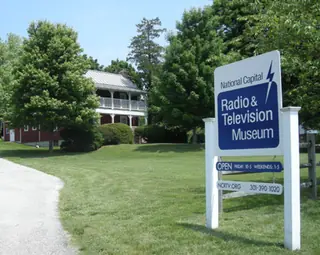
National Capital Radio & Television Museum
Museum in a 1906 house in Bowie tracing radio and television from the wireless telegraph to the TV age, with working vintage receivers.
Show individual sections
About the museum
The museum grew out of the Mid-Atlantic Antique Radio Club, founded in 1984 by collectors in the Washington and Baltimore area. Members set up a separate non-profit in 1993, the Radio History Society, to create a museum of radio and television. Without a building or collection of its own, it first borrowed objects from collectors for temporary exhibits in libraries, at George Washington University and in a shopping mall in Silver Spring.
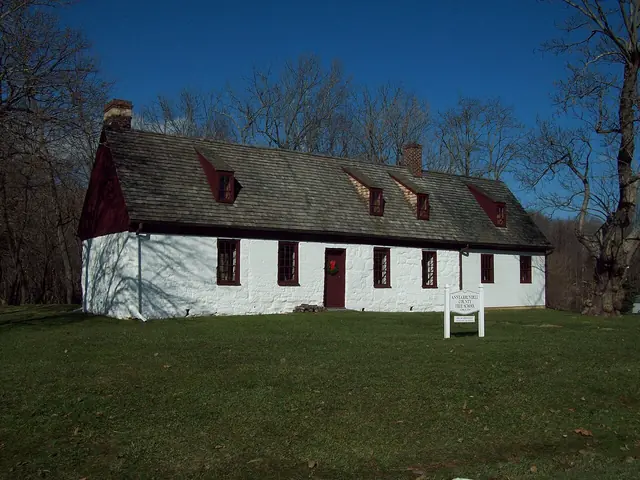
In 1998 the society learned of a restored farmhouse owned by the City of Bowie: the 1906 Harmel House, a former storekeeper's home in the old village of Mitchellville. A long-term lease was signed in March 1999, and the Radio & Television Museum opened in June 1999. The city maintains the building and grounds, while the museum runs the exhibits. In 2012 the organization took the name National Capital Radio & Television Museum.
Seven galleries on two floors present the receivers used by listeners and viewers over the decades, from a piece of the 1858 Atlantic telegraph cable and early crystal sets to cathedral radios, art deco designs, postwar portables and early television. Restored sets play historic programs, and a restoration shop in the annex hosts repair classes. The museum also maintains an exhibit at the Library of American Broadcasting at the University of Maryland.
Highlights
- Specimen of the 1858 Atlantic telegraph cable
- Radios of the 1920s and 1930s, including a 1939 Crosley Reado radio fax
- Early mechanical television with scanning-disc receivers
- Vintage receivers playing historic radio and TV programs
- Restoration shop in the annex
Permanent exhibitions
- From Spark to Byte – Gallery on milestones in the history of electronics, including a section of the 1858 Atlantic telegraph cable.
- Leading Up to WW2 – Radios of the 1930s with many art deco designs and a rare 1939 radio fax receiver.
- The Rise of Television – The story of television from experiments in Washington in the 1920s and scanning-disc receivers to later sets.
- Founded
- 1999
Admission & discounts
| Adults | $7 |
|---|---|
| Reduced | $5Seniors 62+, students, military and Bowie residents |
| Children & teens | freefree up to age 4 · Free for children under 5. |
| Seniors | $5Ages 62 and over |
| Students & apprentices | $5 |
| Groups (8+ people) | $10 per personAdvance reservations encouraged; tours outside regular hours must be booked two weeks ahead. |
Museum members free.
Accessibility
- Partially wheelchair accessible
- Elevator: not available
- Accessible restroom: no information
- Accessible parking: no information
- Service dogs welcome: no information
- Tactile models & exhibits: no information
- Sign language tours: no information
- Easy-to-read materials: no information
- Audio description: no information
The first-floor galleries are wheelchair accessible; the second floor is reached only by stairs, and a video tour of it is available on request.
Kids & families
The museum hasn’t published any information on this.
Getting there & parking
By car
Free parking
Free parking next to the museum.
There is no public transit nearby, so a car is needed. From US 50 take Exit 11 (Collington Road, Route 197), then follow Mitchellville Road south for 1.3 miles; the museum sign and driveway are on the right just before the light at Mount Oak Road.
Get directionsAddress & contact
National Capital Radio & Television Museum2608 Mitchellville Road
20716 Bowie
Maryland, United States
Amenities & dining
- Museum shop
Small museum shop with books, restored radios and vacuum tubes.
Events & venue rental
The museum hasn’t published any information on this.
Plan your visit
| Guided tours | yes · approx. 60 min |
|---|---|
| School programs | yes |
| Good to know | Docents are on duty during regular hours; visitors can explore on their own or join an introductory tour. Groups should contact the office in advance. |
Visitor experiences
Loading experiences …