Musée de Cruzy – A.C.A.P.
Association-run museum in Cruzy devoted to Late Cretaceous dinosaurs, local archaeology, pottery from the church well and winemaking.
Geen geluid? Controleer de stilschakelaar van je apparaat.
Alleen afzonderlijke secties laten voorlezen
Over het museum
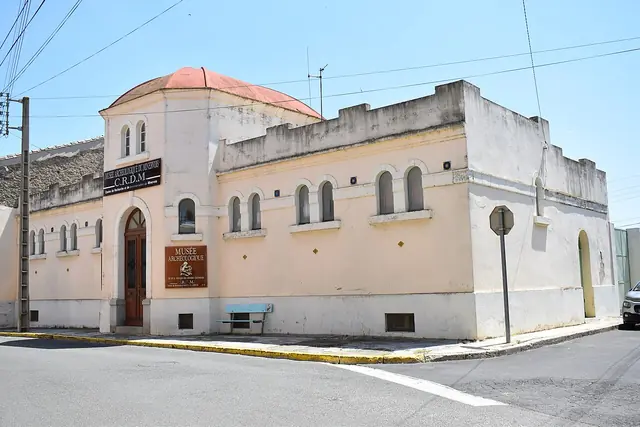
The Cruzy museum was founded in 1975, when the town council made a building available to the Association culturelle archéologique et paléontologique, the A.C.A.P. In 2012 the commune also set up a depot-laboratory for it. The association, which brings together Cruzy and the neighbouring villages of Creissan, Montouliers and Villespassans, aims to research, promote and conserve local and regional heritage. It also carries out archaeological and palaeontological excavations.
The most famous theme is dinosaurs. The Late Cretaceous sites of Cruzy, Creissan, Montouliers and Villespassans, dating from about 70 million years ago, have yielded more than 25 species, including ornithopods, sauropods, theropods and armoured dinosaurs. Bird bones from the age of the dinosaurs have also been found there. The museum displays dinosaur eggs, a titanosaur femur and fossilised turtle shells, among other things.
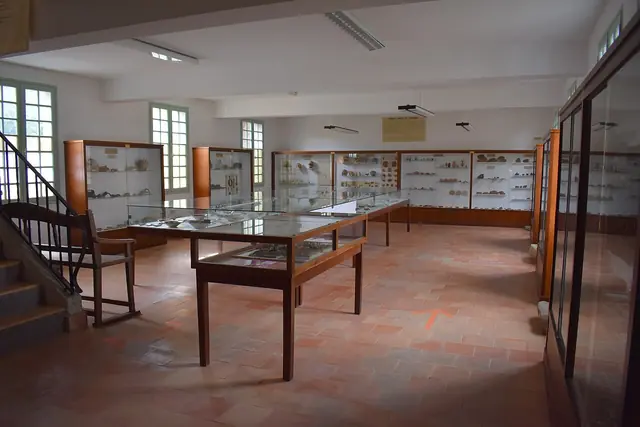
Other rooms show 17th- and 18th-century pottery recovered from the church well, local archaeological material and a collection of minerals. One area is devoted to winemaking, with four banners from the winegrowers' revolt of 1907, which are listed as historic monuments.
Hoogtepunten
- Late Cretaceous dinosaur fossils found in Cruzy and the neighbouring villages
- Dinosaur eggs, a titanosaur femur and fossilised turtle shells
- Bird bones from the age of the dinosaurs
- 17th- and 18th-century pottery from the church well
- Banners of the winegrowers' revolt of 1907, listed as historic monuments
- Mineral collection
Vaste collectie
- Les dinosaures de Cruzy – Fossils of dinosaurs and other Late Cretaceous animals found in Cruzy and the neighbouring villages: eggs, a titanosaur femur, turtle shells.
- Archéologie et puits de l'église – Local archaeological material and 17th- and 18th-century pottery recovered from the church well.
- Viticulture et bannières de 1907 – The history of winemaking in Languedoc and the winegrowers' revolt of 1907, illustrated by four banners listed as historic monuments.
- Opgericht
- 1975
- Beheerder
- Association culturelle archéologique et paléontologique (A.C.A.P.)
Toegangsprijzen & kortingen
De toegang is gratis.
The Hérault Tourisme listing states free admission; the museum's website does not mention a price.
Toegankelijkheid
- Rolstoeltoegankelijk: geen informatie
- Lift: geen informatie
- Aangepast toilet: geen informatie
- Gehandicaptenparkeerplaats: geen informatie
- Hulphonden welkom: geen informatie
- Tastmodellen / voelbare objecten: geen informatie
- Rondleidingen in gebarentaal: geen informatie
- Informatie in eenvoudige taal: geen informatie
- Audiodescriptie: geen informatie
The Hérault Tourisme listing states that the museum welcomes people with motor disabilities.
Kinderen & gezin
Het museum heeft hierover geen informatie gepubliceerd.
Bereikbaarheid & parkeren
Het museum heeft hierover geen informatie gepubliceerd.
Service & horeca
- Museumwinkel
Gift shop according to the Hérault Tourisme listing; the museum's website also offers an online shop.
Evenementen & zaalverhuur
Het museum heeft hierover geen informatie gepubliceerd.
Je bezoek plannen
| Rondleidingen | ja · duur ca. 60 min. |
|---|---|
| Aanbod voor scholen | ja |
| Goed om te weten | Guided tour on request, about one hour (in French, English or Spanish according to the Hérault Tourisme listing). Self-guided visits are possible. Educational workshop available for school groups. |