Musée historique de Haguenau
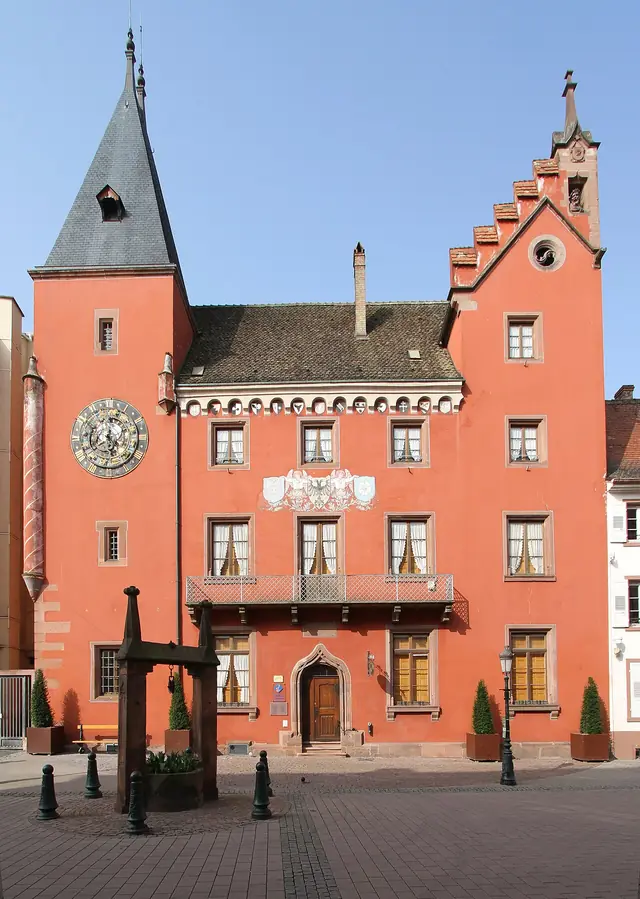
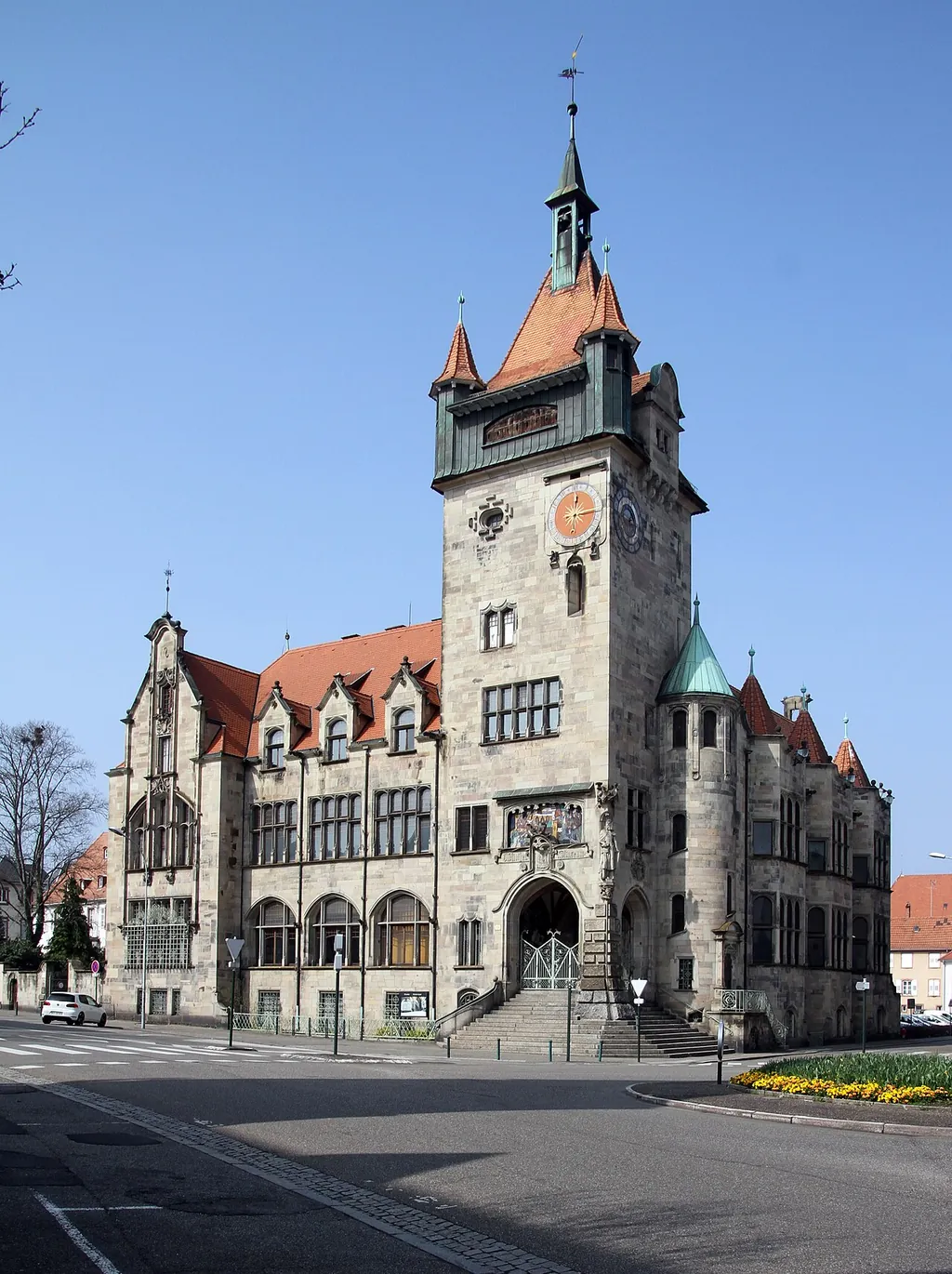
Museum in Haguenau housed in a neo-Renaissance building from 1900–1905, tracing the history of the town and its region from prehistory to the 20th century.
Geen geluid? Controleer de stilschakelaar van je apparaat.
Alleen afzonderlijke secties laten voorlezen
Over het museum
The Musée historique de Haguenau occupies a neo-Renaissance building constructed between 1900 and 1905, which also houses the municipal archives and a library. The entrance hall is decorated with a stained-glass window by Léo Schnug showing Richard the Lionheart before Emperor Henry VI, an encounter that took place in Haguenau in 1193.
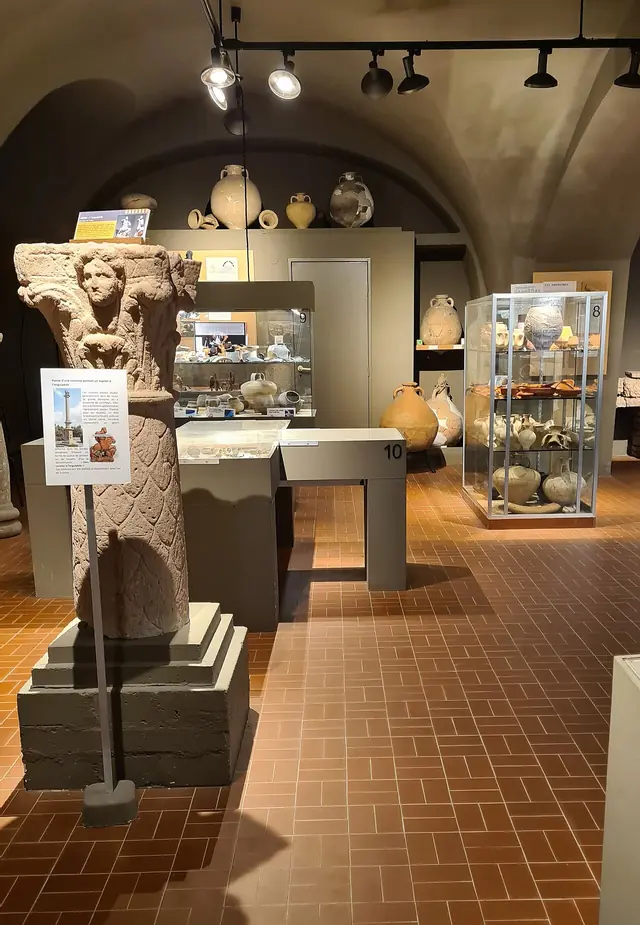
The permanent route presents collections spanning from prehistory to the 20th century. Prehistory is illustrated by Mesolithic and Neolithic tools and by the grave goods from more than 750 Bronze and Iron Age burials in the Haguenau forest. The Roman period is represented by a legionary helmet found at Drusenheim, a statue of Jupiter-Taranis, and the bronze hoard of Seltz.
Several rooms recount the town’s history since its founding in 1115, with medieval stove tiles, a reliquary of the head of Saint John the Baptist, and manuscripts linked to the workshop of Diebolt Lauber. The museum also holds more than eighty Art Nouveau and Art Deco glass objects from the Jean-David Henninger collection, as well as faience from the Hannong family. For its 120th anniversary, the 2025–2026 season is titled “Inventer, réinventer son musée” (roughly: reinventing one’s museum).
Hoogtepunten
- More than 750 Bronze and Iron Age graves from the Haguenau forest
- Roman legionary helmet from Drusenheim and the bronze hoard of Seltz
- Reliquary of Saint John the Baptist and manuscripts from the workshop of Diebolt Lauber
- Art Nouveau and Art Deco glass from the Henninger collection
- Stained-glass window by Léo Schnug in the entrance hall
Vaste collectie
- Parcours permanent – Collections spanning from prehistory to the 20th century: archaeology of the Haguenau forest, Gallo-Roman objects, the town’s history since 1115, and Art Nouveau and Art Deco glass.
- Opgericht
- 1900
- Bezoekers per jaar
- ca. 66.094
Toegangsprijzen & kortingen
| Volwassenen | € 5 |
|---|---|
| Met korting | € 3Teachers, students, job seekers, groups of more than 20 people, and holders of the Gîtes de France Bas-Rhin passport |
| Kinderen & jongeren | gratisgratis t/m 18 jaar · Free admission up to 18 years old. |
| Studenten | € 3 |
| Groepen (vanaf 21 pers.) | € 3 p.p.Reduced rate for groups of more than 20 people. School groups enter free. |
| Combined ticket for the Musée historique and the Musée alsacien (valid 2 days) | € 6Reduced rate €3. |
Free admission for school groups and holders of the Museums Pass. The Musées du Rhin supérieur pass gives access to more than 300 museums and sites in France, Germany and Switzerland. Payment by check, cash or card.
Toegankelijkheid
Het museum heeft hierover geen informatie gepubliceerd.
Kinderen & gezin
Het museum heeft hierover geen informatie gepubliceerd.
Bereikbaarheid & parkeren
Met het openbaar vervoer
Marché aux Grains
Bus line 1, stop Marché aux Grains.
Met de auto
Parkeerplaats aanwezig
Parking behind the museum.
On foot, the museum is about 10 minutes from the train station. It holds the “Accueil Vélo” label.
Route plannenService & horeca
- Museumwinkel
The shop sells books (€1 to €17) and souvenirs such as postcards, magnets, badges and bookmarks.
Evenementen & zaalverhuur
Het museum heeft hierover geen informatie gepubliceerd.
Je bezoek plannen
| Rondleidingen | ja |
|---|---|
| Aanbod voor scholen | ja |
| Goed om te weten | Guided visits for groups by reservation by phone or email. A themed tour or lecture takes place on the fourth Sunday of each month at 15:00. The 2026–2027 school program is for pupils from nursery school to higher education. Self-guided visits are free outside of guided tours. |