Parque de las Ciencias
Interactive science museum with galleries, pavilions, a BioDomo, planetarium and astronomical observatory on a 70,000 m² site in Granada.
Alleen afzonderlijke secties laten voorlezen
Over het museum
The Parque de las Ciencias in Granada is an interactive science museum that opened in May 1995. It is run by a consortium made up of the Regional Government of Andalusia, Granada City Council, the Provincial Council of Granada, the University of Granada and the CSIC. It now occupies some 70,000 m² in the Fígares district and has become one of the city's main tourist attractions.
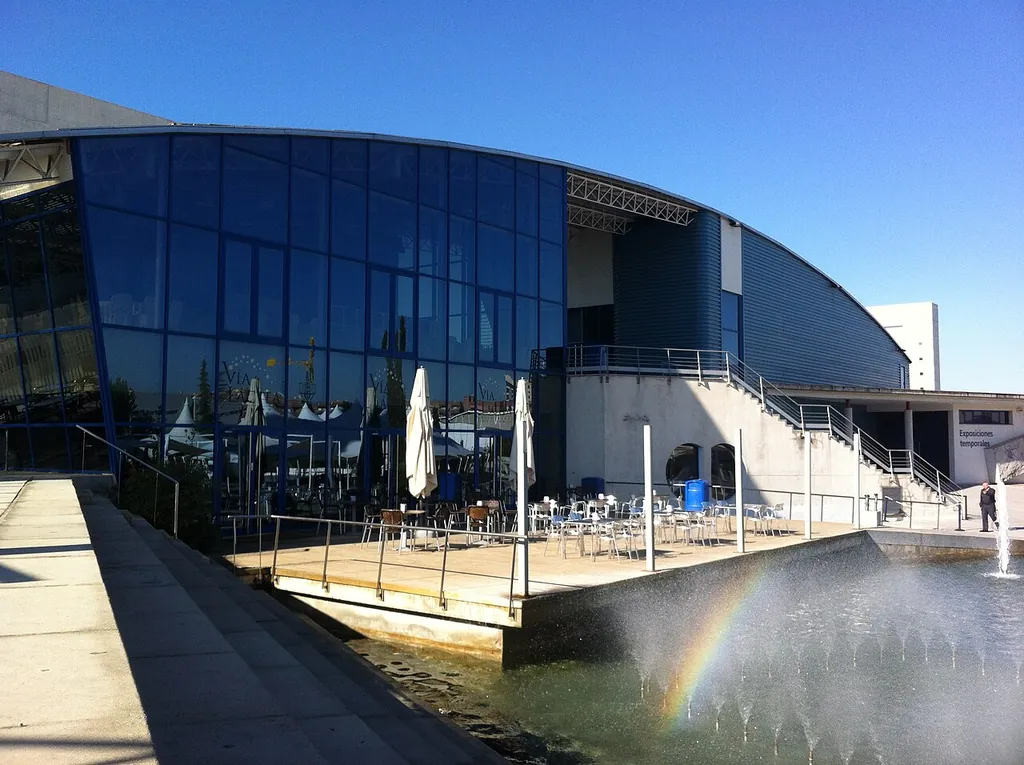
The main building, the Macroscopio, is an extension designed by Carlos Ferrater with Eduardo Jiménez Artacho; its large skylight imitates the profile of the Sierra Nevada. From the entrance hall you reach the permanent and temporary exhibition galleries. The museum is complemented by thematic pavilions such as Viaje al Cuerpo Humano, devoted to health and the life sciences, and the Cultura de la Prevención, which teaches visitors to recognise risks at work and in everyday life through simulators and audiovisual resources.
Other facilities include the BioDomo, a space devoted to biodiversity with environments such as the Indo-Pacific, Madagascar and Amazonia; the planetarium and the astronomical observatory; the observation tower and the tropical butterfly house; and the outdoor areas, with a dolmen, an olive mill and an olive grove. A space for the youngest visitors, Explora, and numerous workshops complete the offer.
Hoogtepunten
- Macroscopio building with interactive galleries and a skylight that imitates Sierra Nevada
- BioDomo with Indo-Pacific, Madagascar and Amazonia environments
- Planetarium and astronomical observatory
- Pavilions Viaje al Cuerpo Humano and Cultura de la Prevención
- Tropical butterfly house and observation tower
- Outdoor spaces with dolmen, olive mill and birds-of-prey area
Vaste collectie
- Museo interactivo de ciencia – Permanent exhibition halls and pavilions in the Macroscopio and Péndulo de Foucault buildings, with themes such as the human body, perception, risk prevention and the biosphere, and outdoor spaces.
- BioDomo – Tour of biodiversity environments, including the Indo-Pacific, Madagascar and Amazonia, with sessions every ten minutes.
- Planetario – Astronomy shows in the planetarium, generally held every hour, and a children's planetarium.
- Opgericht
- 1995
- Beheerder
- Consorcio Parque de las Ciencias
- Directie
- Alfonso Peres Osia
Toegangsprijzen & kortingen
| Volwassenen | € 10 |
|---|---|
| Met korting | € 8Over-65s, under-18s, organised groups of more than 15 people and holders of the Tarjeta Joven (youth card). |
| Kinderen & jongeren | € 8gratis t/m 2 jaar · Reduced rate for under-18s; under-3s enter the museum and the BioDomo free of charge. |
| Senioren | € 8Reduced rate for over-65s. |
| Mensen met een beperking | € 8Reduced admission for people with disabilities, with supporting documentation. |
| Groepen (vanaf 16 pers.) | € 8 p.p.Reduced rate for organised groups of more than 15 people; school rate of €5.50. |
| BioDomo | € 7Reduced rate €6; school rate €3.50. |
| Planetarium | € 3,50Reduced rate €3.50; school rate €2. |
| BioDomo only (the hour before the museum closes) | € 8,50Reduced rate €7.50; school rate €5. |
| Planetarium only (last session) | € 4,50Reduced rate €4; school rate €2. |
| Astronomy Nights | € 9Reduced rate €8. |
| Visit “Otra mirada” | € 3,50 |
| Guided tour | € 2 |
Gratis toegang: Free museum admission for members of the Club Infantil La Banda (ages 0 to 14); does not include the BioDomo or planetarium.
Admission to the museum costs €10 (general) or €8 (reduced); BioDomo and planetarium tickets are paid separately. The BioDomo and planetarium have limited capacity, so it is advisable to check availability and book online. Prices may vary. An annual pass, the Tarjeta Amiga, is also available.
Toegankelijkheid
- Rolstoeltoegankelijk
- Lift
- Aangepast toilet
- Gehandicaptenparkeerplaats
- Hulphonden welkom: geen informatie
- Tastmodellen / voelbare objecten: geen informatie
- Rondleidingen in gebarentaal
- Informatie in eenvoudige taal: geen informatie
- Audiodescriptie: geen informatie
The museum is designed without architectural barriers and most spaces are adapted for wheelchair users; there are two step-free entrances, adapted lifts and accessible toilets in all buildings open to visitors, and the whole BioDomo route is accessible. Reserved spaces are in the underground car park of the Macroscopio. Free induction loops or necklaces are available on prior request, signoguías (guides) in Spanish Sign Language, and adapted visits and workshops on request.
Kinderen & gezin
Erg geschikt voor kinderen & gezinnen
| Toegang kinderen | gratis t/m 2 jaar |
|---|
- Gezinsrondleidingen & workshops
- Doe- en voelstations
The museum is interactive and has a space for the youngest visitors (Explora, ages 3 to 7), a children's planetarium, educational workshops and the Club Infantil La Banda. Under-3s enter the museum and the BioDomo free of charge.
Bereikbaarheid & parkeren
Met het openbaar vervoer
Alcázar del Genil (metro)
City bus: line 5 (Fernando de los Ríos–Parque de las Ciencias), line 11 (Plaza de las Américas), line 21 (Avda. Federico García Lorca–Parque Cruz de Lagos) and line C5 (Alejandro Otero). Metro: Alcázar del Genil stop.
Met de auto
Betaald parkeren
Public car park with reduced rates for visitors; the museum's underground car park, in the Macroscopio building, has spaces reserved for people with disabilities.
- Gehandicaptenparkeerplaats
On foot, the museum is 15 minutes from the historic centre. By car, you arrive via the Camino de Ronda and from the ring road.
Route plannenService & horeca
- Café
- Restaurant
Darwin café (Tuesday to Saturday, 10:00–19:00; Sundays and public holidays, 10:00–15:00) and Vía Láctea restaurant (same hours).
Evenementen & zaalverhuur
Het museum heeft hierover geen informatie gepubliceerd.
Je bezoek plannen
| Rondleidingen | ja |
|---|---|
| Aanbod voor scholen | ja |
| Goed om te weten | The park offers guided tours, educational workshops, special itineraries and school visits adapted by age (for example “Explora” for children aged 3 to 7). |