History of Science Museum
Free Oxford museum of historic scientific instruments in the 1683 Old Ashmolean building, with astrolabes, clocks and Einstein's blackboard.
Alleen afzonderlijke secties laten voorlezen
Over het museum
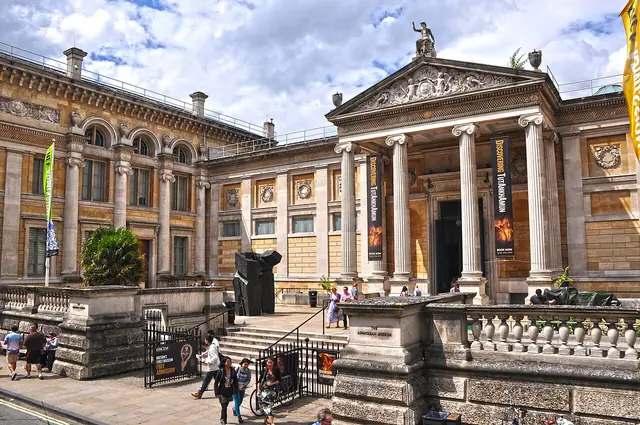
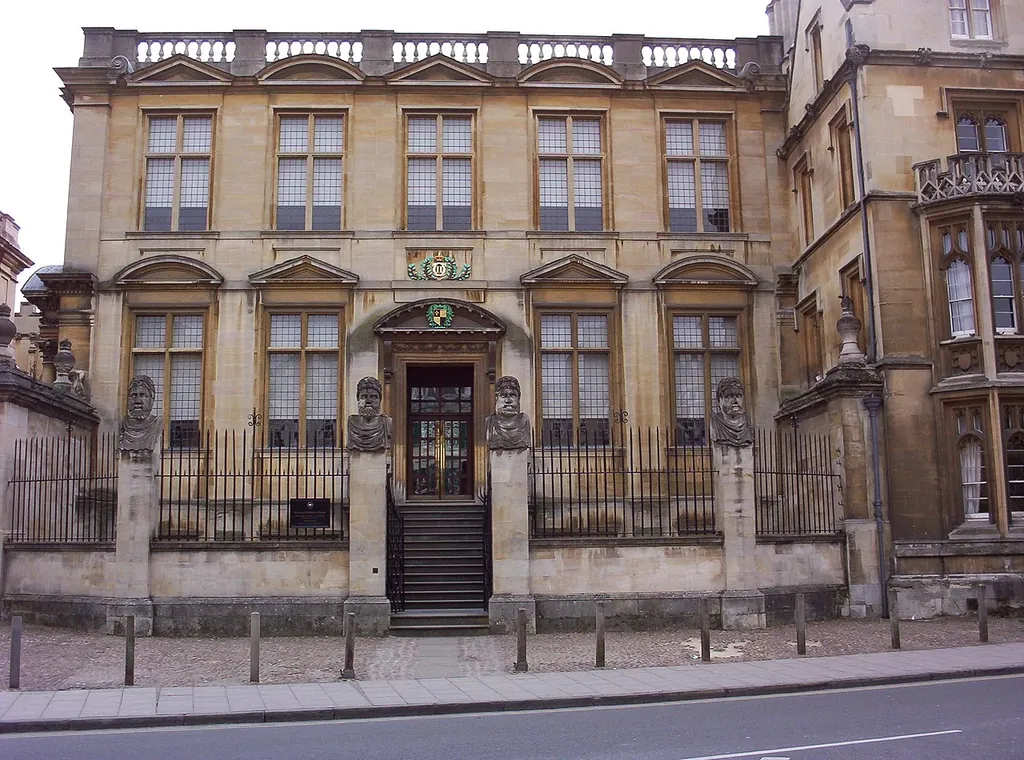
The History of Science Museum occupies the Old Ashmolean building on Broad Street in Oxford, completed in 1683 to house the collection of Elias Ashmole. It is regarded as the oldest surviving purpose-built museum building in the world. The building was planned for public display, lectures and experiments, with a chemical laboratory in the basement.
A newer Ashmolean Museum building was completed in 1894. In 1924 the collector Lewis Evans gave his large group of historic scientific instruments to the University of Oxford, and the old building became their home. Further gifts followed, and in 1935 the institution took the name Museum of the History of Science. It adopted its present name, History of Science Museum, in 2018.
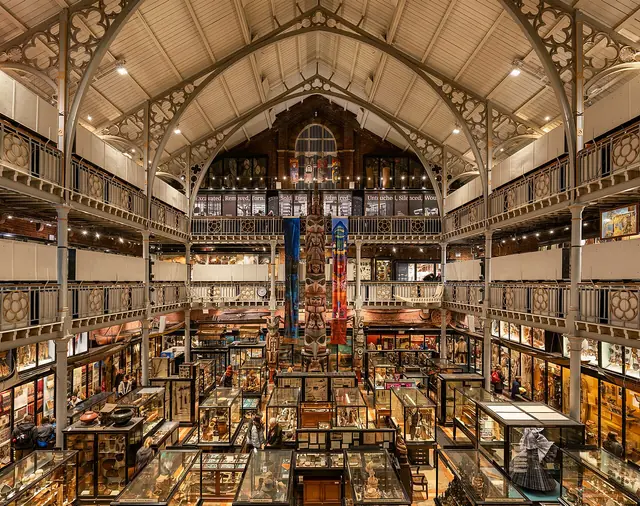
Today the museum holds around 18,000 objects from antiquity to the early 20th century. Its collection of astrolabes is among the most complete in the world, and it also shows sundials, early mathematical instruments, clocks, microscopes, telescopes and medical and chemical equipment. One of its best-known objects is the blackboard that Albert Einstein used for a lecture in Oxford on 16 May 1931. The museum also looks after a collection of early wireless equipment connected with Guglielmo Marconi and runs Multaka-Oxford, a project that works with people who have settled in Oxford, many of them after forced migration. General admission is free.
Hoogtepunten
- Einstein's blackboard from his 1931 Oxford lecture
- One of the most complete astrolabe collections in the world
- Sundials, clocks, microscopes and telescopes from the Middle Ages to the 19th century
- Marconi collection of early wireless equipment
- The Old Ashmolean building of 1683, the oldest surviving purpose-built museum building
Vaste collectie
- Permanent galleries – Historic scientific instruments from the Middle Ages to the 19th century, including astrolabes, sundials, clocks, microscopes and telescopes, shown across the Basement, Entrance and Top galleries.
- Opgericht
- 1683
- Beheerder
- University of Oxford
- Directie
- Silke Ackermann
Toegangsprijzen & kortingen
De toegang is gratis.
| Groepen | £ 3 p.p.Groups, including self-guided visits, must book in advance and pay 3 pounds per person for a self-guided group booking. UK primary and secondary schools and further education colleges visit self-guided groups free of charge. |
|---|
General admission is free and does not need to be booked; donations are welcome. All groups must book in advance and need at least 5 working days' notice.
Toegankelijkheid
- Deels rolstoeltoegankelijk
- Lift: geen informatie
- Aangepast toilet: niet aanwezig
- Gehandicaptenparkeerplaats: geen informatie
- Hulphonden welkom
- Tastmodellen / voelbare objecten: geen informatie
- Rondleidingen in gebarentaal: geen informatie
- Informatie in eenvoudige taal
- Audiodescriptie: geen informatie
The building is historic and the entrance has steps. A lift that gives level access to the Basement Gallery only is temporarily out of order; visitors with mobility impairments can book a dedicated ticket so that staff can arrange access. There are no public toilets in the museum. Only assistance dogs are allowed. An Easy Read Guide, a visitor map and an online access guide are available, and staff can answer questions on +44 1865 277293 or info@hsm.ox.ac.uk.
Kinderen & gezin
Erg geschikt voor kinderen & gezinnen
- Gezinsrondleidingen & workshops
- Speurtocht, doeboekje of kinderaudiotour
- Kinderwagenvriendelijk: niet aanwezig
Free family trails are available during opening hours and can also be downloaded: an animals trail for ages 3 to 7, an Einstein trail for ages 7 and over and a Women in Science trail for ages 7 and over. The museum also holds family events. The lift is not suitable for pushchairs and the museum cannot store buggies, so visitors with buggies must carry them up the steps at the entrance.
Bereikbaarheid & parkeren
Met het openbaar vervoer
Oxford railway station · 15 min. lopen
About 15 minutes' walk from Oxford railway station, where there are also bus stops and a taxi rank, and about 10 minutes' walk from the bus station. Oxford Parkway station is about an hour's walk away, so the museum recommends the Park and Ride bus or a taxi from there.
Met de auto
Geen eigen parkeerplaats bij het museum.
The museum has no car park. Daytime parking in central Oxford is limited and Oxford City Council encourages visitors to use one of the five Park and Ride services. There is pay-and-display parking near the museum in Broad Street, Mansfield Road and Blackhall Road, and the main car and coach park for the city is on Oxpens Road.
The museum is on Broad Street next to the Sheldonian Theatre. Coaches can drop off and pick up in Broad Street; groups in minibuses are advised to use Park and Ride.
Route plannenService & horeca
- Café: niet aanwezig
- Restaurant: niet aanwezig
- Museumwinkel
- Garderobe: niet aanwezig
The museum shop is in the Basement Gallery and sells souvenirs including replica scientific instruments. The museum does not sell food or drink and asks visitors not to bring food or drink apart from bottled water. Cloakroom facilities are not available, so visitors should not bring bulky bags.
Evenementen & zaalverhuur
- Ruimtes te huur
The museum can be hired for filming; enquiries go through an online form.
Aanvragen & detailsJe bezoek plannen
| Aanbod voor scholen | ja |
|---|---|
| Fotograferen | Photography is welcome, but flash is not allowed. |
| Goed om te weten | Individual visitors do not need to book. Groups, including school groups and self-guided groups, must book in advance. A museum map can be opened on a phone, and a visitor map and guide covering the University of Oxford gardens, libraries and museums can be downloaded. Schools can book taught sessions and study days. |