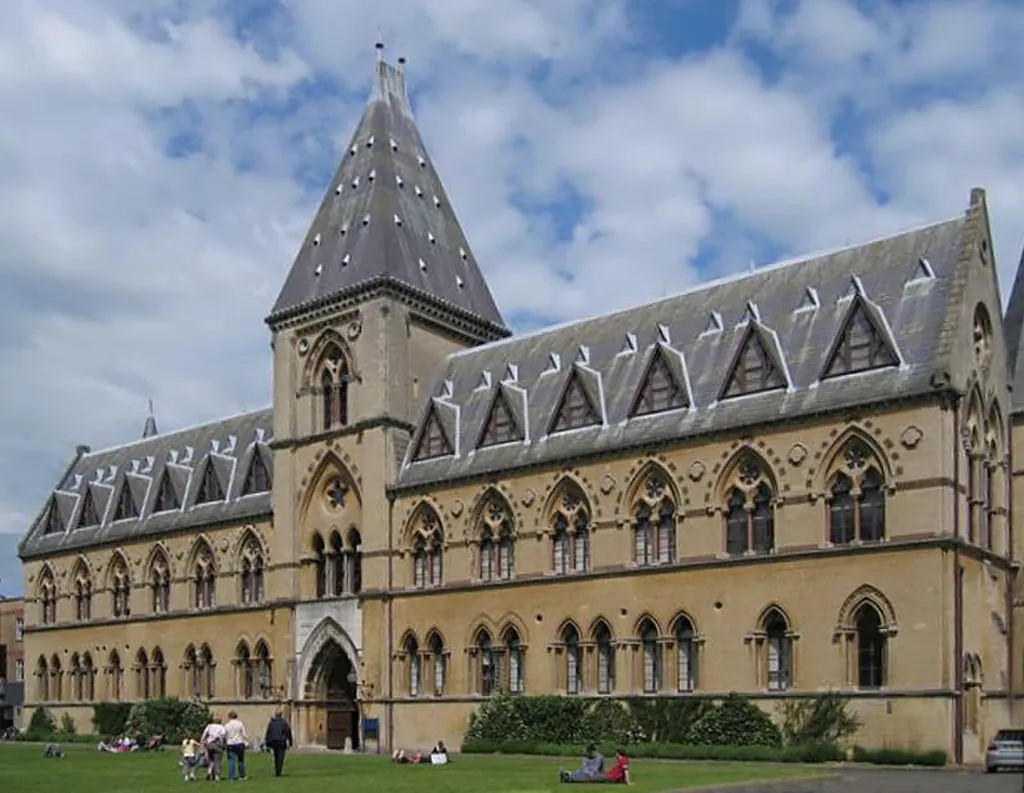
Oxford University Museum of Natural History
Free Victorian Gothic museum in Oxford with the University's natural history collections, from dinosaur and whale skeletons to minerals and gemstones.
Alleen afzonderlijke secties laten voorlezen
Over het museum
The Oxford University Museum of Natural History was built between 1855 and 1860 on the initiative of Henry Acland, the University's Regius Professor of Medicine. At the time, teaching and collections in the natural sciences were scattered across the colleges, and Acland wanted to bring them together under one roof, with a central court surrounded by laboratories and lecture rooms. The Gothic Revival building opened in 1860, and the same year it hosted a famous debate about Darwin's ideas on evolution.
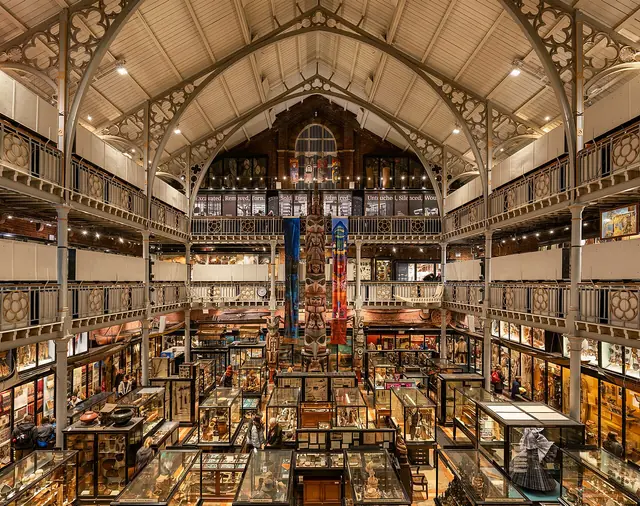
The core of the collection came from the Ashmolean Museum, including specimens gathered by the Tradescant family, and from other Oxford institutions. Over the following decades the science departments moved out to new buildings along South Parks Road, and the last of them left in 1978. In 1885 and 1886 a neighbouring building was added to house the ethnographic collection of General Pitt Rivers, which became the Pitt Rivers Museum; visitors still reach it through this museum.
Today the museum holds more than seven million specimens in zoology, entomology, geology, mineralogy and palaeontology, and it remains a research centre for the University. Its main court, with the cast-iron and glass roof, displays skeletons of dinosaurs and other animals. A long-running re-display project has been renewing the permanent galleries since 2018.
Hoogtepunten
- Whale and dolphin skeletons hanging from the roof of the main court
- Two plesiosaur skeletons in the Out of the Deep display
- Trilobite wall with 450-million-year-old fossils from Morocco
- Nantan meteorite, which visitors can touch
- Gemstone and mineral collection
- Victorian Gothic building with its glass and iron roof
Vaste collectie
- Life, As We Know It – Newly installed permanent displays on biodiversity, evolution and the history of life, including past ecosystems of Oxfordshire.
- Whale skeletons – Five skeletons, including a killer whale, a beluga and a bottlenose dolphin, hang from the roof of the main court.
- Out of the Deep – Two large plesiosaur skeletons from the seas that covered Britain about 165 million years ago.
- Opgericht
- 1860
- Beheerder
- University of Oxford
- Directie
- Gavin Svenson
Toegangsprijzen & kortingen
De toegang is gratis.
| Groepen (vanaf 11 pers.) | –Groups of more than ten people must book in advance, at least 2 days before the visit. A £3 administration fee per person applies to groups, but self-guided school, higher education, further education and non-commercial learning groups are exempt. The maximum is 55 people per booking, and students under 18 need one adult per 10 students. |
|---|
Entry to the museum is free and not ticketed.
Toegankelijkheid
- Rolstoeltoegankelijk
- Lift
- Aangepast toilet
- Gehandicaptenparkeerplaats
- Hulphonden welkom
- Tastmodellen / voelbare objecten
- Rondleidingen in gebarentaal: geen informatie
- Informatie in eenvoudige taal
- Audiodescriptie
A step-free accessible entrance is on the right-hand side of the building as seen from Parks Road, with an automatic door and a lift to the lower ground, ground and first floors; the lift has tactile buttons, audio announcements and a hearing loop. The main entrance has eight steps. A small stair lift links the ground floor with the north lower ground floor. Two manual wheelchairs can be borrowed (no booking). Two Blue Badge spaces are on site. Accessible toilets are on the lower ground floor. A Touch Table with Braille text and raised images and other touchable specimens are on the ground floor. An audio-described guide, a visual guide for autistic visitors, an Easy Read guide and an access and sensory guide are available. Assistance animals are welcome. The shop counter has no hearing loop.
Kinderen & gezin
Erg geschikt voor kinderen & gezinnen
- Gezinsrondleidingen & workshops
- Doe- en voelstations
- Kinderwagenvriendelijk
- Verschoonruimte
The museum describes itself as family friendly, with touchable specimens such as rocks, fossils and bones, family events and downloadable family craft templates. Pushchairs are welcome in the wide aisles, but they cannot be stored. Baby changing is in the south toilets on the lower ground floor.
Bereikbaarheid & parkeren
Met het openbaar vervoer
Keble Road bus stop
Oxford railway station is about a 20-minute walk. From bus stop R4 at the station take bus 500, 14 or 14A for eight stops to Keble Road. Five Park and Ride sites serve the city, with city centre stops within walking distance.
Met de auto
Betaald parkeren · 120 m naar de ingang
There is no general parking at the museum. Two on-site Blue Badge spaces are reached from Parks Road. Short-stay pay and display spaces are on Museum Road, about 120 metres from the accessible entrance, and there are two public Blue Badge spaces on Keble Road about 400 metres away. Other pay and display parking is on Mansfield Road, and the Westgate Shopping Centre has a car park.
- Gehandicaptenparkeerplaats
Traffic filters operate across Oxford, so visitors by car are encouraged to use Park and Ride. Coaches should not stop on Parks Road because of construction work and should use Keble Road for drop-off and pick-up. Bike racks are on Parks Road and beside the Robert Hooke building.
Route plannenService & horeca
- Café
- Museumwinkel
- Garderobe: niet aanwezig
Taylors museum café on the first floor with hot lunches, salads, sandwiches, snacks and drinks, and the Horsebox outside for cakes, snacks and drinks. The museum shop is on the ground floor. There is no cloakroom, so visitors keep their belongings with them.
Evenementen & zaalverhuur
- Ruimtes te huur
- Privéfeesten
- Zakelijke evenementen
Tot 300 personen.
Spaces include the central court, meeting rooms and a lecture theatre with a capacity of 300.
Aanvragen & detailsJe bezoek plannen
| Audiotour | ja |
|---|---|
| Aanbod voor scholen | ja |
| Fotograferen | Non-commercial photography is welcome; tripods need prior arrangement and commercial photography or filming must be requested in advance. |
| Goed om te weten | A free audio guide, usually available online, comes in nine languages. The museum is in the same building as the Pitt Rivers Museum, which is entered through it. School and group visits can include guided or supported sessions. |