Musée d’Estavayer-le-Lac et ses grenouilles
Museum in the house of Humbert le Bâtard in Estavayer-le-Lac with local history and 108 stuffed frogs in human scenes of the 19th century.
Ingen lyd? Tjek lydløs-knappen på din enhed.
Få kun enkelte afsnit læst op
Om museet
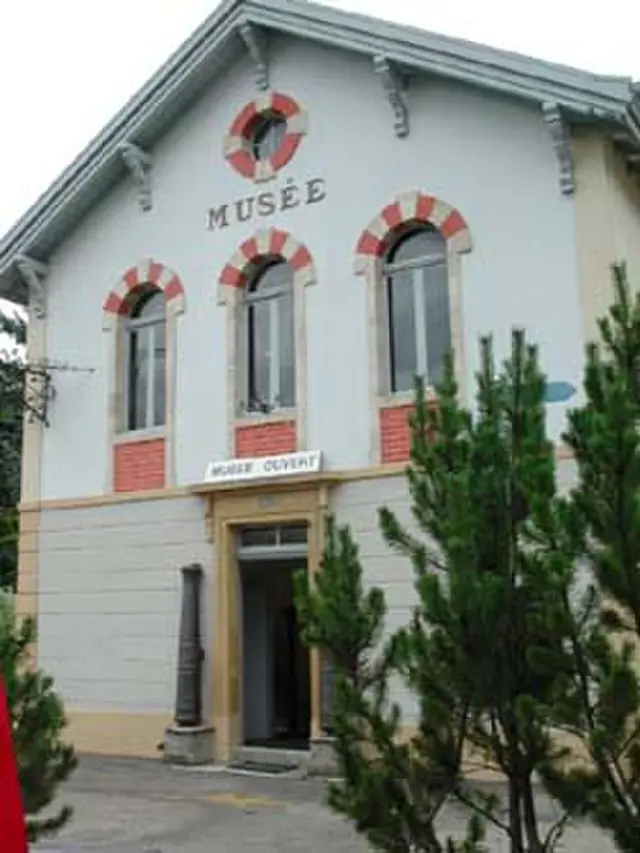
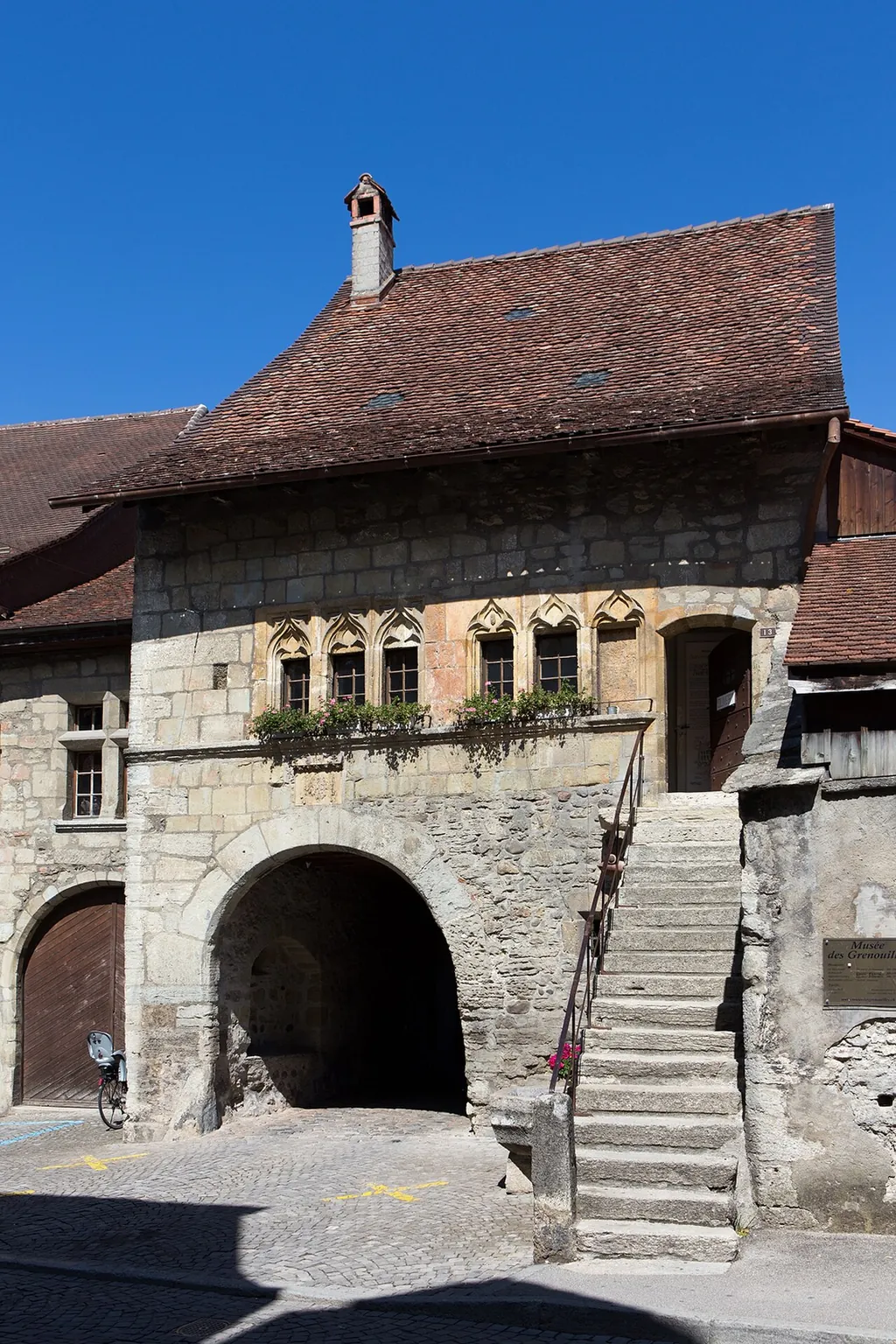
The museum opened in 1927 and was extended in 1941. It stands in the middle of the medieval old town of Estavayer-le-Lac, in the former residence of Humbert le Bâtard. The lord of Estavayer and half-brother of Count Amadeus VIII of Savoy acquired the house in 1406 and lived in it until his death in 1443. The street facade with two triple windows on the upper floor has remained almost unchanged since 1408. Later the building served, among other things, as a school, a granary and a tithe house.
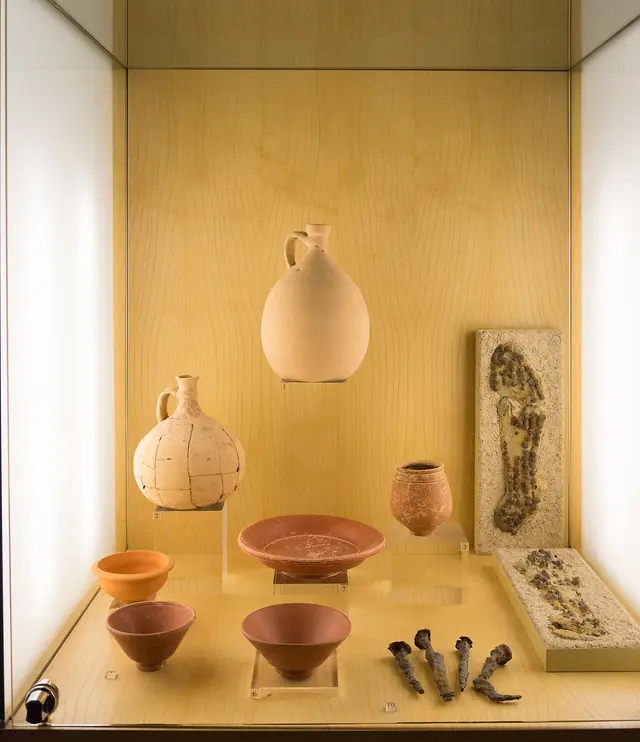
The collections are predominantly local and regional and range from prehistory to the present: weapons and archaeological finds stand for the town's major events, while craft and everyday objects, household items in an old kitchen, farm tools, keys, locks and many stuffed birds show the life of the inhabitants. The exhibition is deliberately kept in the spirit of the late 19th century and thus also conveys an impression of the mentality of that time.
The best-known piece is the group of 108 frogs that Staviacois François Perrier (1813–1860) prepared around 1850 and arranged in humorous human scenes: as soldiers, at the barber's, at school, playing billiards and even at an election banquet.
Højdepunkter
- 108 preserved frogs by François Perrier in 19th-century scenes
- Former residence of Humbert le Bâtard from the 15th century
- Finds and objects from the Neolithic to the present
- Exhibition style and sequence of rooms from the late 19th century
- Activity booklets for children ("À ta hauteur", "Le voyage dans le temps")
Permanente udstillinger
- Die Frösche von François Perrier – 108 frogs preserved around 1850 humorously re-enact scenes of everyday civilian and military life in the 19th century.
- Lokale und regionale Sammlungen – Objects from the Neolithic to the present: weapons, archaeological finds, crafts, kitchen, agriculture and birds in a house from the 15th century.
- Grundlagt
- 1927
Entrépriser & rabatter
| Voksne | 5 CHF |
|---|---|
| Nedsat pris | 4 CHF |
| Børn og unge | 3 CHFgratis til og med 5 år · Children aged 6 and over and students pay CHF 3. |
| Studerende og elever | 3 CHF |
| Grupper (fra 10 pers.) | 4 CHF pr. personFrom 10 people: adults CHF 4 (reduced CHF 3) per person; schools CHF 2 per pupil and accompanying person. |
| Guided tour of the museum (1 hour) | 80 CHFFlat rate, by reservation at musee@estavayer.ch |
| Guided tour of the old town and museum (2 hours) | 150 CHFFlat rate, reservation via the Estavayer-le-Lac tourist office |
Free admission with the Swiss Museum Pass, VMS/AMS and ICOM cards, Raiffeisen, Caritas Culture Card and AG Culturel; the guest card "Be my Guest" is accepted.
Tilgængelighed
Museet har ikke offentliggjort oplysninger om dette.
Børn og familie
Velegnet til børn og familier
| Entré for børn | gratis til og med 5 år |
|---|
- Opgavehæfte, skattejagt eller audioguide for børn
Two downloadable activity booklets guide children through the museum: "À ta hauteur" (objects below one metre in height) and "Le voyage dans le temps" (puzzles around the frog room).
Transport & parkering
Med offentlig transport
Bahnhof Estavayer-le-Lac · 10 min. til fods
Take the train to Estavayer-le-Lac; from the station it is about a 10-minute walk.
I bil
Gratis parkering
Free parking at the Amarante sports hall and at the La Prillaz hall.
By car via the A1, exit Estavayer-le-Lac.
Planlæg ruteService & spisesteder
- Museumsbutik
Museum shop with books, postcards and tote bags. In bad weather, a room with tables, chairs, kitchen and bathroom can be reserved nearby for a picnic (+41 26 664 80 65).
Arrangementer & udlejning
Museet har ikke offentliggjort oplysninger om dette.
Planlæg dit besøg
| Rundvisninger | ja · varighed ca. 60 min. |
|---|---|
| Tilbud til skoler | ja |
| Godt at vide | Tours cover the history of the town from the Neolithic to the Spahis in the Second World War, Humbert le Bâtard and the frogs. Materials for preparing and carrying out the visit are available for school classes. |