Group exhibition based on Olivia Laing's book “Everybody,” in which contemporary artists present the body as a site of social negotiation, vulnerability, and freedom – including Pauline Boudry/Renate Lorenz and EVA & ADELE.
Steel sculpture in the museum garden, created for the exhibition on the Constructivist Marlow Moss; part of the garden's annually changing art intervention.
More than 100 drawings and prints from the collection, including works by Liebermann, Rodin, Renoir, and Sintenis; Kolbe's former studio becomes an open drawing room for visitors.
Major solo exhibition of the Berlin object artist with three large-scale installations, often made from objects found in the city.
Om museet
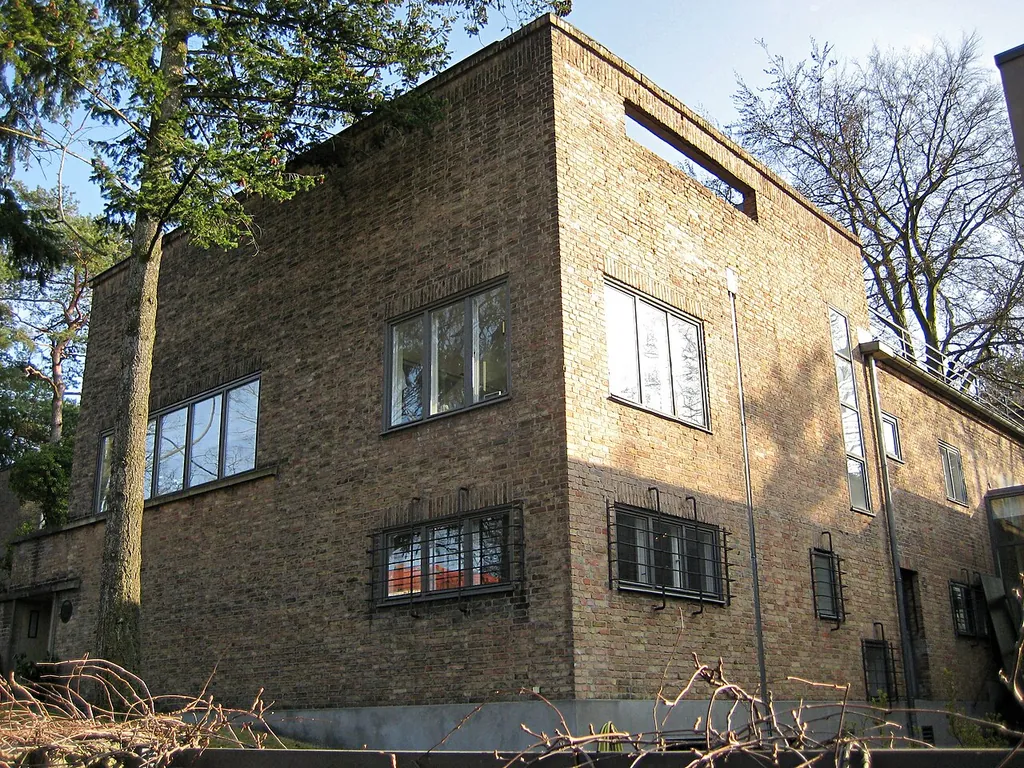
In 1928/29, the sculptor Georg Kolbe (1877–1947) had a house and studio built on Sensburger Allee in Westend, close to the Friedhof Heerstraße cemetery, where his wife Benjamine, who died in 1927, is buried. The cubic brick buildings with large studio windows were designed by the architect Ernst Rentsch, with Kolbe himself heavily involved in the planning; in 1932 a clay studio by the Bauhaus student Paul Linder was added, and later a sculpture courtyard in the garden.
Kolbe had stipulated in his will that his house should pass to a foundation after his death. The Georg Kolbe Museum opened there in 1950 – by its own account the first museum newly founded after the war. The neighboring house, originally built for Kolbe's daughter, was added in the 1970s and today houses Café Benjamine. In 1995, the museum received an extension in place of the clay studio, with additional exhibition rooms, a storage facility, and an elevator. Between 2016 and 2021, the listed ensemble was thoroughly renovated according to historical plans.
The collection comprises sculptures, drawings, and prints by Kolbe, his written and photographic estate, as well as works and estates of other artists of classical modernism, such as Renée Sintenis, Milly Steger, and Emy Roeder. Today the museum combines exhibitions on modernism – with a focus on women sculptors, dance, and photography – with contemporary art. Following its own provenance research, in 2026 the museum returned Kolbe's Tänzerinnen-Brunnen (Dancers' Fountain), cultural property seized as a result of Nazi persecution, to the heirs of its original owner, Heinrich Stahl. The art critics' association AICA named it Museum of the Year 2025.
Højdepunkter
Georg Kolbe's original studio house from 1928/29
Sculpture garden with an art intervention that changes every year
Visible storage “Sammlung in Bewegung” (Collection in Motion) with changing collection displays
Works by modernist women sculptors such as Renée Sintenis and Milly Steger
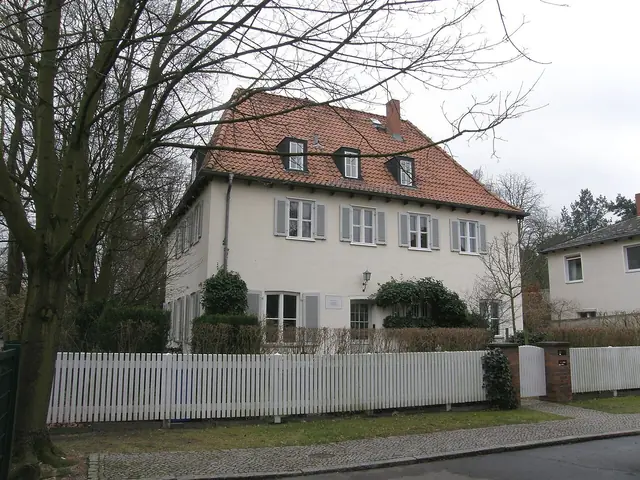
Café Benjamine in the listed neighboring house
AICA award “Museum of the Year 2025”
Permanente udstillinger
Sammlung in Bewegung – Changing displays in the visible storage with works by Georg Kolbe and other modernist sculptors, each related to the current exhibitions.
Grundlagt
1950
Ejer
Georg Kolbe Stiftung
Ledelse
Kathleen Reinhardt
Entrépriser & rabatter
Voksne
10 €
Nedsat pris
6 €School students, university students, people with severe disabilities, artcard holders, members of TheaterGemeinde, Kulturvolk, and Jugend im Museum, as well as city tour guides
Børn og unge
gratisgratis til og med 18 år · Free admission for children and young people “up to 18 years.”
Personer med handicap
6 €ledsager gratis · Reduced admission for people with severe disabilities.
Studerende og elever
6 €Berlin art students get free admission.
Grupper (fra 10 pers.)
6 € pr. personFor booked group tours, each person in groups of 10 or more pays reduced admission, plus a tour fee: weekdays in German €110, weekends/public holidays or in a foreign language €135, Tuesdays or 18:00–20:00 €200. Tours led by your own guide €30 per group plus admission; book at least 2 weeks in advance.
Annual pass
45 €Valid for 12 months from purchase, personalized.
Public guided tour (surcharge)
4 €In addition to admission.
Museumspass Berlin (3 days)
32 €Reduced €16; valid at more than 30 Berlin museums, available at the museum.
Free admission also with the Berechtigungsnachweis (formerly Berlinpass, for low-income residents), the Berlin-Brandenburg volunteer card (Ehrenamtskarte), for press, members of the friends' association, and various professional associations (including ICOM, DMB, BBK).
Tilgængelighed
Kørestolsvenlig
Elevator
Handicaptoilet: ingen oplysninger
Handicapparkering: ingen oplysninger
Servicehunde tilladt: ingen oplysninger
Taktile tilbud
Rundvisninger på tegnsprog
Letlæste tilbud: ingen oplysninger
Synstolkning: ingen oplysninger
According to the museum, accessible to wheelchair users; the 1995 extension provides step-free access by elevator. Since its founding, the museum has regularly offered tactile tours for blind and visually impaired people, as well as tours with German Sign Language interpretation and workshops for people with experience of psychiatric care.
Børn og familie
Velegnet til børn og familier
Entré for børn
gratis til og med 18 år
Familieomvisninger & workshops
Family workshops related to the exhibitions for children ages 4 and up, accompanied by an adult; during school holidays, workshop weeks in cooperation with Jugend im Museum e. V.
Transport & parkering
Med offentlig transport
Bahnhof Heerstraße · 5 min. til fods
S3, S9, and bus M49, X49, X34, 349, and 218 to Bahnhof Heerstraße, then about a 5-minute walk.
Café Benjamine in the neighboring house (organic cuisine with breakfast, cake, and lunch specials, terrace facing the garden), Wed–Mon 10:00–18:00. Museum shop.
Arrangementer & udlejning
Private parties at Café Benjamine can be booked directly with the café (tel. 030 23592503).
Planlæg dit besøg
Rundvisninger
ja
Tilbud til skoler
ja
Godt at vide
Public guided tours on selected Sundays at 14:00. Group tours in German, English, French, Italian, Russian, and Polish on request at least two weeks in advance. Workshops for daycare centers and school classes in cooperation with Jugend im Museum e. V.; teacher training for each exhibition. The exhibition rooms are under video surveillance.