1. januar 2026 – 31. december 2026
Ach du dickes Dino-Ei – oder warum der Oviraptor keine Eier raubte
Small show in the foyer on dinosaur eggs, feathers from the age of dinosaurs and extinct elephant birds, based on new additions to the collection.
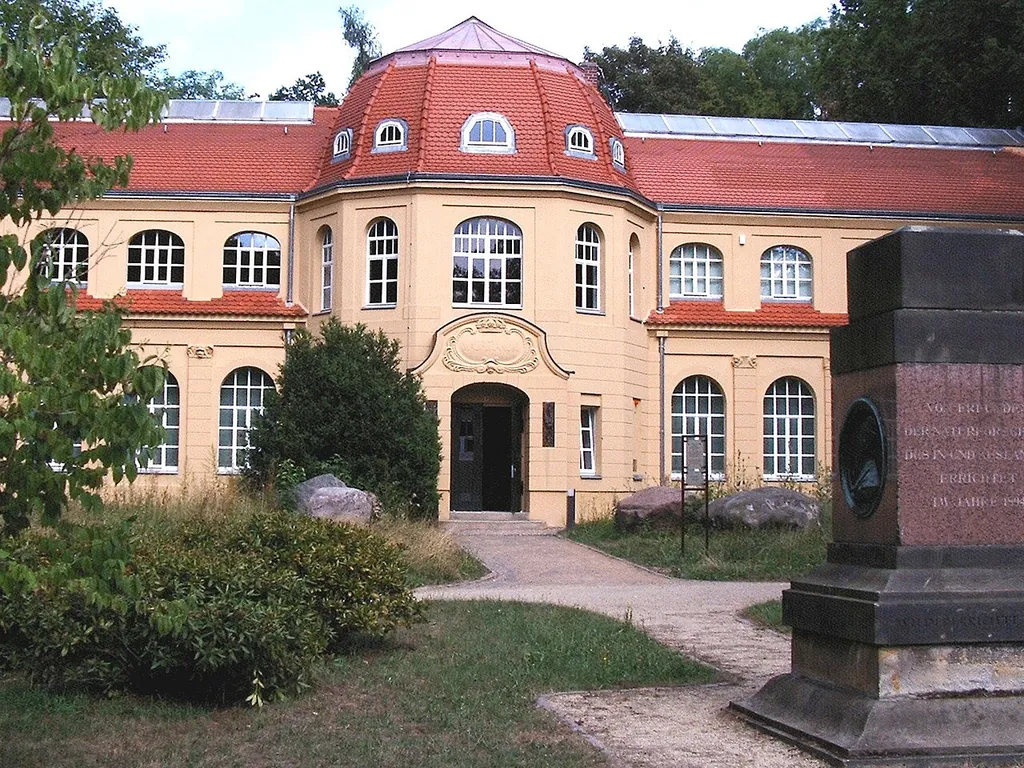
Natural history museum in Altenburg with collections on the geology, fauna and flora of the Osterland region – and the famous Altenburg rat king.
1. januar 2026 – 31. december 2026
Small show in the foyer on dinosaur eggs, feathers from the age of dinosaurs and extinct elephant birds, based on new additions to the collection.
1. januar 2026 – 31. december 2026
The exhibition presents rare insects that find a refuge among the old trees of the palace park.
1. januar 2026 – 31. december 2026
Large herbivores such as the aurochs, European bison and wild horse, and their role in the formation of open landscapes.
1. januar 2026 – 3. november 2026
Letters and drawings from two wars in the same region are juxtaposed.
The Mauritianum is run by the Naturforschende Gesellschaft des Osterlandes (Natural Research Society of the Osterland), which was founded in Altenburg in 1817 and still exists today. Its members included representatives of the Brehm family of naturalists. For a long time, its collections were scattered across various unsuitable rooms in the town.
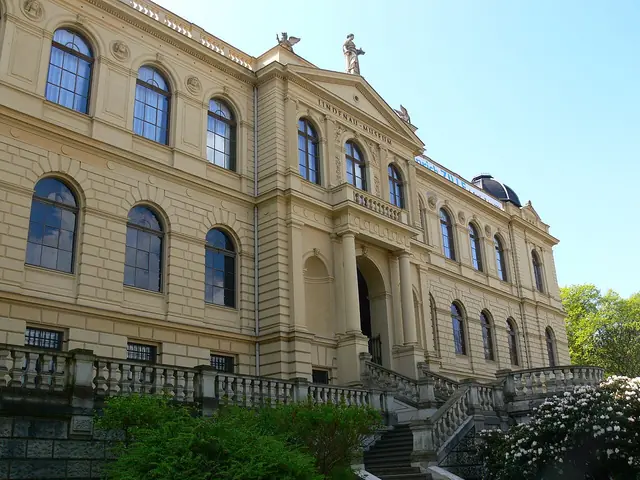
It was not until 1907/08 that a dedicated museum building was erected at the edge of the palace park, to plans by Alfred Wanckel, director of state building works for Saxe-Altenburg, on a plot provided by the ducal family. It was named after Prince Moritz of Saxe-Altenburg, the society's former president. The official opening took place on November 1, 1908.
The building underwent a comprehensive renovation in 2004/05. In 2011, around 1,500 ethnographic objects returned that had been on loan in Wittenberg for decades. Today, the holdings include objects from geology, paleontology, zoology and botany, among them an important bird collection from the 19th and 20th centuries, fossils from the lignite open-pit mines south of Leipzig and an extensive herbarium.
The best-known exhibit is the Altenburg rat king of 1828, a tangle of 32 mummified rats with their tails knotted together. The museum is run by the Naturforschende Gesellschaft Altenburg e. V., which also operates branch sites and teaches natural history to young people through its Kinderkolleg (children's college).
Der er gratis entré.
| Børn og unge | –Free admission for everyone. |
|---|---|
| Pensionister | –Free admission for everyone. |
| Personer med handicap | –Free admission for everyone. |
| Studerende og elever | –Free admission for everyone. |
| Familier | –Free admission for everyone. |
| Kinderkolleg (children's college, per session) | 6 €Monthly courses for children aged 5 and up, registration required |
Admission is free; donations support specimen preparation.
Museet har ikke offentliggjort oplysninger om dette – spørg venligst museet direkte.
Velegnet til børn og familier
Kinderkolleg "Beobachten, Forschen und Experimentieren" (observing, researching, and experimenting): monthly courses from October to June in five age groups (from age 5 to from age 10) with microscopy and small expeditions into the palace park; registration forms in the download area of the website.
Museet har ikke offentliggjort oplysninger om dette – spørg venligst museet direkte.
Museet har ikke offentliggjort oplysninger om dette – spørg venligst museet direkte.
Museet har ikke offentliggjort oplysninger om dette – spørg venligst museet direkte.
Cookies hjælper dig med at bruge websitet. Kort og statistik indlæser vi kun med dit samtykke.