Shows how banned texts were secretly copied and circulated in Czechoslovakia – with a focus on materials, design, and copying techniques; part of the program for the Czech Republic as Guest of Honor at the Frankfurt Book Fair.
History of the postal bicycle since 1896, with historical bikes, uniforms, and a hands-on station.
Om museet
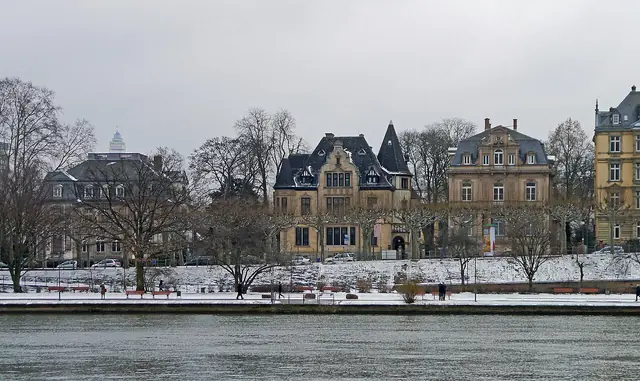
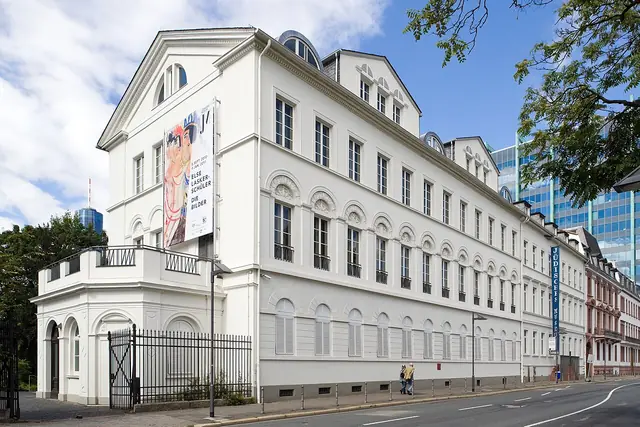
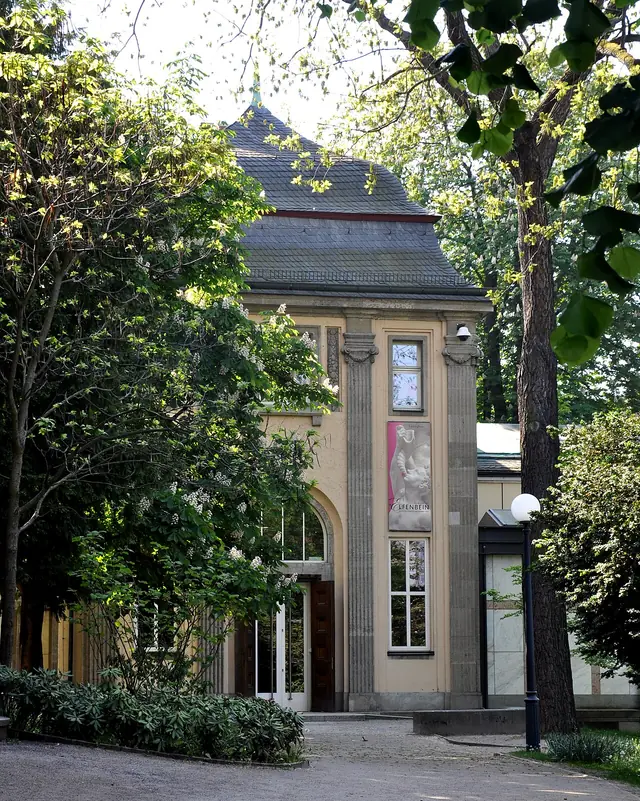
The core of the museum consisted of parts of the collection of the Berlin Reichspostmuseum (Imperial Postal Museum), which had been moved to safety during World War II and brought to Hesse by American soldiers in 1945. From this emerged the Bundespostmuseum (Federal Postal Museum), which opened on January 31, 1958, in the Gründerzeit-era Villa de Neufville on Schaumainkai – one of the first museums on what later became Frankfurt's Museumsufer (Museum Embankment).
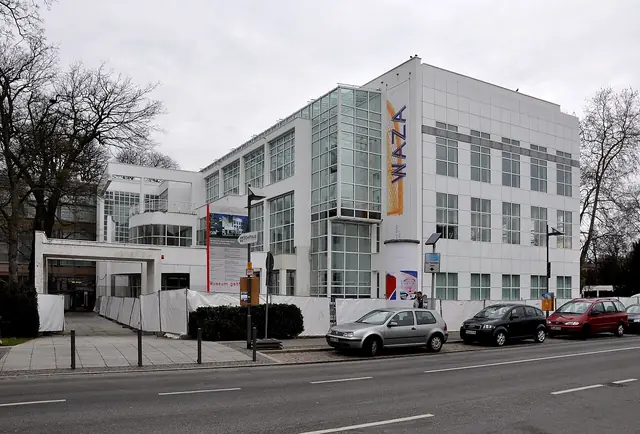
In 1990 a new building by the Stuttgart firm Behnisch & Partner was added. To protect the old trees, the main exhibition spaces are underground; a striking feature is the obliquely cut glass cone above the atrium. The villa now houses the administration and library. With the new building, the institution changed from a postal museum to a museum of communication.
It is run by the Museumsstiftung Post und Telekommunikation, which also includes the Museums for Communication in Berlin and Nuremberg and is supported by Deutsche Post and Deutsche Telekom. The permanent exhibition "Mediengeschichte|n neu erzählt!" presents the development of communication across some 2,500 square meters, organized around the themes of acceleration, networking, control, and participation, including telephones, postal vehicles, and artworks. There are also temporary exhibitions, a children's workshop, and an amateur radio station on the roof. The depot in Heusenstamm holds more than 375,000 objects. The director is Annabelle Hornung.
Højdepunkter
Permanent exhibition "Mediengeschichte|n neu erzählt!" from cuneiform tablets to smart glasses
DAAG postal bus from 1925
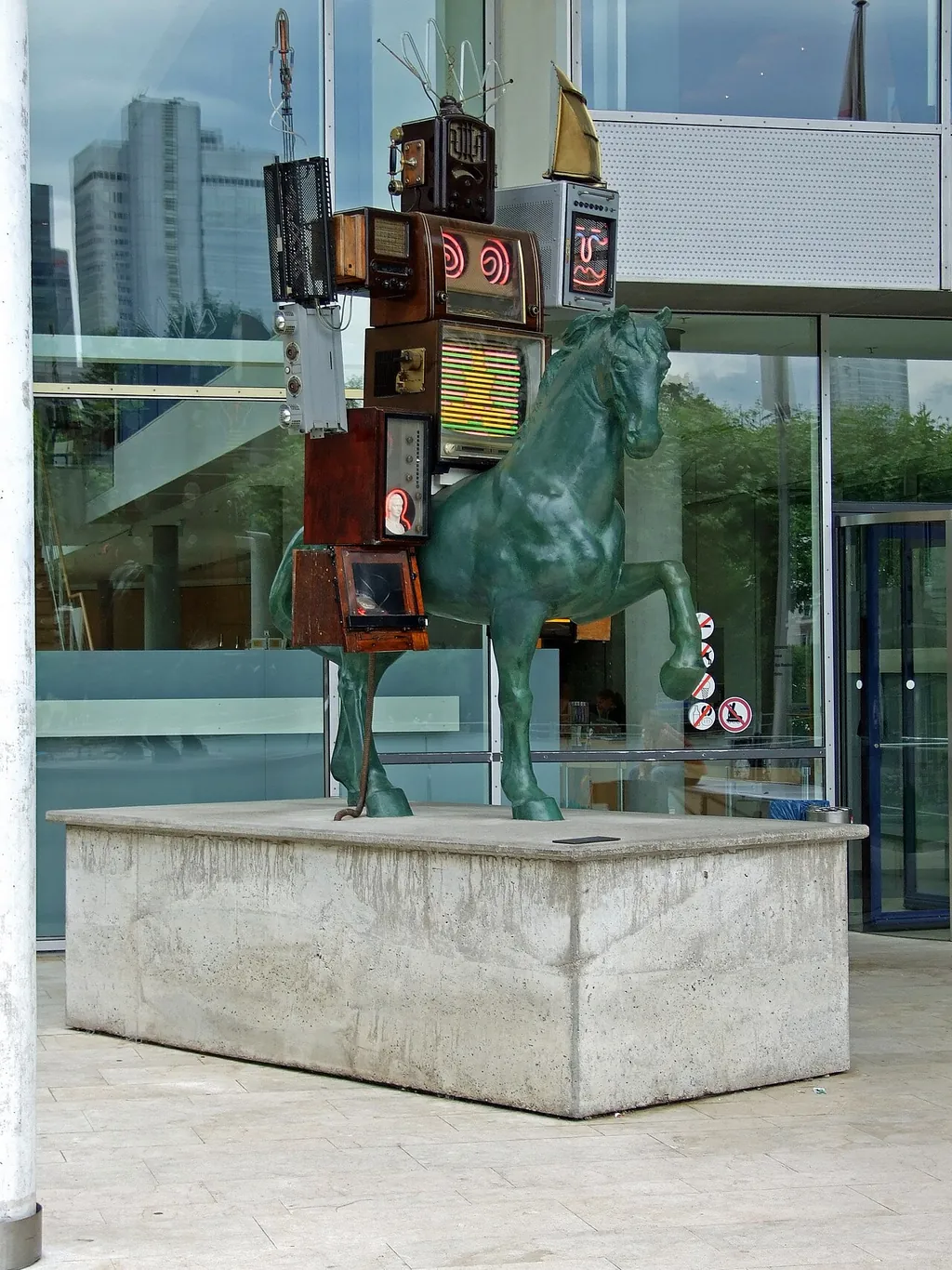
Artworks on communication, including works by Joseph Beuys and Salvador Dalí
Architecture by Behnisch & Partner with glass cone and atrium
Children's workshop and amateur radio station on the roof
Permanente udstillinger
Mediengeschichte|n neu erzählt! – Permanent exhibition on the development of communication through acceleration, networking, control, and participation, complemented by AI islands and the video installation "20+1" on artificial intelligence.
Grundlagt
1955
Ejer
Museumsstiftung Post und Telekommunikation
Ledelse
Annabelle Hornung
Entrépriser & rabatter
Voksne
9 €
Nedsat pris
5 €School pupils, students (not U3L), federal volunteer service participants, the unemployed, holders of the Frankfurt-Pass/Kulturpass and the Hessian Ehrenamts-Card (volunteer card)
Børn og unge
3 €Children and teens aged 6 to 17 €3; no price is given for children under 6. Children under 14 only when accompanied by an adult.
Pensionister
–No senior discount listed.
Personer med handicap
4 €ledsager gratis · €4 with a degree of disability of 50 or higher. Registered companion or necessary assistant admitted free.
Studerende og elever
5 €Reduced with proof (not for students of the Universität des 3. Lebensalters, the university for older adults).
Grupper (fra 10 pers.)
–Book tours and workshops for groups at least six weeks in advance via the online form; a minimum of 10 people is charged. Contact: vermittlung.mfk-frankfurt@mspt.de.
Familier
–No family ticket listed; MuseumsuferTicket for families €32. Further discounts via the FamilienApp Hessen and the Klima-Taler app.
MuseumsuferTicket (2 days, 39 museums)
21 €Reduced €12, families €32.
MuseumsuferCard (annual pass, 39 museums)
89 €Reduced €45, families €150.
Gratis entré:Satourday: free admission for children and teens up to 18 only on the last Saturday of every month (in August on the second-to-last Saturday)
Online tickets via GetYourGuide or at the museum ticket desk. Discounts via the FamilienApp Hessen and the Klima-Taler app (see app for amounts).
Tilgængelighed
Kørestolsvenlig
Elevator
Handicaptoilet
Handicapparkering
Servicehunde tilladt
Taktile tilbud
Rundvisninger på tegnsprog: ingen oplysninger
Letlæste tilbud
Synstolkning: ingen oplysninger
Access via ramp (alternatively a staircase with 9 steps), all levels by elevator with voice announcements. Restrooms, lockers, and first-aid room in the basement. Wheelchair and magnifiers available on loan, assistance animals welcome. Public accessible parking space in front of the building. Tours for people with visual impairments (with tactile objects) and in plain language; assistive listening system for groups. Information in sign language on the website. "Reisen für Alle" assessment reports.
Børn og familie
Velegnet til børn og familier
Familieomvisninger & workshops
Opgavehæfte, skattejagt eller audioguide for børn
Interaktive stationer
Børnefødselsdage
Open children's workshop on Wednesdays, weekends, and during school holidays; monthly family tour on the first Sunday (from age 6); holiday program; digital rally through the permanent exhibition via Actionbound; interactive stations. Children's birthday parties with museum educators. Children under 14 only when accompanied by adults.
Transport & parkering
Med offentlig transport
Schweizer Platz
U1, U2, U3, U8 to Schweizer Platz; from the main train station, U4, U5 to Willy-Brandt-Platz or tram 16 to Otto-Hahn-Platz.
I bil
Public accessible parking space in front of the building; the museum does not mention any other parking options.
Museumscafé Genussfee (during museum opening hours). Museum shop also accessible without admission. Lockers in the basement. Academic reference library by appointment.
Arrangementer & udlejning
Lokaler til leje
Private fester
Firmaarrangementer
Atrium under the glass cone, lecture rooms, and outdoor areas for presentations, conferences, workshops, and celebrations. Contact: event management, tel. +49 69 6060332.
Audio guide via the free Lauschtour app (German, English, French). Public guided tours and workshops according to the calendar; book group offerings at least six weeks in advance. Tours and workshops are usually also available in German and English at simple language levels (A2–B2).