Regional museum at Gutshof Britz: the interactive permanent exhibition “99 × Neukölln” tells the district’s history through 99 objects – free admission.
Temporary exhibition in nine chapters on the political and historical background of the naming and renaming of streets in Neukölln, with a look at current debates and five city neighborhoods.
Om museet
On October 1, 1897, Rixdorf elementary school teacher Emil Fischer opened a natural history school museum in the old schoolhouse on what is now Karl-Marx-Platz. It was meant to provide illustrative material for the children of the rapidly growing working-class town. A friends’ association founded in 1921 helped expand the collection with historical and technical objects; from 1934 the institution operated as a school and local history museum, and in 1936 it was named after its founder. A large part of the holdings was lost during World War II.
From the 1960s, the museum used the former city library on Ganghoferstraße. A new concept in the mid-1980s turned it into a center for social and cultural history research that actively involved local residents in its exhibition projects; in 1987 this earned it the Council of Europe Museum Prize. In 2004 the Heimatmuseum (local history museum) became Museum Neukölln.
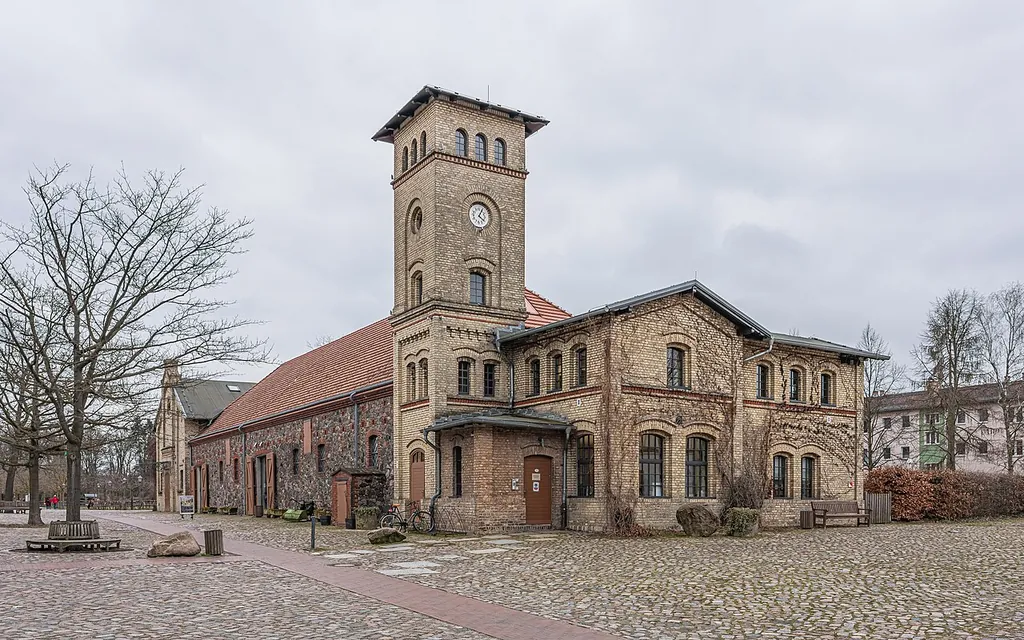
In 2010 the museum moved into the converted former horse and ox stable of Gutshof Britz. On the first floor, the permanent exhibition “99 × Neukölln” presents original objects through media stations with personal stories, photos, films, and audio recordings; the second floor houses the Geschichtsspeicher (history repository) with archive and storage. Since 2022 the museum has also served as the district’s department for urban history and remembrance culture, coordinates the Stolpersteine (memorial stumbling stones) in Neukölln, and shows two temporary exhibitions each year.
Højdepunkter
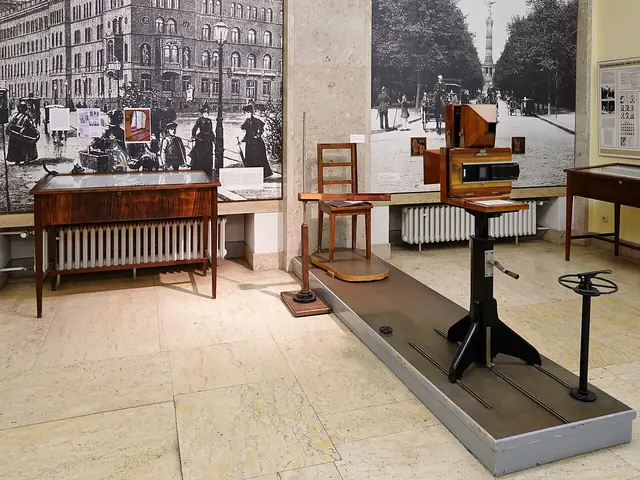
Permanent exhibition “99 × Neukölln” with 99 original objects and media terminals
Quiz on every object and texts in Easy Read German
Geschichtsspeicher with archive and storage (research by appointment)
Setting on the historic Gutshof Britz next to the palace and palace park
Permanente udstillinger
99 × Neukölln – Orientation exhibition that explores the district’s past and present through 99 original objects – with media terminals, stories, films, and a quiz on every piece.
Grundlagt
1897
Ejer
Bezirksamt Neukölln von Berlin (Fachbereich Museum, Stadtgeschichte und Erinnerungskultur)
Ledelse
Matthias Henkel
Entrépriser & rabatter
Der er gratis entré.
Grupper
–Free admission; guided tours of “99 × Neukölln” on request.
Admission to the exhibitions is free; some events may charge a fee.
Tilgængelighed
Kørestolsvenlig
Elevator
Handicaptoilet: ingen oplysninger
Handicapparkering: ingen oplysninger
Servicehunde tilladt: ingen oplysninger
Taktile tilbud
Rundvisninger på tegnsprog: ingen oplysninger
Letlæste tilbud
Synstolkning: ingen oplysninger
Accessible entrance; the exhibition on the first floor is largely step-free, and an elevator leads to the Geschichtsspeicher on the second floor. Introductory texts in Easy Read German are available for all 99 objects; replicas of selected objects are provided for blind and visually impaired visitors.
Børn og familie
Museet har ikke offentliggjort oplysninger om dette – spørg venligst museet direkte.
Transport & parkering
Med offentlig transport
Parchimer Allee (U7)
U7 to Parchimer Allee; bus M46 to Fulhamer Allee, M44 to Britzer Damm/Tempelhofer Weg, 181 to Britzer Damm/Mohriner Allee.
I bil
Parkering muligt
Parking on Parchimer Allee (follow signs for "Gutshof Britz"); from there a few minutes' walk across the Gutshof.
On the grounds of Schloss und Gutshof Britz are the restaurant "Buchholz Gutshof Britz" (Thu–Mon from 12:00) and the Schlossrestaurant (Wed–Sun).
Arrangementer & udlejning
Museet har ikke offentliggjort oplysninger om dette – spørg venligst museet direkte.
Planlæg dit besøg
Rundvisninger
ja
Tilbud til skoler
ja
Godt at vide
Guided tours of “99 × Neukölln” on request (phone 030 902391665). For schools and daycare centers: guided tours, rallies (Richardplatz, Hufeisensiedlung, Gutshof), workshops, and advice; contact the museum educator. Research in the Geschichtsspeicher by advance appointment with the collection management.