Paläontologische Sammlung der Universität Tübingen
University of Tübingen fossil exhibition with marine reptiles, Plateosaurus skeletons, and therapsids in a historic setting – free admission.
Om museet
The Paleontological Collection traces its origins to an 18th-century teaching collection of the University of Tübingen. It gained its great size and scientific importance through Tübingen researchers: in the 19th century, Friedrich August Quenstedt gathered fossils from the Triassic and Jurassic of the Swabian Jura, Friedrich von Huene collected Triassic vertebrates and saurians, Otto Heinrich Schindewolf ammonites, and Adolf Seilacher an important collection of trace fossils. Numerous donated private collections were added as well.
With an estimated one million objects, the collection is one of the largest university collections in Europe. To this day it serves primarily research and teaching; thousands of specimens are scientifically published reference specimens. Part of the finds has been on public display since the early 20th century, today on the upper floor of the geosciences institute building on Sigwartstraße.
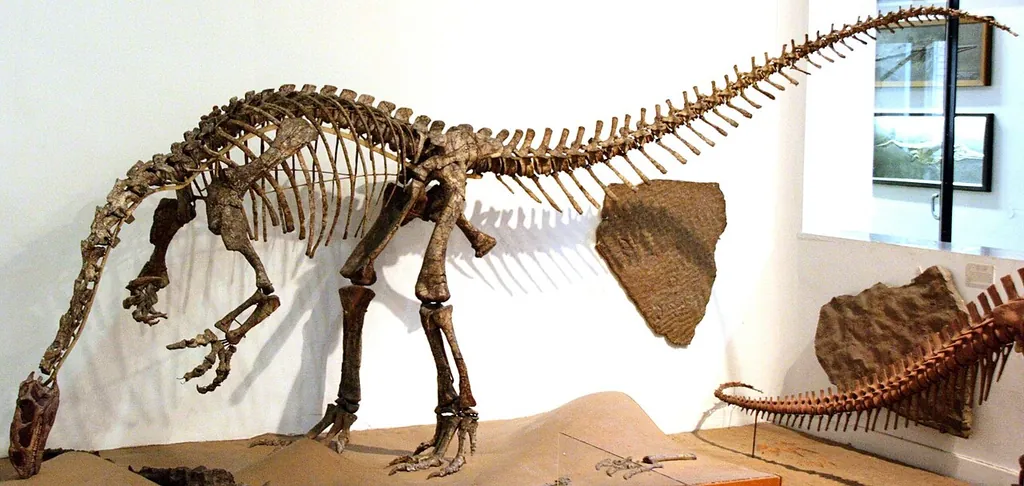
After about a year and a half of renovation and redesign, the exhibition reopened in November 2011, partly prompted by the university’s cooperation with the Senckenberg Society. The presentation deliberately evokes a natural history cabinet from around 1900 and, across several halls, shows marine reptiles from the Posidonia Shale, two skeletons of the Swabian dinosaur Plateosaurus, mammal-like reptiles, cave bears, and an overview of the history of life. Today the collection is part of the network of the Museum der Universität Tübingen (MUT).
Højdepunkter
- Two skeletons of the dinosaur Plateosaurus from Trossingen
- Marine reptiles and the marine crocodile Steneosaurus from Holzmaden
- Important collection of mammal-like reptiles (therapsids)
- Sea lily colony “Schwäbisches Medusenhaupt” (Swabian Medusa head)
- Group of cave bears
- Historicizing presentation in the style of a natural history cabinet
Permanente udstillinger
- Meeresreptilien-Saal – Ichthyosaurs, plesiosaurs, and marine crocodiles, mainly from the Posidonia Shale of the Swabian Jura around Holzmaden.
- Plateosaurus-Saal – Two mounted skeletons of the Triassic plant-eating dinosaur Plateosaurus from Trossingen, accompanied by other vertebrate finds.
- Therapsiden-Saal – Mammal-like reptiles, mainly from the Southern Hemisphere, illustrating the early evolution toward mammals.
- Ejer
- Eberhard Karls Universität Tübingen, Fachbereich Geowissenschaften
Entrépriser & rabatter
Der er gratis entré.
| Børn og unge | –Free admission for everyone. |
|---|---|
| Grupper | –Group and school tours for 10 or more people by appointment (booking via the MUT, tel. 07071 29-77579). |
Free admission; donations welcome at the donation box by the entrance.
Tilgængelighed
- Kørestolsvenlig
- Elevator
- Handicaptoilet: ingen oplysninger
- Handicapparkering: ingen oplysninger
- Servicehunde tilladt: ingen oplysninger
- Taktile tilbud: ingen oplysninger
- Rundvisninger på tegnsprog: ingen oplysninger
- Letlæste tilbud: ingen oplysninger
- Synstolkning: ingen oplysninger
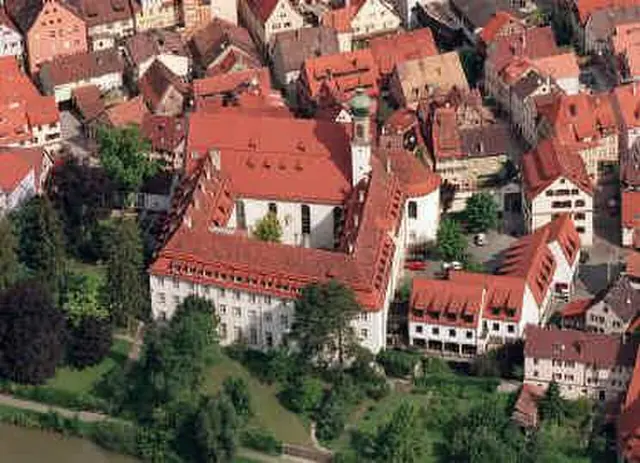
Step-free access via the courtyard (entrance at Hölderlinstraße 12); an elevator leads to the exhibition on the upper floor.
Børn og familie
Museet har ikke offentliggjort oplysninger om dette – spørg venligst museet direkte.
Transport & parkering
Med offentlig transport
Bus to Hölderlinstraße, Uni/Neue Aula, or Mohlstraße (numerous city bus lines); also within walking distance of the train station.
I bil
Parkering muligt
No parking at the collection; parking garages at Brunnenstraße 29 and Wilhelmstraße 31. The courtyard parking lot (access from Hölderlinstraße 12) serves as the step-free access.
Service & spisesteder
- Café: findes ikke
- Restaurant: findes ikke
Arrangementer & udlejning
Museet har ikke offentliggjort oplysninger om dette – spørg venligst museet direkte.
Planlæg dit besøg
| Rundvisninger | ja |
|---|---|
| Tilbud til skoler | ja |
| Fotografering | Permitted for private purposes without flash. |
| Godt at vide | Public guided tours are not currently offered; group and school tours in German or English by appointment. Visits without a guide are possible. The exhibition is on the upper floor of the Institute of Geosciences. |