October 2, 2026 – January 6, 2027
Walter Langhammer. Graz-Indien
The photographer Walter Langhammer travelled through India with his wife Käthe from 1946 to 1956 and documented the young country. The exhibition shows him in a less well-known role.

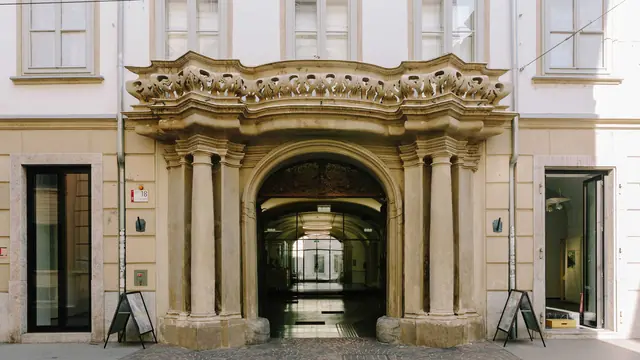
Styrian regional history from the High Middle Ages to the present in the baroque Palais Herberstein on Graz’s Sackstraße – a house of the Joanneum.
October 2, 2026 – January 6, 2027
The photographer Walter Langhammer travelled through India with his wife Käthe from 1946 to 1956 and documented the young country. The exhibition shows him in a less well-known role.
June 19, 2026 – January 6, 2027
The exhibition sheds light on the postwar period in Austria and Styria and connects it with current conflicts and the question of humanitarian aid.
December 12, 2025 – January 6, 2027
Exhibition created together with the kärnten.museum Klagenfurt for the opening of the Koralm railway, on the long-standing connections between Styria and Carinthia.
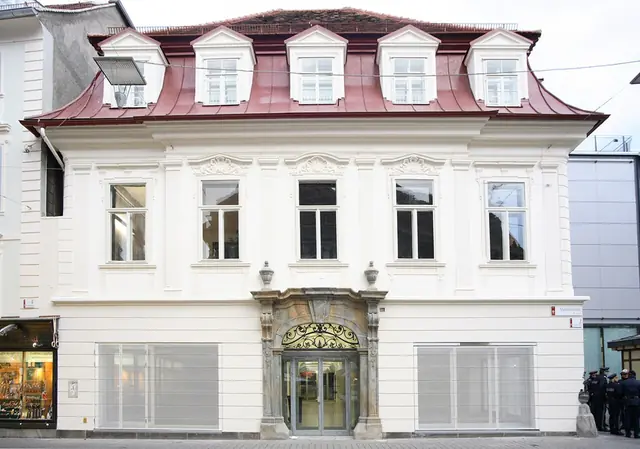
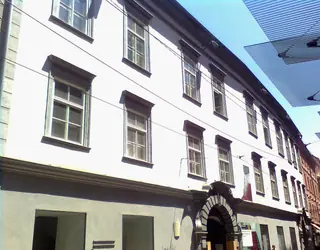
The Palais Herberstein on Sackstraße arose from two 16th-century town houses that the Eggenberg family combined in 1602. Their heirs, the Counts of Herberstein, had the complex extensively rebuilt between 1754 and 1761 by the master builder Joseph Hueber; this phase still shapes its appearance today. Behind the long façade lie several courtyards with arcades and Pawlatschen (open galleries), state and living rooms, and former service areas nestled against the Schloßberg.
In the 19th and early 20th centuries the building was put to very different uses, including as the residence of the Duchess of Berry, as a courthouse and as a dance school. It has served as a museum since 1941: first the Neue Galerie of the Joanneum moved in, which relocated to the Joanneumsviertel in 2011. In the same year the Kulturhistorische Sammlung (Cultural History Collection) came to Sackstraße from Neutorgasse.
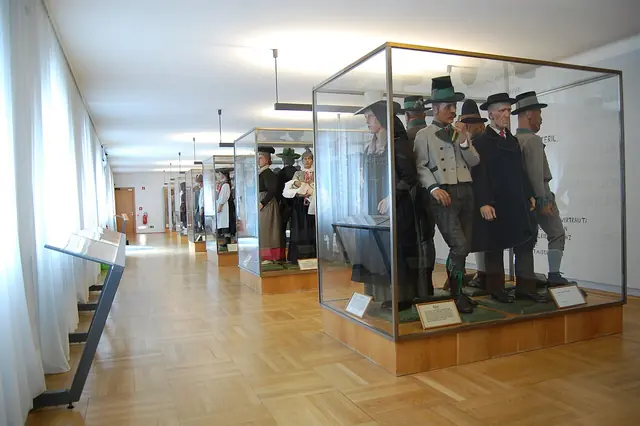
Since 2017 the house has operated as the Museum für Geschichte (Museum of History) of the Universalmuseum Joanneum. It unites the Cultural History Collection with around 35,000 objects and the Multimedia Collections with about three million photos, films and sound documents. The permanent exhibition “100 x Steiermark” has told the story of the region’s development and change in around a hundred episodes since 2017, a visible storage area shows the breadth of the holdings, and since 2022 “Warum?” (Why?) has been devoted to National Socialism in Styria. Among the best-known pieces is the Styrian Ducal Hat. Light installations by Brigitte Kowanz add contemporary accents to the historic building.
| Adults | €11 |
|---|---|
| Reduced | €9Seniors, people with disabilities, groups of 12 or more |
| Children & teens | €2.50free up to age 5 · Children and young people from 6 to 18 years |
| Seniors | €9 |
| Visitors with disabilities | €9For groups from social institutions, accompanying persons are free for admission and tour. |
| Students & apprentices | €5.50Students, apprentices, military and civilian service participants aged 19 to 25 |
| Groups (12+ people) | €9 per personPrice per person; student groups and groups from social institutions €2.50; tour fee for registered groups of up to 25 people €55 |
| Families | €22Two adults with a maximum of two children under 14 |
| 24-hour ticket (all Joanneum museums) | €20Reduced €17, ages 6–18 €5, ages 19–25 €10, family €40 |
| 48-hour ticket (all Joanneum museums) | €26Reduced €22, ages 6–18 €6.50, ages 19–25 €13, family €52 |
| Annual ticket Universalmuseum Joanneum | €32Ages 6–18 €8, ages 19–25 €16 |
| Guided tour | €4In addition to admission |
| Audio guide/multimedia guide | €3 |
Free admission: National Holiday (26 October): free admission
The ticket is valid for one admission on one calendar day. Free admission with the cultural pass “Hunger auf Kunst & Kultur”; Graz Card and GenussCard are valid. Reductions, among others, with the Bühnen Graz Card; Drei KulturSonntag: two tickets for the price of one on Sundays.
Level entrance from Sackstraße to the ticket desk; the upper floors can be reached step-free via the large gate and by lift; accessible toilets on the 1st and 2nd floors. The red carpet is somewhat wobbly because of its substructure. In the permanent exhibition on the 2nd floor, one passage near the end is too narrow for electric wheelchairs – but the exhibition can be seen in full from the other side. Wheelchair loan free of charge at the ticket desk (against photo ID). Tours for blind and visually impaired people with tactile elements, as well as in Easy Language, on request (inklusion@museum-joanneum.at).
Great for kids & families
| Kids’ admission | free up to age 5 |
|---|---|
| Family ticket | €22 · Two adults with a maximum of two children under 14 |
Regular family tours for young and old on Sunday afternoons (dates in the calendar); programmes for school classes and kindergarten groups.
Schloßbergplatz – Murinsel
Tram lines 3 and 5 to Schloßbergplatz – Murinsel, then on foot towards Hauptplatz; or lines 1, 3, 4, 5, 6 and 7 to Hauptplatz – Grazer Congress, then towards Schloßbergplatz
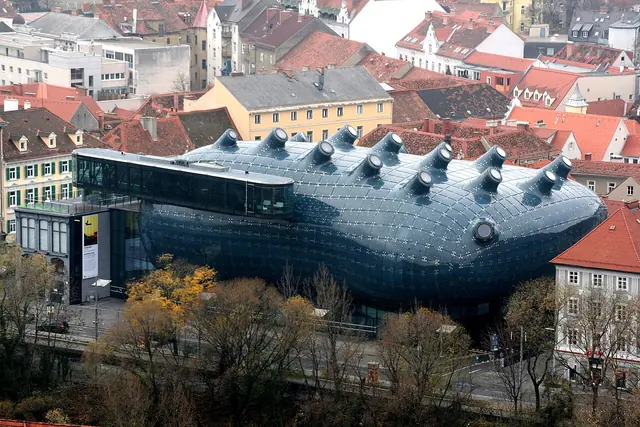
Car park beneath the Kunsthaus Graz (entrance Lendkai) and other car parks in the city centre, a few minutes’ walk away.
The museum hasn’t published any information on this.
| Guided tours | yes |
|---|---|
| Audio guide | yes |
| School programs | yes |
| Good to know | Regular tours of the exhibitions without registration; dates in the calendar. Request tours and workshops for groups at least one week in advance (+43 316 8017 9800). Groups and school classes with a tour are also possible on Tuesdays by registration. The exhibition “Warum?” is aimed especially at young people aged 13 and over. |
Loading experiences …