Museum voor Dierkunde
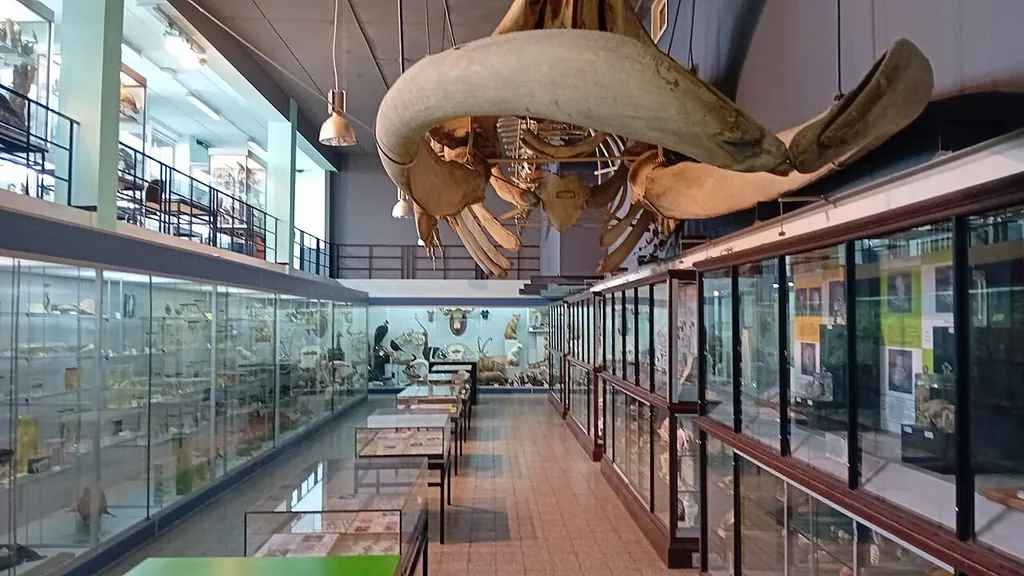
Free zoological museum of KU Leuven in the Koningscollege with around 5,000 mounted animals and skeletons, including a Greenland whale.
Have only individual sections read aloud
About the museum
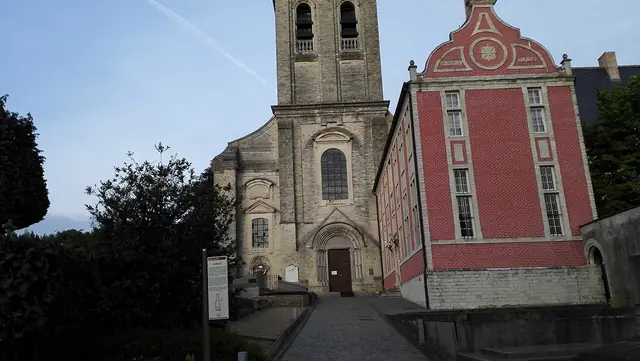
The Museum voor Dierkunde is the zoological collection of KU Leuven and is housed in the Koningscollege, which Philip II had founded in 1579 as a residence for students preparing for the priesthood. When the university restarted as a state university in 1817, a first animal collection came into being in the Cabinet for Natural History, with purchases from England, France and Germany.
A major expansion came under Professor Pierre-Joseph Van Beneden, who lived in the college from 1851 and mainly collected marine mammals. Later, Gustave Gilson and Henri Koch, among others, added material from places including Roscoff, Naples, the Fiji Islands and Scandinavia. Even before the First World War, a new museum room was needed.
During an air raid on 11 and 12 May 1944, a large part of the collection was lost and the building was damaged. After the university was split in 1970, what remained was divided between KU Leuven and its French-speaking sister university in Louvain-la-Neuve; around 5,000 pieces stayed in Leuven. Since then the collection has grown again through study trips and donations, including African animal species and a large donation of European birds from the Pas family from Rijkevorsel.
Today the museum shows preserved animals and skeletons from sponges to mammals. It is free for everyone to visit.
Highlights
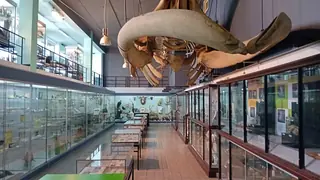
- Skeleton of a Greenland whale, bought by Van Beneden in 1867 and spared in the 1944 bombing
- Coelacanth, a living fossil that was believed to be extinct until 1938
- Stuffed passenger pigeon and other recently extinct birds, such as the Carolina parakeet
- Life-size dinosaur models from 1853-1855, designed by Richard Owen (Iguanodon and Megalosaurus)
- Systematic display of the animal kingdom from sponges to mammals, with an extensive shell collection
Permanent exhibitions
- Het dierenrijk van sponzen tot zoogdieren – A systematic display shows the diversity of the animal kingdom, with mounted animals, skeletons, a large shell collection and highlights such as the whale skeleton and the coelacanth.
- Dinosauriërmodellen uit de 19de eeuw – The life-size models of Iguanodon and Megalosaurus from the mid-19th century show how scientists at the time viewed these animals.
- Founded
- 1817
- Operated by
- KU Leuven, Departement Biologie
Admission & discounts
Admission is free.
| Guided tour for groups of more than 15 people (1 hour) | €2per person |
|---|---|
| Guided tour for groups of fewer than 15 people (1 hour) | €30per group |
The museum is free for everyone. Only a guided tour for groups costs something.
Accessibility
- Wheelchair accessible
- Elevator
- Accessible restroom: no information
- Accessible parking: no information
- Service dogs welcome: no information
- Tactile models & exhibits: no information
- Sign language tours: no information
- Easy-to-read materials: no information
- Audio description: no information
The museum is accessible to wheelchair users and the building has a lift. The toilets are on the second and third floors.
Kids & families
The museum hasn’t published any information on this.
Getting there & parking
By public transit
Station Leuven
The nearest railway station is Leuven station.
Amenities & dining
The museum hasn’t published any information on this.
Events & venue rental
The museum hasn’t published any information on this.
Plan your visit
| Guided tours | yes · approx. 60 min |
|---|---|
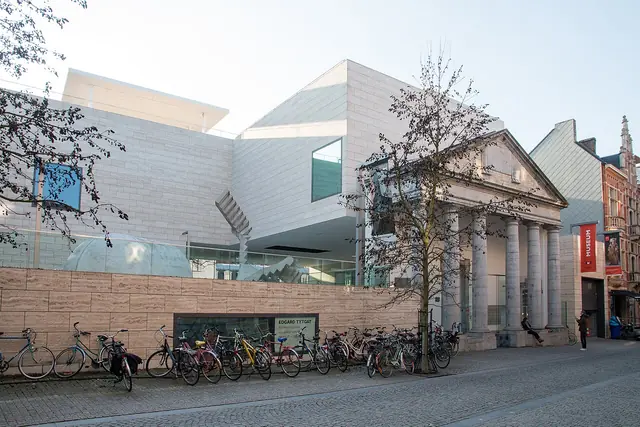
| Good to know | Groups can visit the museum independently for free during opening hours and register in advance via the reservation form. A guided tour must be requested at least one month in advance; the guide covers the history of the museum and the various animal groups, with evolution as a common thread. The entrance is the white door next to the bicycle parking. |