Dúvugarðar í Saksun
An open-air museum and leasehold farm in Saksun, with buildings that are 200 years old or younger.
Have only individual sections read aloud
About the museum
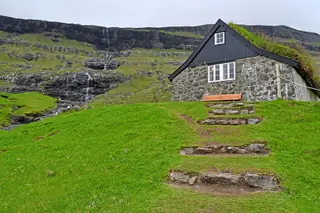
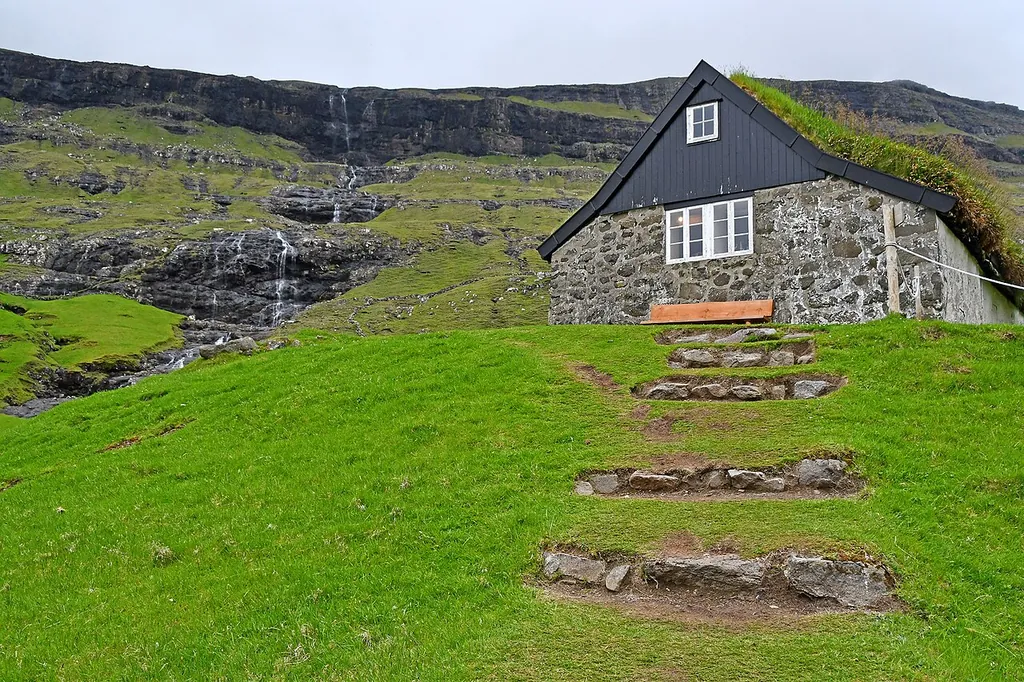
Dúvugarðar in Saksun is an open-air museum and a leasehold farm in beautiful, dramatic scenery. The farm is assessed at 10 merkur and 8 skinn and has carried around 300 sheep. The buildings, which are 200 years old or younger, are the open-air museum of the National Museum of the Faroe Islands.
The buildings were erected in several stages. The building to the west of the glass room dates from around 1750; it was privately owned and not part of the farm, and it housed the old couple when the younger generation took over. The interior of the smoke room dates from around 1820, but an older smoke room stood on the same spot. When the church in Saksun was built in the 1850s, the Priest's House was built to the north; it was privately owned and housed the priest when he was in Saksun. The glass room dates from around 1900 and replaced an older one; it was used only for guests, Sundays and holidays. The building to the west was rebuilt and renovated in 1939.
The smoke room was the centre of everyday life, where all the indoor work took place, with kettles, wool tools and other implements. People sat on benches or on the floor and ate from a trough. The byre had room for six cows and a calf, and three horses lived outdoors all year round.
Highlights
- Smoke room with interior from around 1820
- Glass room from around 1900 and Priest's House from the 1850s
- Byre with room for six cows and a calf
- Open-air museum in beautiful scenery in Saksun
Permanent exhibition
- Dúvugarðar – útisavn – Smoke room, glass room, Priest's House and byre in a farm complex with buildings that are 200 years old or younger.
- Operated by
- Tjóðsavnið
Admission & discounts
The museum hasn’t published any information on this.
Accessibility
The museum hasn’t published any information on this.
Kids & families
The museum hasn’t published any information on this.
Getting there & parking
The museum hasn’t published any information on this.
Amenities & dining
The museum hasn’t published any information on this.
Events & venue rental
The museum hasn’t published any information on this.