Musée Curie
Museum in the former Radium Institute, with Marie Curie’s office and laboratory; free entry from Wednesday to Saturday.
No sound? Check your device’s silent switch.
Have only individual sections read aloud
About the museum
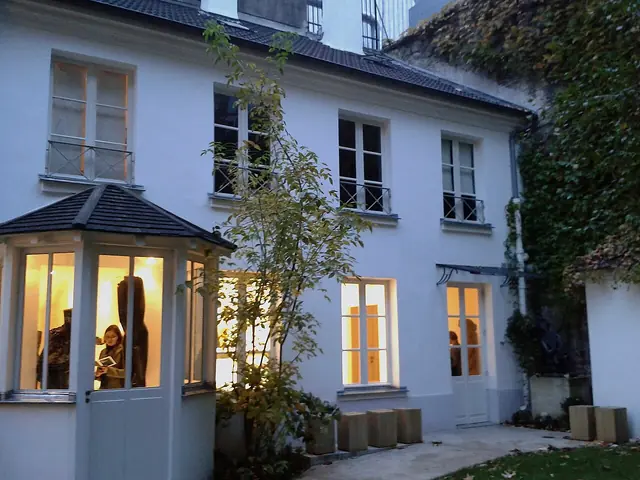
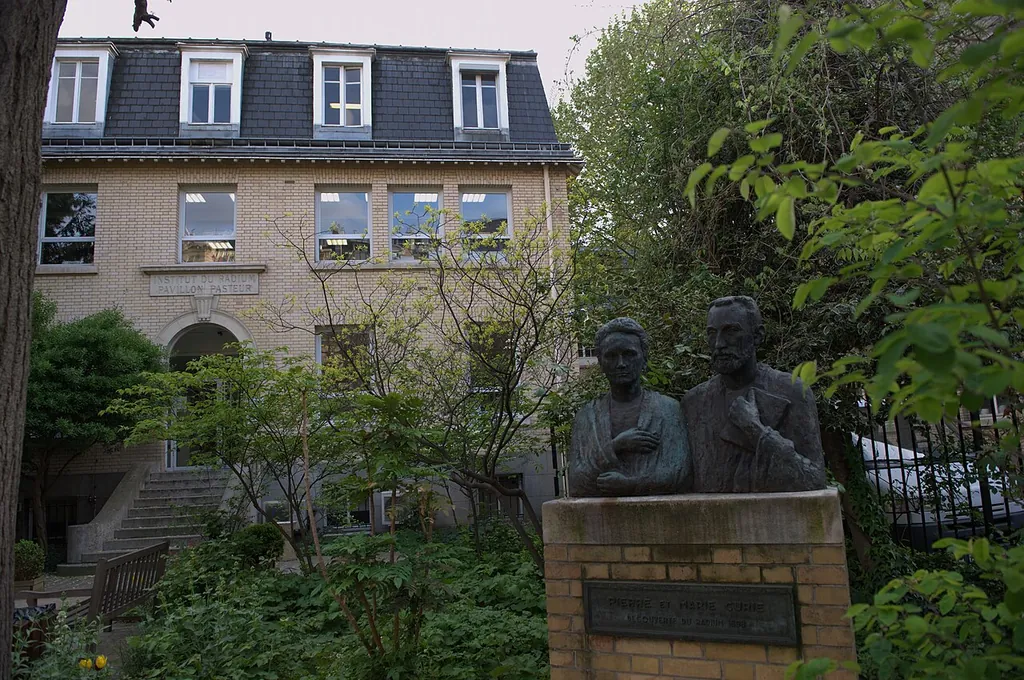
The Radium Institute opened in July 1914 in Paris with two buildings: the Pasteur pavilion, devoted to biological and medical applications, and the Curie pavilion, directed by Marie Curie, where her research laboratory on radioactivity was located. It was in this laboratory that Irène and Frédéric Joliot-Curie discovered artificial radioactivity in 1934.
After Frédéric Joliot-Curie’s death in 1958, the office and laboratory were closed and preserved as a memorial site. The chemistry laboratory was decontaminated and reconstructed in 1981. The museum was set up in the early 1990s and now occupies the ground floor of the Curie pavilion, designed by the architect Henri-Paul Nénot; it is jointly managed by the CNRS and the Institut Curie. A renovation funded by a bequest from Ève Curie was completed in 2012.
The route presents Marie Curie’s office and chemistry laboratory, scientific instruments used roughly between 1910 and 1960, and archives on the Curie and Joliot-Curie families. It covers four themes: the family of five Nobel Prize winners, radium between myth and reality, the Curie laboratory, and the first medical applications of radioactivity. The neighbouring garden was created by Marie Curie.
Highlights
- Marie Curie’s preserved office
- Marie Curie’s chemistry laboratory
- Scientific instruments of the Radium Institute
- Route on the family of five Nobel laureates and on radium
- Marie Curie Garden
Permanent exhibitions
- Bureau et laboratoire de Marie Curie – Visit to the office and chemistry laboratory where Marie Curie worked for twenty years from 1914.
- Exposition permanente – Four themes: the family of five Nobel laureates, radium between myth and reality, the Curie laboratory, the Curie Foundation and the fight against cancer.
- Founded
- 1995
- Operated by
- CNRS et Institut Curie
Admission & discounts
Admission is free.
Entry and activities are free for everyone; donations are welcome on site or online.
Accessibility
- Partially wheelchair accessible
- Elevator: no information
- Accessible restroom: not available
- Accessible parking
- Service dogs welcome
- Tactile models & exhibits: no information
- Sign language tours
- Easy-to-read materials: no information
- Audio description: no information
Five steps lead to the entrance door; a lift can be reached through a neighbouring entrance. The exhibition rooms are on one level, but the historic rooms and zone C1 to C8 are not accessible. There are no adapted toilets on site; adapted public toilets are nearby. Priority access for people with disabilities and their companion; free folding seats. Guided tours in French Sign Language.
Kids & families
| Time needed | approx. 50 min |
|---|
Getting there & parking
By public transit
Place Monge
RER B, Luxembourg station; metro line 7 (Place Monge) or line 10 (Cardinal Lemoine); buses 21, 24, 27, 38, 75, 82, 84 and 89.
By car
- Accessible parking
5 minutes’ walk from the Panthéon. Vélib’ stations Estrapade–Ulm and Gay-Lussac–Saint-Jacques; bike parking in front of the museum.
Get directionsAmenities & dining
- Museum shop
- Coat check
Bookshop and shop, free drawer-cloakroom, folding seats. Benches are placed in the Marie Curie garden.
Events & venue rental
The museum hasn’t published any information on this.
Plan your visit
| Guided tours | yes · approx. 60 min |
|---|---|
| School programs | yes |
| Photography | Photography without flash or selfie stick. |
| Good to know | Free guided tours in French on the first and fourth Saturday of each month at 13:00 since September 5, 2026, recommended from age 15, with online booking; English-language tours are not currently offered. Groups of 10 people or more are admitted only with a booking. Reception and texts are in French and English. Animals are not allowed, except guide dogs and assistance dogs. |