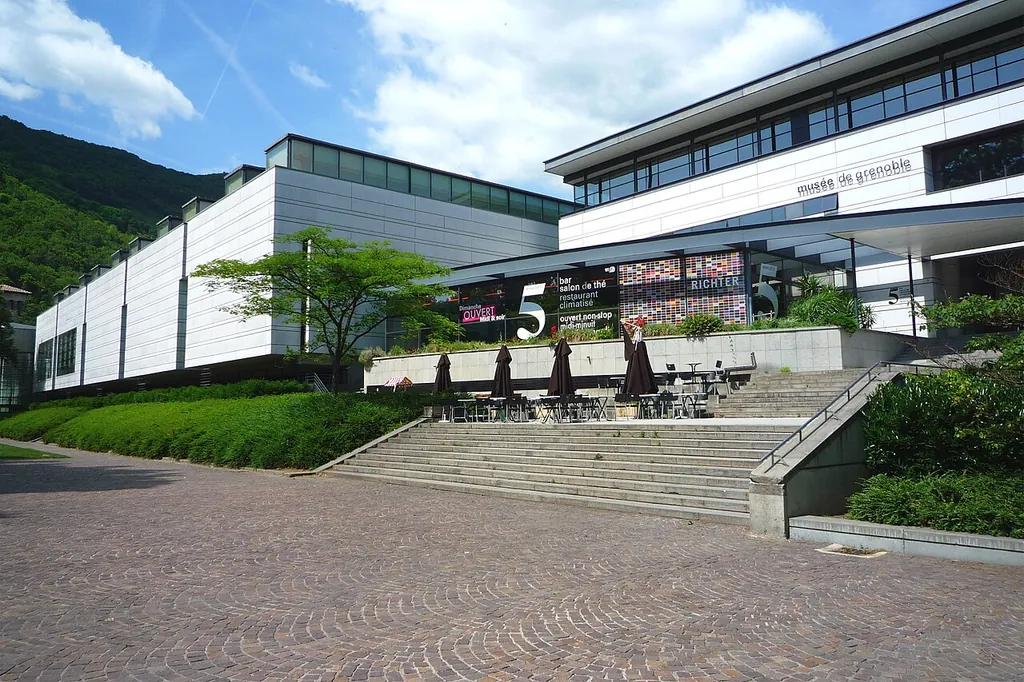
Musée de Grenoble
Art museum founded in 1798: ancient art, modern and contemporary art, with free access to the permanent collections.
No sound? Check your device’s silent switch.
Have only individual sections read aloud
About the museum
The Grenoble museum was founded on February 16, 1798 by the departmental administration, following a petition from citizens anxious to safeguard works seized during the Revolution. It is one of the first provincial museums in France, well before the Chaptal decree. It was first housed in the former Bishop’s Palace (Palais de l’Évêché), then in a building erected on today’s Place de Verdun, inaugurated in 1876 and in use until 1993.
The collections grew through purchases, gifts and bequests, such as Léonce Mesnard’s bequest of old drawings in 1890 or the gifts of General de Beylié, including the four Zurbaráns given in 1901. Under Andry-Farcy, curator from 1919 to 1949, the museum became the first French museum of modern art: it acquired works by Matisse and Picasso, the Agutte-Sembat bequest of 1923 with its Neo-Impressionist and Fauvist paintings, and later Surrealist works.
Since 1994 the museum has occupied a building designed by a team of Grenoble architects on the banks of the Isère, with 6,500 m² for the permanent collections and 1,000 m² for temporary exhibitions. It now holds collections of ancient, modern and contemporary art, as well as graphic arts and antiquities.
Highlights
- The four Zurbaráns, given in 1901
- Modern art ensemble: Matisse, Picasso, Delaunay, Soutine, Giacometti
- Agutte-Sembat bequest of Neo-Impressionist and Fauvist paintings
- Surrealist works by Max Ernst and De Chirico
- Contemporary art: Sol LeWitt, Soulages, Jeff Wall, Sigmar Polke
- Collections of ancient art from the 13th to the 18th century
Permanent exhibitions
- Collection d'art ancien – European paintings from the 13th to the 18th century, including the Zurbaráns, and a rich holding of old drawings.
- Collection d'art moderne et contemporain – Works by Matisse, Picasso, Delaunay, Soutine, Giacometti, then contemporary artists such as Sol LeWitt, Soulages or Jeff Wall.
- Founded
- 1798
- Operated by
- Ville de Grenoble
Admission & discounts
Admission is free.
| Children & teens | freefree up to age 25 · Free admission for visitors under 26, including the main temporary exhibition. |
|---|---|
| Visitors with disabilities | freecompanion free · Free admission for people with a disability or invalidity and one companion. |
| Groups | –Free for school groups accompanied by their teachers. |
| Main temporary exhibition – full price | €14 |
| Main temporary exhibition – reduced rate | €7 |
Free admission: The first Sunday of every month (collections and exhibitions, free for all), as well as during Musées en fête, Museum Night, the Nocturne des étudiants, European Heritage Days and the Printemps du Livre
Visiting the permanent collections is free for everyone; only the main temporary exhibition is paid, the other temporary exhibitions being free. The reduced rate for the main exhibition applies in particular to large families, SEMITAG subscribers, Grenoble residents on proof of address and members of museum friends’ associations. Free admission to the exhibition for job seekers, recipients of minimum social benefits, war veterans, ICOM card holders and members of the Amis du musée.
Accessibility
- Partially wheelchair accessible
- Elevator
- Accessible restroom: no information
- Accessible parking
- Service dogs welcome
- Tactile models & exhibits: no information
- Sign language tours: no information
- Easy-to-read materials
- Audio description: no information
Three lifts serve the museum’s spaces, except the floors of the Tour de l’Isle; the access ramps to levels -1 and -2 are not suitable for wheelchairs. Reception and the ticket desk have a lowered counter; wheelchairs and folding seats are lent at the cloakroom in exchange for ID. Reserved parking spaces and a drop-off zone in front of the entrance. Entry by the outside staircase or by the lift from the car park. Induction loop in the auditorium, lip-reading tours on request, documents in easy-read and easy-to-understand language (FALC). Only guide dogs for the blind are admitted.
Kids & families
Great for kids & families
| Kids’ admission | free up to age 25 |
|---|
- Family tours & workshops
- Stroller-friendly
Free workshops on Wednesdays for unaccompanied children aged 6 to 11 (online booking one month in advance), family tours for ages 2 to 5 and 6 to 11, and a programme during school holidays. The library has an “art et jeunesse” reading area, open on Wednesday afternoons to children up to age 11 when accompanied.
Getting there & parking
By public transit
Notre-Dame Musée
Tram lines B and D, stop Notre-Dame Musée; bus lines 17 and 62, stop Notre-Dame Musée. From the SNCF station: tram B to the Gares stop, direction Gières Plaine des sports, get off at Notre-Dame Musée.
By car
Parking available
Car park under the museum, accessed from Quai Jongkind and Boulevard Maréchal Leclerc, with spaces reserved for people with reduced mobility; drop-off zone in front of the car park entrance on Boulevard Maréchal Leclerc.
- Accessible parking
By car: A48 Lyon–Grenoble, exit Grenoble Bastille; A41 Chambéry–Grenoble, exit Grenoble Centre; then Place Lavalette.
Get directionsAmenities & dining
- Restaurant
- Museum shop
- Coat check
- Lockers
The FÉNO restaurant is inside the museum (lunch Monday to Friday, brunch at weekends, afternoon snack daily except Tuesday from 10:00 to 18:30, dinner Wednesday to Friday); booking recommended. Bookshop run by the Réunion des Musées Nationaux – Grand Palais. Free cloakroom at the entrance, lockers when closed; strollers and wheelchairs lent subject to availability.
Events & venue rental
- Spaces for rent
- Corporate events
Up to 600 guests.
Auditorium with 273 seats, large gallery and courtyard (1,080 m², up to 600 standing or 220 seated at tables) for companies, professionals and associations outside opening hours; private tours with mediators possible.
Inquiries & detailsPlan your visit
| Guided tours | yes |
|---|---|
| School programs | yes |
| Good to know | Free podcasts on works in the collection. Guided tours, “visites flash” and adapted tours depending on the programme. The museum also offers a presentation in English, Italian, Spanish and German on its website. Prohibited items (suitcases, backpacks, selfie sticks, bicycle and scooter batteries) must be left at the cloakroom; bags are visually checked at the entrance (Plan Vigipirate). |
Museums nearby
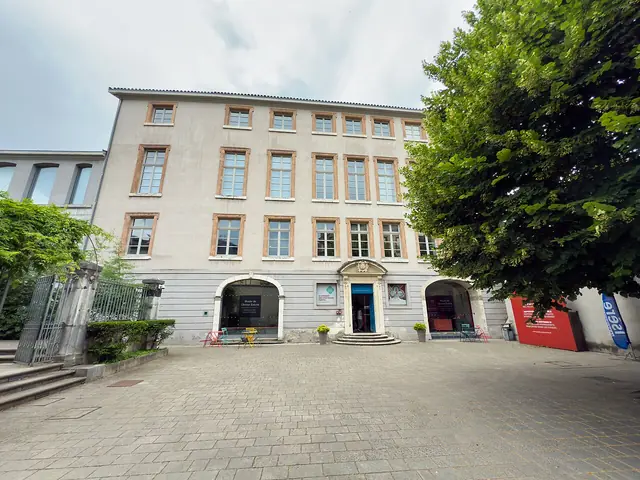
Musée de l'Ancien Evêché
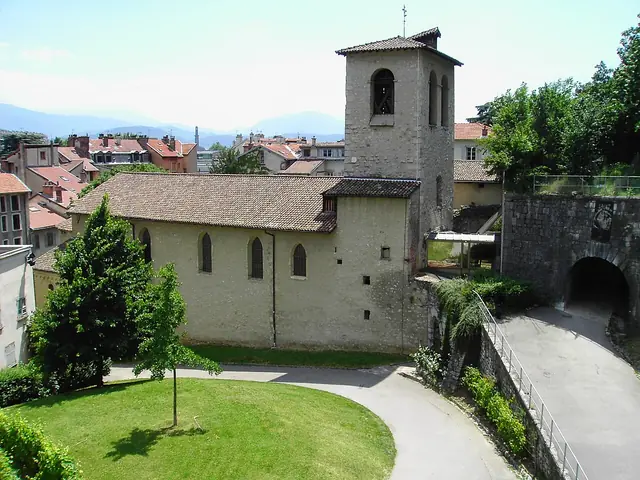
Musée archéologique Saint-Laurent
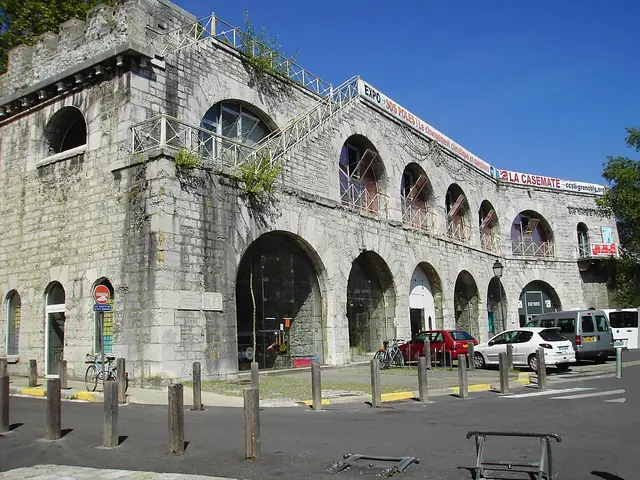
La Casemate
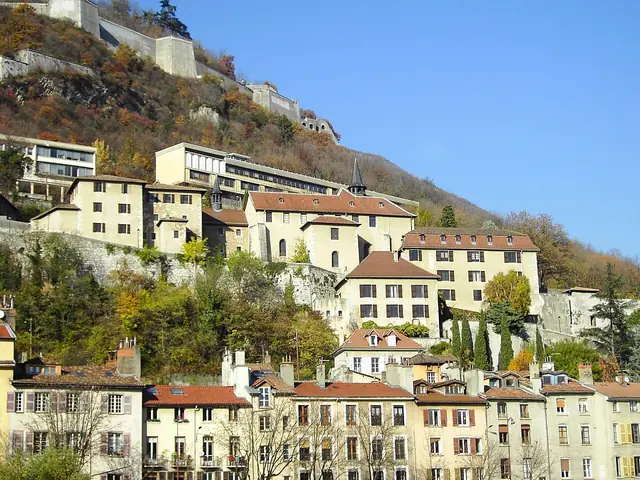
Musée dauphinois
Musée Stendhal
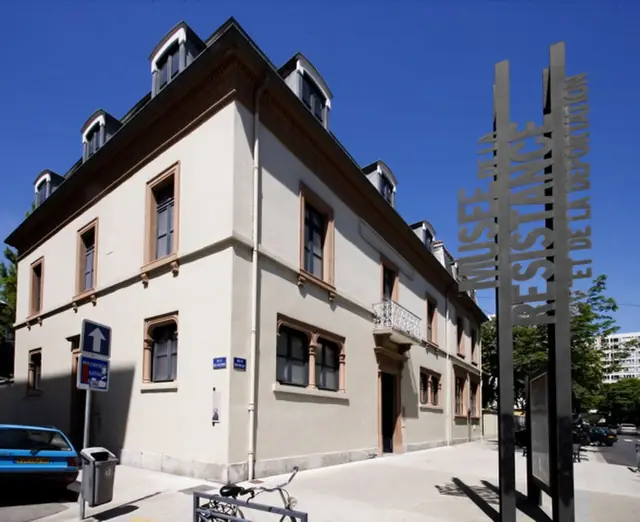
Musée de la Résistance et de la Déportation de l'Isère
All 11 museums in Grenoble All museums in Auvergne-Rhône-Alpes