Archaeological museum of the Ardèche department in Alba-la-Romaine, with objects from the ancient city of Alba Helviorum and an archaeological site open to all.
The exhibition traces the history of the oppidum of the Helviens at Jastres, a fortified village of the late Iron Age that became a town under Roman rule, based on excavations and original objects. On show from 2026 to 2028.
Framed drawings by the illustrator Anne Defréville made for the book “Le Loup de Nocaïna”.
About the museum
The museum opened in October 2013 and belongs to the Ardèche department, as part of its directorate for culture, sport, youth and associative life. Its collection bears the “Musée de France” designation and includes around a thousand objects classed as national treasures.
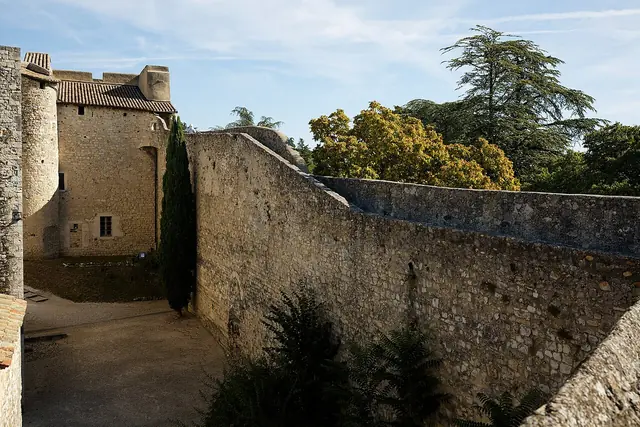
Inside, objects unearthed by archaeologists reveal the daily life of the ancient capital Alba Helviorum. Outside, the classified archaeological site can be visited freely; it presents the areas of a Roman town that show the political, administrative, judicial, commercial, cultural and religious organisation of Roman antiquity.
The museum also hosts temporary exhibitions, workshops, guided tours and performances, notably in the ancient theatre.
Highlights
“Musée de France” collection of about a thousand objects classed as national treasures
Daily life in the ancient city of Alba Helviorum
Archaeological site open to all 24 hours a day, with a smartphone guided tour
Roman costumes lent free of charge, play room and workshops
Free admission for under 25s and every Sunday
Permanent exhibition
Exposition permanente sur Alba Helviorum – Objects found during excavations reveal the daily life of the ancient city, with an outdoor archaeological site open to all.
Founded
2013
Operated by
Département de l'Ardèche
Visitors per year
approx. 53,604
Admission & discounts
Adults
€5
Reduced
€2.50students, people with disabilities, recipients of minimum social benefits, professional foster carers, groups of at least 10 people, holders of CNAS cards or cards of approved works councils
Children & teens
freefree up to age 24 · Free admission for under 25s on all opening days; activities free for under 4s.
Visitors with disabilities
€2.50companion free · Half price on presentation of the card; free admission for the accompanying person.
Students & apprentices
€2.50On presentation of a student card.
Groups (10+ people)
€2.50 per personHalf price for groups of at least 10 people (school groups, leisure centres, associations).
Workshop
€6Includes free access to the permanent and temporary exhibitions. Subscription: €25 for 10 workshops.
Guided tour
€7Includes free access to the exhibitions.
Performance in the museum
€8
Performance in the ancient theatre
€10
Birthday party at the museum (per child)
€8For children aged 4 and over; 12 children maximum.
Course (up to 10 hours)
€30€40 for 11 to 18 hours, €50 for 19 to 30 hours.
Free admission:Free admission every Sunday, during the evening openings from 18:00 to 21:00, on Museum Night, on the European Archaeology and Heritage Days, on Fête de la science and on other annual events.
The most favourable reduction is applied; reductions cannot be combined. Admission is also free with the Pass Ardèche, the ICOM card, the press card and for teachers. Payment by cash, bank card or Pass Culture; Chèques-Vacances are not accepted.
Accessibility
Wheelchair accessible
Elevator: no information
Accessible restroom
Accessible parking
Service dogs welcome
Tactile models & exhibits: no information
Sign language tours: no information
Easy-to-read materials: no information
Audio description: no information
The museum and the archaeological site are accessible to people with reduced mobility. A wheelchair and folding stools are lent at reception; in high season, booking by phone is recommended. A ramp leads to the museum and the site. The museum has an induction loop and tactile strips in places. A bag called “Ma visite bien-être” (noise-cancelling headphones, glasses, calming objects) can be borrowed free of charge at reception. Some workshops are adapted for people with physical or intellectual disabilities.
Kids & families
Great for kids & families
Time needed
approx. 30 min
Kids’ admission
free up to age 24
Family tours & workshops
Stroller-friendly
Baby changing facilities
Playground / play area
Kids’ birthday parties
Free admission for under 25s and free activities for under 4s. Costumes for children and adults are lent free of charge at reception; a drawing corner and a play area are included in the route (giant puzzle, building blocks, children’s books, nursing chair). Hiking-style baby carriers worn on the back are not allowed in the museum. Baby changing table in the women’s toilets. Workshops and birthday parties with a Roman theme.
Getting there & parking
By public transit
Alba-ruines romaines · 150 m
Coach line 74 TER: Les Vans, Aubenas, Montélimar, Valence TGV, stop “Alba-ruines romaines”. By train: TGV station at Montélimar, then bus.
By car
Parking spaces reserved for people with reduced mobility.
Accessible parking
By car from Paris, Lyon or Marseille: A7, exit 17 or 18, then N7 towards Montélimar and Le Teil, N102 towards Aubenas and D107 to Alba-la-Romaine. Distances: Montélimar 20 km, Aubenas 25 km, Vallon-Pont-d’Arc 35 km, Viviers 15 km. The museum also lists car-sharing sites and offers a “green rate” to visitors who come by bike or with a public transport ticket.
Shop with local products. Small refreshment point on request at reception (juice, water, coffee). Outdoor water point accessible even outside opening hours. The museum is air-conditioned.
Events & venue rental
The museum hasn’t published any information on this.
Plan your visit
Guided tours
yes
School programs
yes
Dogs
allowed in some areas only · Animals on a leash admitted at the archaeological site, not in the museum (except guide dogs).
Good to know
Allow about 30 minutes for the museum and 45 minutes for the tour of the archaeological site (30 minutes more during a temporary exhibition). Free guided tours on some Sundays; booking strongly recommended. Animals on a leash are admitted to the archaeological site, but not to the museum (except guide dogs).