Petit Palais
Fine arts museum of the City of Paris, housed in a palace built for the 1900 Universal Exhibition, with free admission to the permanent collections.
No sound? Check your device’s silent switch.
Have only individual sections read aloud
About the museum
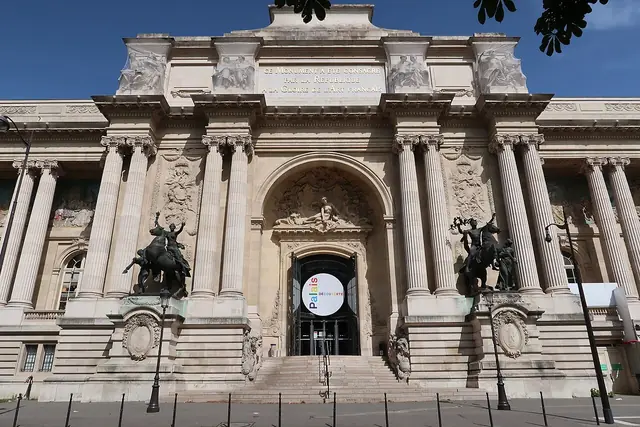
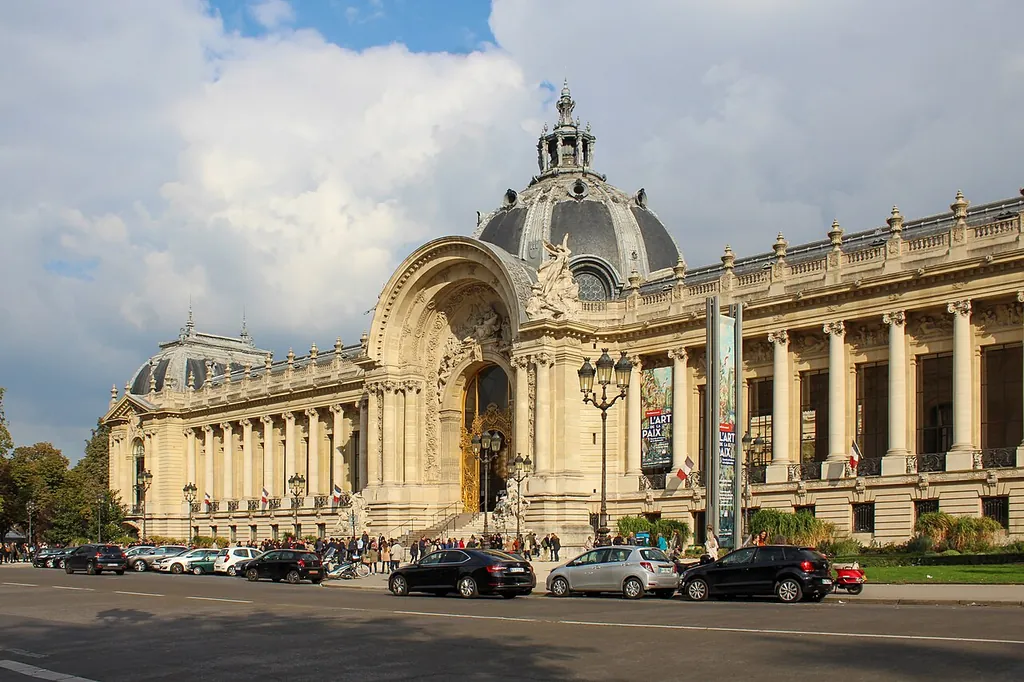
The Petit Palais was built by the architect Charles Girault for the 1900 Universal Exhibition. Together with the Grand Palais and the Pont Alexandre III, it forms an ensemble designed for that event, between the Seine and the Champs-Élysées. In 1902, the building became the Palais des Beaux-Arts of the City of Paris.
The collections were initially made up of commissions and purchases made by the City of Paris at the Salons or directly from artists. They were enriched by a major group of older works bequeathed by the Dutuit brothers in 1902, and then by other donations, including those of the American collectors Edward and Julia Tuck, the Carpeaux and Courbet holdings, the art dealer Ambroise Vollard and, more recently, the icon collector Roger Cabal.
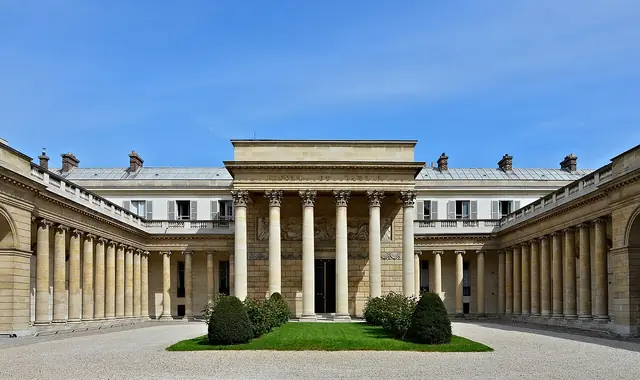
More than twenty years, from 1903 to 1925, were needed to complete the painted and sculpted decorations celebrating the City of Paris and the arts. These include Albert Besnard's symbolist panels in the vestibule, Cormon's vault in the north gallery, Maurice Denis's dome, and the peristyle decorated with frescoes by Paul Baudoüin around an inner garden. The museum also presents major temporary exhibitions; admission to the permanent collections is free.
Highlights
- A Beaux-Arts palace built for the 1900 Universal Exhibition
- The inner garden and its fresco-decorated peristyle
- “Soleil couchant sur la Seine à Lavacourt” by Claude Monet
- “Le Portrait de Sarah Bernhardt”
- The dining room of the Hôtel Guimard
- Collections from Antiquity to the 20th century, including the Dutuit holdings
- Founded
- 1902
- Operated by
- Ville de Paris (Paris Musées)
Admission & discounts
Admission is free.
| Children & teens | freefree up to age 17 · Visitors under 18 also enter temporary exhibitions free of charge. |
|---|---|
| Visitors with disabilities | freecompanion free · Free admission for people with disabilities and one companion, including exhibitions, on presentation of proof; activities are charged at the lowest rate for the person with a disability and are free for the companion. |
Admission to the permanent collections is free and does not require a reservation. Temporary exhibitions are paid, with online booking strongly recommended; the conditions for free admission and reductions are published on the Paris Musées prices page. The museum garden is free to visit during opening hours.
Accessibility
- Wheelchair accessible
- Elevator: no information
- Accessible restroom: no information
- Accessible parking
- Service dogs welcome
- Tactile models & exhibits
- Sign language tours
- Easy-to-read materials: no information
- Audio description
The entrance for visitors with reduced mobility is on the ground floor, to the right of the main staircase; the museum is accessible, except for the entrance hall on the upper level. Wheelchairs, folding seats and magnifying glasses are lent at the reception desk. Tactile devices, including a tactile model, are available in the galleries. The free visitor app offers routes in French Sign Language and with audio description. Assistance animals are allowed, and therapy animals with a medical certificate. A map of accessible parking is available.
Kids & families
Great for kids & families
| Kids’ admission | free up to age 17 |
|---|
- Family tours & workshops
- Activity booklet, scavenger hunt or kids’ audio guide
- Hands-on stations
- Stroller-friendly
- Baby changing facilities
Workshops, guided tours and activities for families and children from 12 months, for example “baby visits” (12–24 months), workshops for 2- to 5-year-olds and detective-style tours for 6- to 10-year-olds. Activities must be booked through the ticket desk. A family visitor guide and an exploration booklet for the 14 City of Paris museums can be downloaded. The fully enclosed garden lets children relax under supervision. The cloakroom and toilets with changing tables are grouped on the ground floor.
Getting there & parking
By public transit
Champs-Élysées – Clemenceau
Metro: lines 1 and 13, Champs-Élysées – Clemenceau station; line 9, Franklin D. Roosevelt station. RER C: Invalides station. Buses: lines 28, 42, 72, 73, 80, 83 and 93.
By car
- Accessible parking
Individual visitors enter through the main entrance; groups and visitors with reduced mobility use the ground-floor entrance, at the bottom right of the main staircase.
Get directionsAmenities & dining
- Café
- Museum shop
- Coat check
- Lockers
Café 1902 in the garden, open Tuesday to Sunday from 10:00 to 17:45, and until 19:40 during late openings. Bookshop and museum shop on the ground floor. Lockers on the ground floor; luggage, suitcases and large bags are prohibited. Auditorium for lectures and concerts.
Events & venue rental
- Spaces for rent
- Private parties: not available
- Corporate events
Up to 600 guests.
Only professional events are accepted; no private hire. Spaces: the South Gallery and South Pavilion (300 seated, 600 standing), the garden and its peristyle (200 for dinner, 600 for cocktails) and the 182-seat auditorium, which are rented together. Daytime events take place only on Mondays, the closing day.
Inquiries & detailsPlan your visit
| Guided tours | yes |
|---|---|
| Audio guide | yes |
| School programs | yes |
| Good to know | The free visitor app offers six routes, including “12 Masterpieces” and “30 Essentials”, a free visit, and tours in French Sign Language and with audio description; it is also available with a video guide rented at the desk (€5). Guided tours, workshops and family activities can be booked at the ticket desk. Strollers are allowed. |