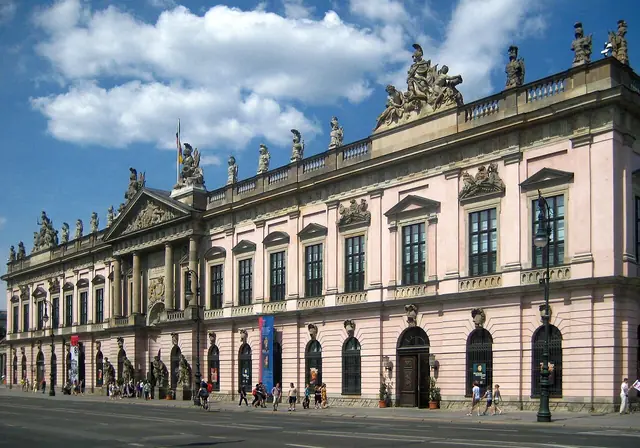
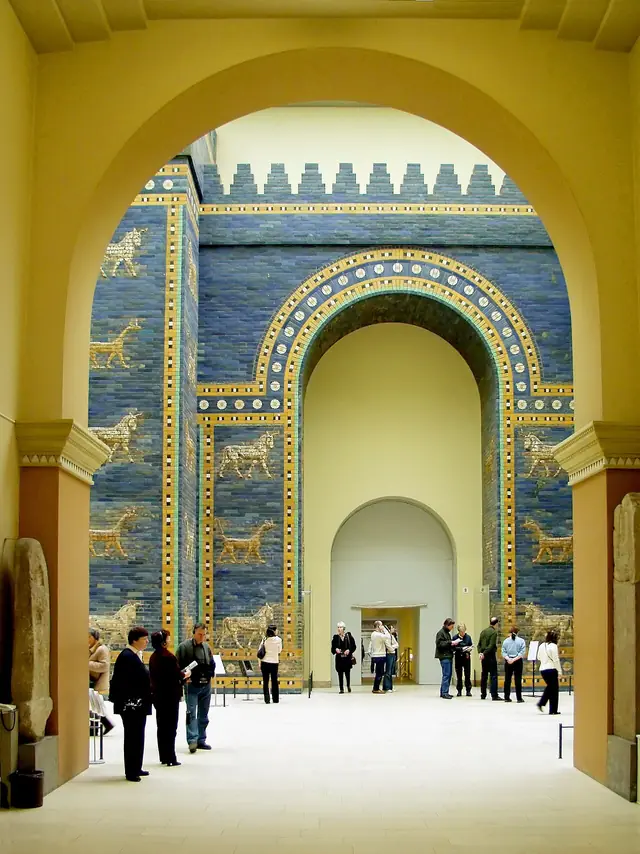
The show on the upper floor looks back at the beginnings of the Königliches Museum, which opened in 1830, and brings together antiquities that were already on view in the very first presentation.
About the museum
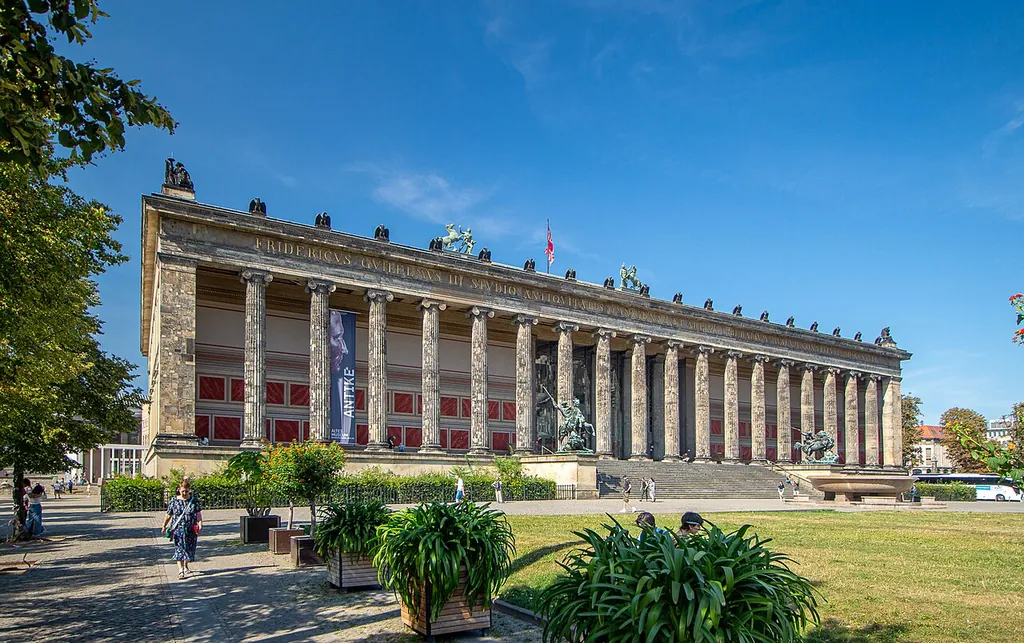
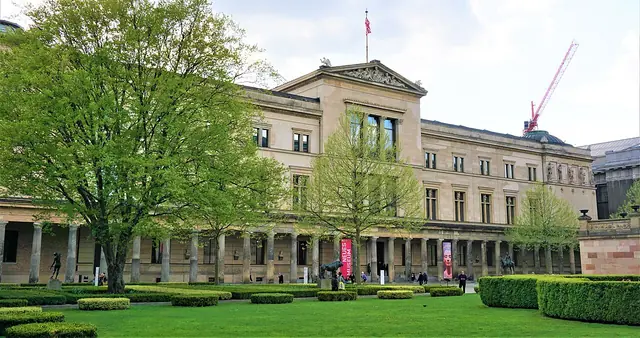
The Altes Museum is considered Prussia's first public museum. King Friedrich Wilhelm III commissioned Karl Friedrich Schinkel to design a building on the Lustgarten opposite the City Palace; the foundation stone was laid in 1825, and on August 3, 1830, the building opened as the Königliches Museum (Royal Museum), quickly becoming a crowd-puller. It received its present name ("Old Museum") after Stüler's Neues Museum was added as a second museum building.
Schinkel's design is regarded as a key work of Neoclassicism. A long portico with 18 Ionic columns opens onto the Lustgarten; inside, a rotunda inspired by the Roman Pantheon and lined with ancient statues of gods forms the center, with daylight falling through its oculus. The building burned out in World War II, and reconstruction dragged on into the 1960s. As part of Museumsinsel (Museum Island), it has been a UNESCO World Heritage Site since 1999.
Today the Antikensammlung (Collection of Classical Antiquities) presents its permanent exhibition on the Greeks, Etruscans, and Romans here. The main floor leads chronologically through Greek art from the 10th to the 1st century BC with marble sculptures, vases, and bronzes. The upper floor features one of the largest Etruscan collections outside Italy and the art of the Roman Empire with portraits, sarcophagi, mosaics, and the Hildesheim Silver Treasure; one hall is reserved for special exhibitions. A comprehensive renovation of the building is planned, but its start date has not yet been set.
Highlights
Rotunda with ancient statues of gods
"Berlin Goddess" with original paint
Bronze statue "Praying Boy"
Hildesheim Silver Treasure
Portraits of Caesar and Cleopatra
Etruscan collection with the Capua Tile
Permanent exhibitions
Antike Welten. Griechen, Etrusker und Römer – Chronological tour through Greek art on the main floor, plus the Etruscans and the Roman imperial period on the upper floor.
Founded
1822
Operated by
Staatliche Museen zu Berlin – Stiftung Preußischer Kulturbesitz
Director
Martin Maischberger (Direktor der Antikensammlung)
Visitors per year
approx. 285,000 (2025)
Admission & discounts
Adults
€14
Reduced
€7School pupils, apprentices, students, people doing voluntary service, job seekers receiving ALG I (unemployment benefit), and people with severe disabilities with a degree of disability of 50 or higher (each with proof)
Children & teens
freefree up to age 17 · Children and teens under 18 get free admission (free ticket at the ticket desk or online).
Seniors
–No senior discount.
Visitors with disabilities
€7companion free · Reduced admission from a degree of disability of 50; a companion recognized by a doctor as necessary gets free admission if noted on the severe disability ID (Schwerbehindertenausweis).
Students & apprentices
€7Students and school pupils receive a 50% discount; admission is free for registered university courses and school class visits.
Groups (10+ people)
–Groups of 10 or more must register at least two weeks in advance (online ticket shop or info service). Admission at the individual price plus a €10 registration fee per (sub)group; groups of 25 or more are split.
Families
–No family ticket; children and teens under 18 get free admission.
Day tickets; online advance sales open four weeks ahead. Museumsinsel ticket (area ticket): €24, reduced €12, valid for one day at all museums of the Staatliche Museen on Museum Island (Alte Nationalgalerie, Altes Museum, Bode-Museum, Neues Museum, Pergamonmuseum. Das Panorama) as well as the Friedrichswerdersche Kirche and PETRI Berlin. Museumspass Berlin (3 days, more than 30 museums): €32, reduced €16. Annual passes Basic, Classic, and Classic Plus. Free admission for, among others, recipients of Bürgergeld, Wohngeld, Grundsicherung, or benefits under the AsylbLG (various German social benefits), ICOM members, and press.
Accessibility
Wheelchair accessible
Elevator
Accessible restroom
Accessible parking: no information
Service dogs welcome
Tactile models & exhibits: no information
Sign language tours: no information
Easy-to-read materials: no information
Audio description: no information
Fully wheelchair-accessible according to the Staatliche Museen; step-free access is via the staff entrance on Am Lustgarten (please report to the gatekeeper). Accessible restroom and baby changing table as shown on the site map. Loaner wheelchairs on prior request with the info service (030 266424242, Mon–Fri 9:00–16:00). Only trained assistance dogs are permitted.
Kids & families
Great for kids & families
Kids’ admission
free up to age 17
Family tours & workshops
Activity booklet, scavenger hunt or kids’ audio guide
Baby changing facilities
Gallery talks and workshops for families and children aged 6 to 12 (e.g., "Fortuna – was ist Glück?" – Fortuna: what is happiness?), multi-day workshops for ages 9 to 12. Companion booklet "HERAKLES – Magazin für Kinder und Familien" (ages 6–12). Workshop room and baby changing table as shown on the site map. Under the Staatliche Museen's visitor rules, certain strollers may have to be exchanged for strollers provided by the museum; children may not be carried in back carriers or on shoulders.
Getting there & parking
By public transit
Museumsinsel
U5 to Museumsinsel; S-Bahn to Friedrichstraße or Hackescher Markt; tram to Am Kupfergraben or Hackescher Markt; bus to U Museumsinsel.
By car
No on-site parking at the museum.
The Staatliche Museen do not list any parking and recommend arriving by public transport or bicycle.
Café in the Altes Museum (Tue–Sun 10:00–18:00). Shop, coat check, audio guide desk, and workshop room as shown on the site map. Bags larger than 30 × 20 × 10 cm must be checked; travel luggage is not accepted. Programs for schools ("Das Leben in der Antike" – Life in Antiquity).
Events & venue rental
Spaces for rent
Corporate events
Up to 300 guests.
Events outside opening hours through Museum&Location, the events company of the Staatliche Museen: standing receptions in the colonnade for up to 300 people, in the gallery and stairwell (warmer months) for up to 100 people.