29 early woodcuts by Gerhard Marcks from a recently donated collection are shown publicly for the first time, complemented by ceramics from the Bauhaus holdings. Many of the prints reflect his time in Dornburg, where the Bauhaus pottery workshop was based.
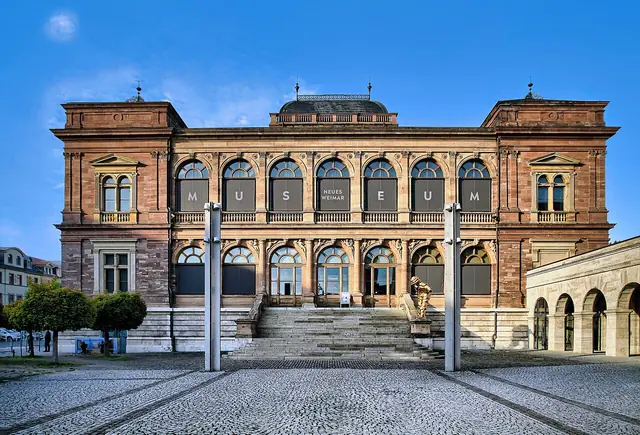
Shown at the Bauhaus-Museum and the Museum Neues Weimar, the exhibition follows 18 women artists on their path into art and a profession – from the Weimar art schools to the Bauhaus.
About the museum
The Bauhaus was founded in Weimar in 1919. When the school moved to Dessau in 1925, a selection of workshop pieces assembled by Walter Gropius remained with the Weimar art collections – the core of the world's oldest Bauhaus collection, which today comprises around 13,000 objects and documents.
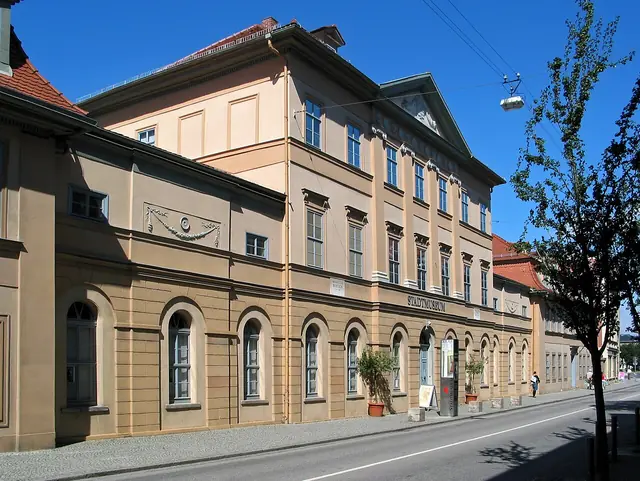
The foundation opened a first Bauhaus Museum in 1995 in a former carriage house from 1823 on Theaterplatz. There was room for only a fraction of the collection there, so a new building was planned. The 2012 international competition, with more than 2,000 participants, was won by the Berlin architect Heike Hanada together with Benedict Tonon.
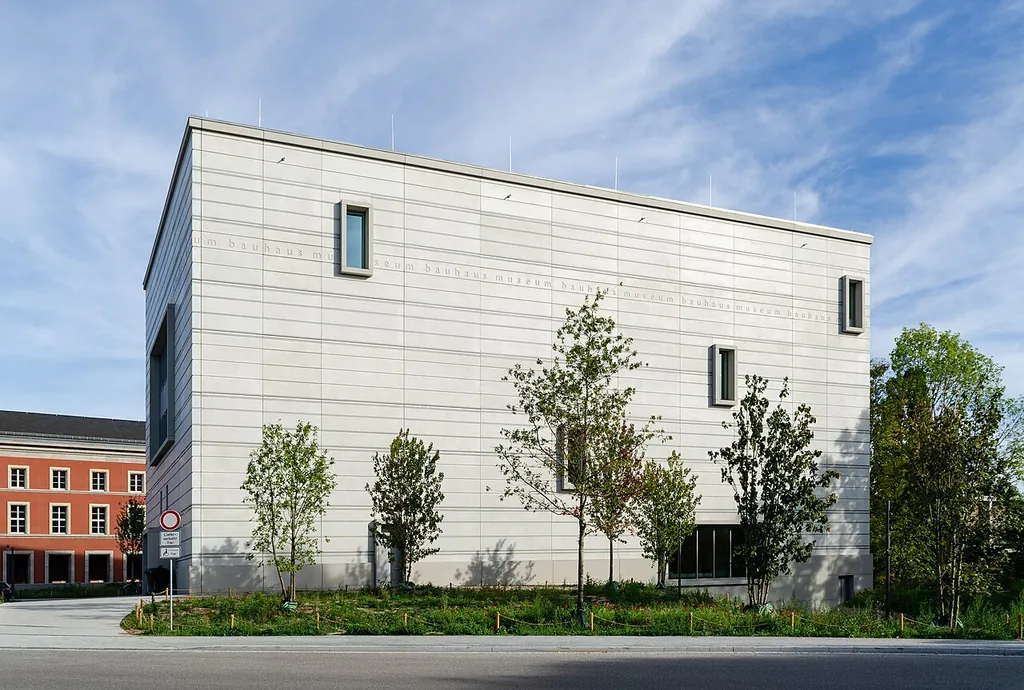
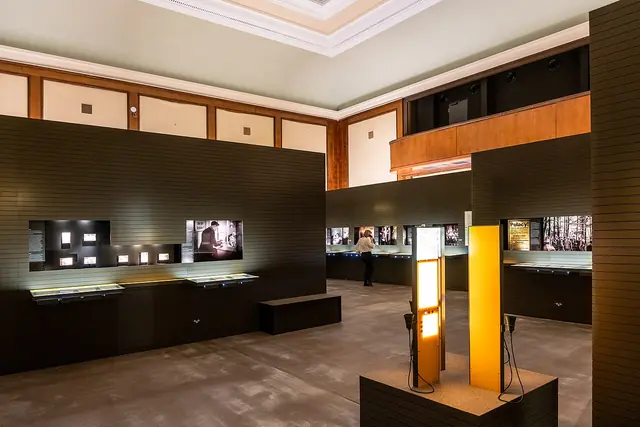
The plain, cubic building on the edge of the Weimarhallenpark opened in April 2019 for the 100th anniversary of the Bauhaus's founding. Spread over several levels, the permanent exhibition "Das Bauhaus kommt aus Weimar" presents the ideas and design proposals of the early school, from workshop pieces to works by Paul Klee and László Moholy-Nagy. It is complemented by special exhibitions, hands-on workshop activities, and the Café Kunstpause with a terrace facing the park.
Highlights
Table lamp by Wilhelm Wagenfeld and Carl Jakob Jucker
Works by Paul Klee, Lyonel Feininger, and László Moholy-Nagy
Slatted chair by Marcel Breuer and Bauhaus chess set
Core collection from Gropius's 1925 selection – the world's oldest Bauhaus collection
Architecture by Heike Hanada (opened 2019)
Hands-on workshop "MACH MIT!"
Permanent exhibitions
Das Bauhaus kommt aus Weimar – The permanent exhibition presents the central questions and design ideas of the early Bauhaus school – with workshop pieces, furniture, and artworks from the oldest Bauhaus collection.
Founded
1995
Operated by
Klassik Stiftung Weimar
Admission & discounts
Adults
€11
Reduced
€8Students (except distance learners), people with severe disabilities, federal volunteer service and voluntary military service participants, trainees, the unemployed, artCard holders
Children & teens
€4free up to age 15 · Free admission until the 16th birthday (except for special children's events) and for school classes up to grade 10; school pupils aged 16 to 20 pay €4.
Seniors
–No senior discount.
Visitors with disabilities
€8companion free · Reduced €8 with a severe disability ID (Schwerbehindertenausweis); one medically recognized companion is admitted free.
Students & apprentices
€8Reduced for students (does not apply to distance learners).
Groups (10+ people)
–Groups of 10 or more register at least 21 days in advance via the group form; max. 25 people per tour. Guided tours for adult groups plus admission: 30 min. €40, 60 min. €70, 90 min. €95, foreign-language surcharge €10. School classes up to grade 10 get free admission; tour prices for schools vary by grade level and museum.
Families
–No family ticket; children and teens under 16 get free admission.
ModerneCard (365 days, one admission each to the Bauhaus-Museum, Museum Neues Weimar, Haus Am Horn, Haus Hohe Pappeln, and Nietzsche-Archiv)
€17Reduced €12, school pupils €7.
BauhausCard (365 days)
€30PartnerCard €56.
Free admission:Foundation-wide free admission days: International Women's Day (March 8) and Buß- und Bettag (Day of Repentance and Prayer, November 18, 2026)
Tickets online (timed entry, bookable up to four months in advance) or at the museum ticket desks. MuseumsCard annual pass (12 months, all museums) €49, reduced €29, school pupils €19. Free admission with the weimar card (48 h €32.50, 96 h €59.50) as well as for refugees and ICOM/DMB members. Timed-entry tickets recommended.
Accessibility
Wheelchair accessible
Elevator
Accessible restroom
Accessible parking: no information
Service dogs welcome
Tactile models & exhibits: no information
Sign language tours
Easy-to-read materials
Audio description: no information
Step-free, door widths at least 90 cm, elevator to all floors, wheelchair-accessible restroom; walkers and wheelchairs on free loan. Offerings for people with visual and hearing impairments, guided tours for groups with blindness or visual impairment, content in sign language and Einfache Sprache (plain German) in the Weimar+ app. Details at "Reisen für Alle". Advice: +49 3643 545400, barrierefrei@klassik-stiftung.de.
Kids & families
Great for kids & families
Kids’ admission
free up to age 15
Family tours & workshops
Activity booklet, scavenger hunt or kids’ audio guide
Hands-on stations
Baby changing facilities
Kids’ birthday parties
Free MACH MIT! booklet for children from age 4 at the ticket desk; "bauhaus bag" backpack tour for 6- to 12-year-olds available to borrow at the ticket desk year-round. MACH MIT! station "WohnCollage" in the Werklabor on weekends, free and without registration. Children's birthday parties with a design workshop on request; nursing and baby changing area in the Café Kunstpause.
Getting there & parking
By public transit
Goetheplatz · 200 m
Goetheplatz bus stop (all city bus lines), approx. 200 m. From the main train station, bus lines 1, 2, 5, 7, and 8 run to Goetheplatz.
By car
The Klassik Stiftung does not list any parking of its own; it recommends the parking lots at the Weimar Atrium for coaches and refers to the City of Weimar for other parking options.
Multimedia tours in the free Weimar+ app (loan device available at some museums for €2). Public and bookable guided tours, workshops for families and schools.