Bonhoeffer-Haus
Dietrich Bonhoeffer's family home in Berlin-Westend: a memorial site with an exhibition and his study, Saturday tours with registration.
About the museum
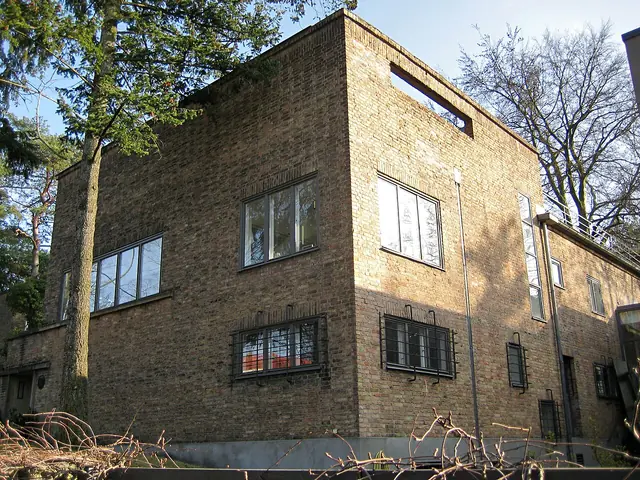
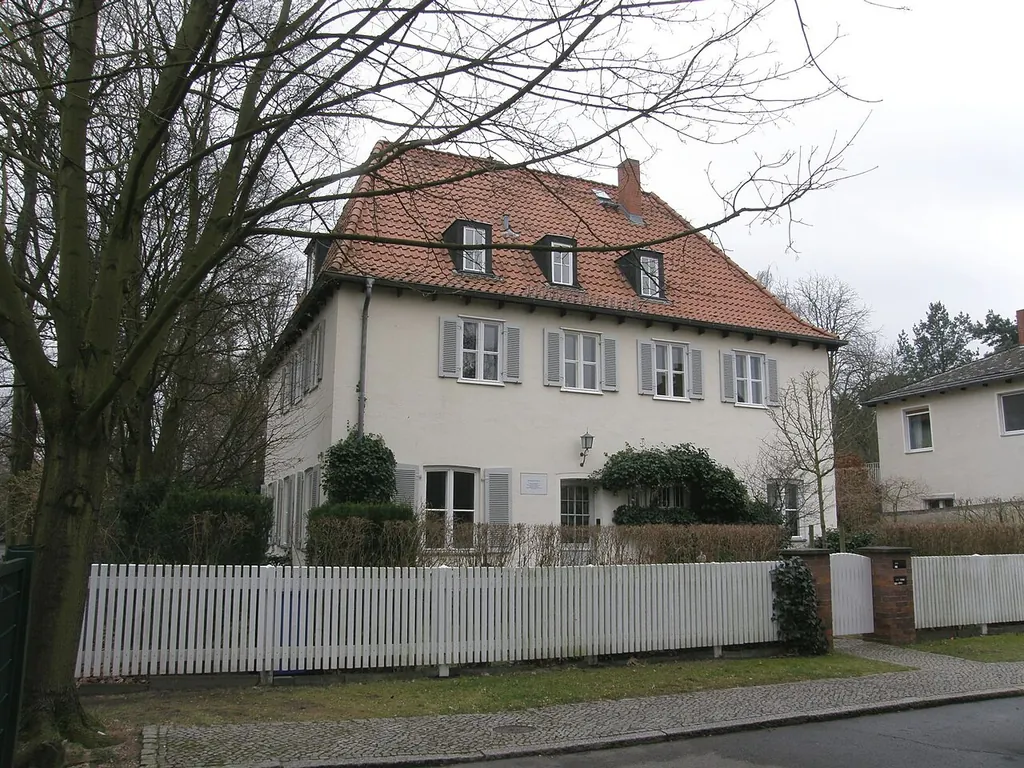
The psychiatrist Karl Bonhoeffer and his wife Paula had the house at Marienburger Allee 43 built in 1935 as their retirement home. It was designed by Jörg Schleicher, who also planned the neighboring house for the family of their daughter Ursula and Rüdiger Schleicher; the light-colored, two-story stucco building with a hipped roof follows the tradition of the conservative Stuttgart School. Their son Dietrich, a Protestant theologian and leading figure of the Confessing Church, lived in a room in the attic during his stays in Berlin.
Here Bonhoeffer worked on his Ethics, and here family members and confidants from the circles of resistance against the Nazi regime came together. On April 5, 1943, the Gestapo arrested him in this house; in April 1945 he was executed at Flossenbürg concentration camp. His brother Klaus and his brothers-in-law Hans von Dohnanyi and Rüdiger Schleicher were also murdered.
After the parents' deaths, the Protestant church bought the house with help from the Church of Sweden. It became the seat of the student congregation and the residence of the student chaplain Eberhard Bethge, Bonhoeffer's friend and biographer, and served as a student residence until the 1980s. In 1987 it opened as a memorial site with an exhibition of picture collages by the artist Matthias Frach; Bonhoeffer's study was largely restored to its 1943 condition. The house has been a listed monument since 1996, and since 2017 a nonprofit association has run the memorial and meeting place, which offers talks, concerts and discussion series in addition to guided tours.
Highlights
- Dietrich Bonhoeffer's study in the attic with desk, clavichord and bookshelf
- Site of his arrest by the Gestapo on April 5, 1943
- Exhibition of nine picture collages by Matthias Frach (1987) on his life and resistance
- The family's grand piano, which Dietrich Bonhoeffer himself played
- Event series such as "Teatime bei Bonhoeffers" and a political salon
Permanent exhibitions
- Leben und Werk Dietrich Bonhoeffers – Bildcollagen von Matthias Frach – Nine large-format panels with photo collages from 1987 tell the story of Bonhoeffer, his family, the church struggle and the resistance against National Socialism.
- Dietrich Bonhoeffers Studierzimmer – The attic room is furnished largely as it was at the time of his arrest in 1943 – with a desk, a clavichord and a shelf holding editions of the books he owned.
- Founded
- 1987
- Operated by
- Erinnerungs- und Begegnungsstätte Bonhoeffer-Haus e.V.
Admission & discounts
Admission is free.
| Groups | –Group tours (45 minutes to over 2 hours) by appointment; groups of 30 or more are split due to limited space. Suggested donation for school classes and groups of young adults €2–5 per person. |
|---|
Free admission; a donation is requested (suggested €5–10 per person, in cash on site or online). The house is run by volunteers.
Accessibility
- Partially wheelchair accessible
- Elevator: not available
- Accessible restroom: not available
- Accessible parking: no information
- Service dogs welcome: no information
- Tactile models & exhibits: not available
- Sign language tours: no information
- Easy-to-read materials: no information
- Audio description: no information
A 1930s residential house: three steps with a handrail lead to the entrance, and a mobile ramp is available if needed. The restrooms in the basement and the study in the attic can only be reached by stairs. The exhibition is currently purely visual. The website offers information in Easy German (Leichte Sprache). Contacting the house in advance is recommended.
Kids & families
The museum hasn’t published any information on this – please ask the museum directly.
Getting there & parking
By public transit
S Heerstraße · 700 m
Heerstraße S-Bahn station (S3, S9; buses M49, X34, X49, 218, 349).
By car
Free parking
Limited free parking along Marienburger Allee and in the residential area; for coaches, the parking lot at Mommsenstadion is recommended.
Amenities & dining
- Café: not available
- Restaurant: not available
- Coat check
Small coat check (no liability). No café in the building; the museum refers visitors to a stand-up café nearby.
Events & venue rental
- Spaces for rent
- Corporate events
Up to 30 guests.
For retreats, conferences, workshops and meetings, preferably related to remembrance culture, theology or education: seminar room (the former study, up to 30 people, with grand piano and presentation equipment), library, meeting room, kitchen, terrace and garden. Full-day rental €500, half day (up to 4 hours) €300; no overnight stays.
Inquiries & detailsPlan your visit
| Guided tours | yes · approx. 1.5 hrs |
|---|---|
| School programs | yes |
| Good to know | Allow 60–90 minutes for a guided tour. Tours and discussion formats in German and English: short tour (45 minutes), tour of the house and exhibition (1.5 hours), parish evening with music (over 2 hours). For school classes and confirmation groups, options include a digital scavenger hunt (Actionbound) and workshops on moral courage. A visit to the nearby Gleis 17 (Platform 17) memorial is recommended. |