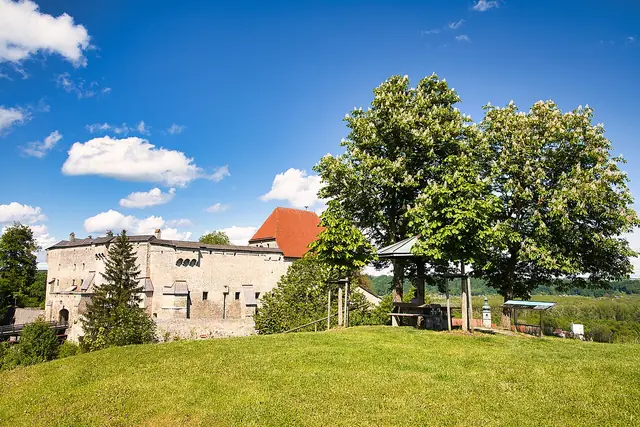
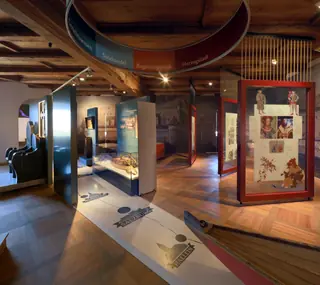
The exhibition shows how the Stadtmuseum collects, preserves, researches and communicates, and traces 125 years of museum history from an enthusiasts' initiative to a place for urban society, partly with objects shown for the first time.
About the museum
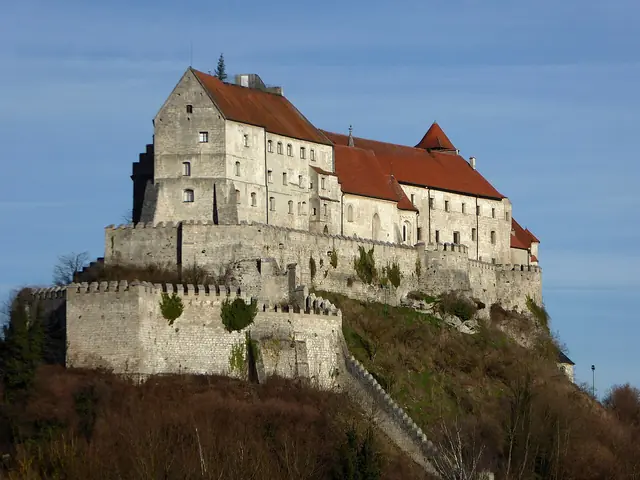
The Stadtmuseum Burghausen grew out of a citizens’ initiative in 1899: in March, twenty people from Burghausen founded the Stadtmuseums- und Altertumsverein (town museum and antiquities association) to collect historical objects and exhibit them in the main castle. In doing so, they helped save the castle, left empty after the garrison withdrew, from decay. The first exhibition opened in June 1899 in a small room; in 1907 the museum moved into the Kemenate (the ladies’ residential wing) of the main castle, where it is still housed today.
Under changing directors the collection grew steadily. Karl Stechele was particularly influential; besides antiquities he also bought contemporary views of the town, which are now among the most important holdings. After the Second World War the museum was reopened in 1949 together with the ducal living quarters and the state gallery; later directors inventoried the holdings and introduced annual special exhibitions.
In 2012 the museum was one of three venues of the Bavarian-Upper Austrian State Exhibition. The permanent exhibition was then redesigned step by step: in 2016 the sections on late medieval court life and town history opened, in 2019 the art department and in 2025 the natural history department on the Salzach and Wöhrsee area. The four permanent exhibitions received the Bavarian Museum Prize in 2025. The museum is run by the town of Burghausen.
Highlights
Located in the main castle of the world's longest castle (1,051 metres)
Interactive princely court around 1500 with many hands-on stations
Works by Burghausen Baroque artists, including the della Croce family of painters
Model of the Marienberg pilgrimage church from 1760
Executioner’s sword from the 18th century
Walk-in town map of 1935 on the Nazi era
Natural history department with hands-on stations and specimens (Bavarian Museum Prize 2025)
Permanent exhibitions
Leben auf der Burg im Spätmittelalter – Staged rooms on the ground floor show everyday life at the court of Duchess Hedwig around 1500 – with costumes, games, a kitchen and a tournament to try out.
Stadtgeschichte Burghausen – From archaeological finds of prehistory and early history through the salt trade, Salzach shipping and the Rentamt period to industrialization with Alexander Wacker; also a staged row of craftsmen’s workshops, townspeople and garrison, a walk-in town map on the Nazi era and a museum cinema on the period after 1945.
Naturraum Salzach-Wöhrsee – Natural history department on the plants, animals and geology of the Salzach valley around Burghausen, with specimens and numerous hands-on stations.
Founded
1899
Operated by
Stadt Burghausen
Director
Patrick Charell
Admission & discounts
Adults
€5
Reduced
€4Groups of 15 or more people, and with ID: people aged 65 and over, students, military and voluntary service participants, Bundeswehr soldiers, trainees, unemployed people
Children & teens
freefree up to age 17 · Students over 18 and school classes also free.
Seniors
€4aged 65 and over
Visitors with disabilities
€4companion free · Reduced admission; the registered companion (marked 'B' on the German disability card) is admitted free, with the museum pass as well as with a single ticket.
Students & apprentices
€4
Groups (15+ people)
€4 per personTour (approx. 90 min., up to 20 people) an additional €65 per group, booking via Burghauser Touristik.
Burghausen Museum Pass
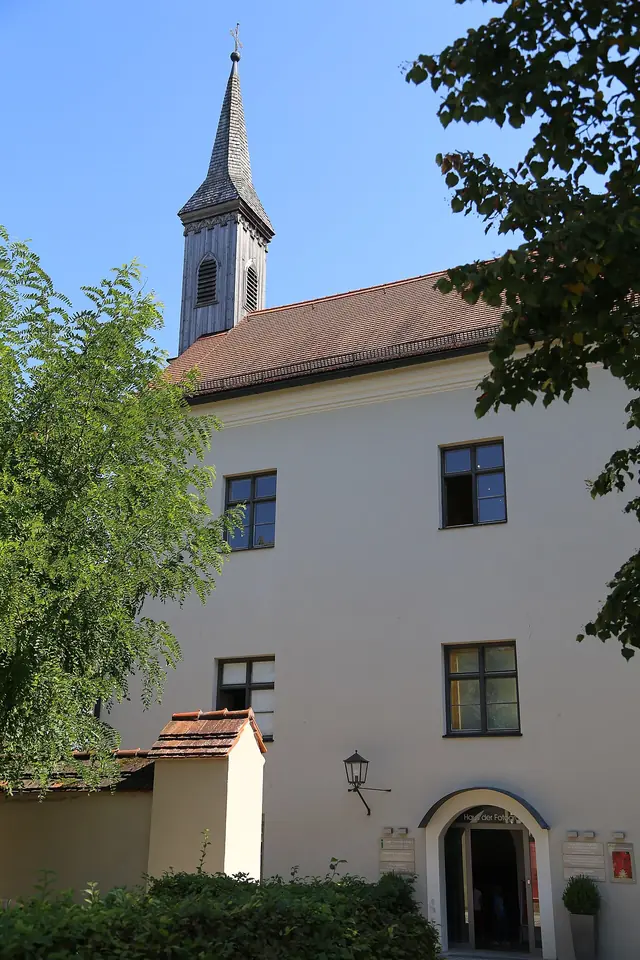
€10One admission each to the Stadtmuseum, Haus der Fotografie and the Burgmuseum with Staatsgalerie, valid in the current year; reduced €8.
Museum tour (up to 20 people)
€65Flat rate per group plus admission
Ehrenamtskarte (volunteer card): free admission; further free admissions on request.
Accessibility
Partially wheelchair accessible
Elevator
Accessible restroom
Accessible parking: no information
Service dogs welcome
Tactile models & exhibits: no information
Sign language tours: no information
Easy-to-read materials
Audio description: no information
Exhibition on four floors, lift to the 1st and 2nd upper floors. For wheelchair users only the entrance area and the town history section on the 2nd upper floor are low-barrier. The route across the castle has paving slabs and compacted gravel, with a barrier-free track in the main castle; accessible toilets at Curaplatz, in the 1st outer courtyard and in the main castle (Dürnitzstock). Assistance dogs allowed. Special exhibitions already include texts in Easy Language; offerings in Easy Language for the permanent exhibitions are planned from the 2027 season.
Kids & families
Great for kids & families
Kids’ admission
free up to age 17
Family tours & workshops
Activity booklet, scavenger hunt or kids’ audio guide
Hands-on stations
Stroller-friendly: not available
Kids’ birthday parties
Hands-on stations in all departments, marked with the castle ghost. Free puzzle booklet on town history for children who can read. Activity programmes such as coat-of-arms painting or medieval games, also bookable for children's birthday parties. Prams must be left in the entrance area.
Getting there & parking
By car
Free parking · 15-min walk to the entrance
Free parking at Curaplatz at the castle entrance and in the Marktler Straße underground car park.
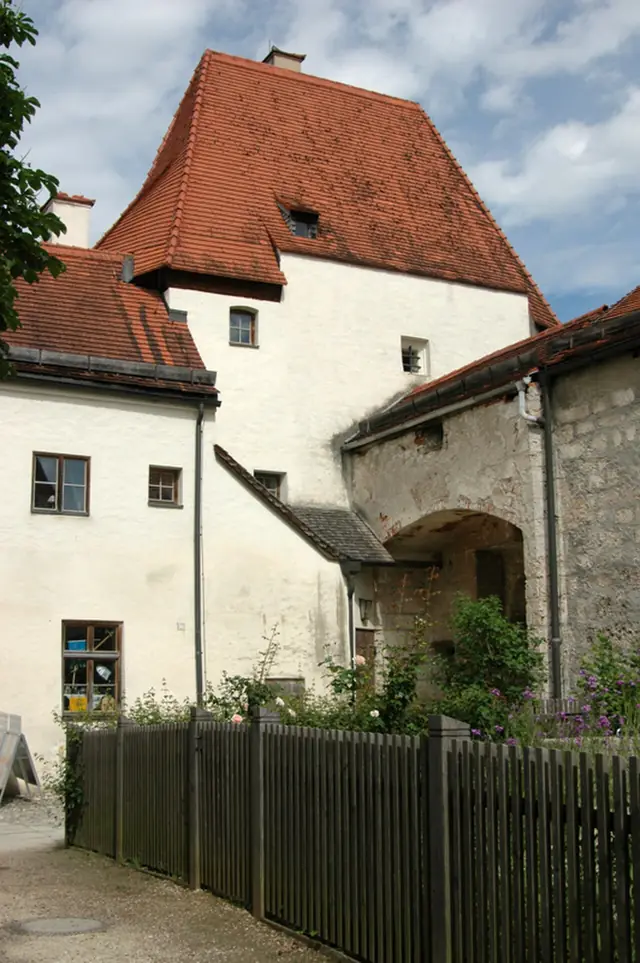
The castle is closed to cars. The museum is in the main castle at the end of the castle complex, entrance on the right in the castle courtyard.
Small museum shop at the ticket desk; lockers (€1). On the castle grounds there are a castle café and a kiosk.
Events & venue rental
As far as we know, the museum does not rent out spaces for external events.
No venue rental. The museum offers a seasonally changing supporting program and annual special exhibitions (information on the website).
Plan your visit
Guided tours
yes · approx. 1.5 hrs
School programs
yes
Photography
Permitted for private purposes, without flash, tripod or selfie stick.
Good to know
Tours only by arrangement via Burghauser Touristik. School classes and children's groups should register beforehand. Backpacks, large bags and umbrellas must go in lockers; animals other than assistance dogs are not allowed.