Dokumentations- und Gedenkstätte Rostock
Memorial in the former Stasi remand prison in Rostock with its cell block and exhibitions on persecution, opposition, and escape across the Baltic Sea.
About the museum
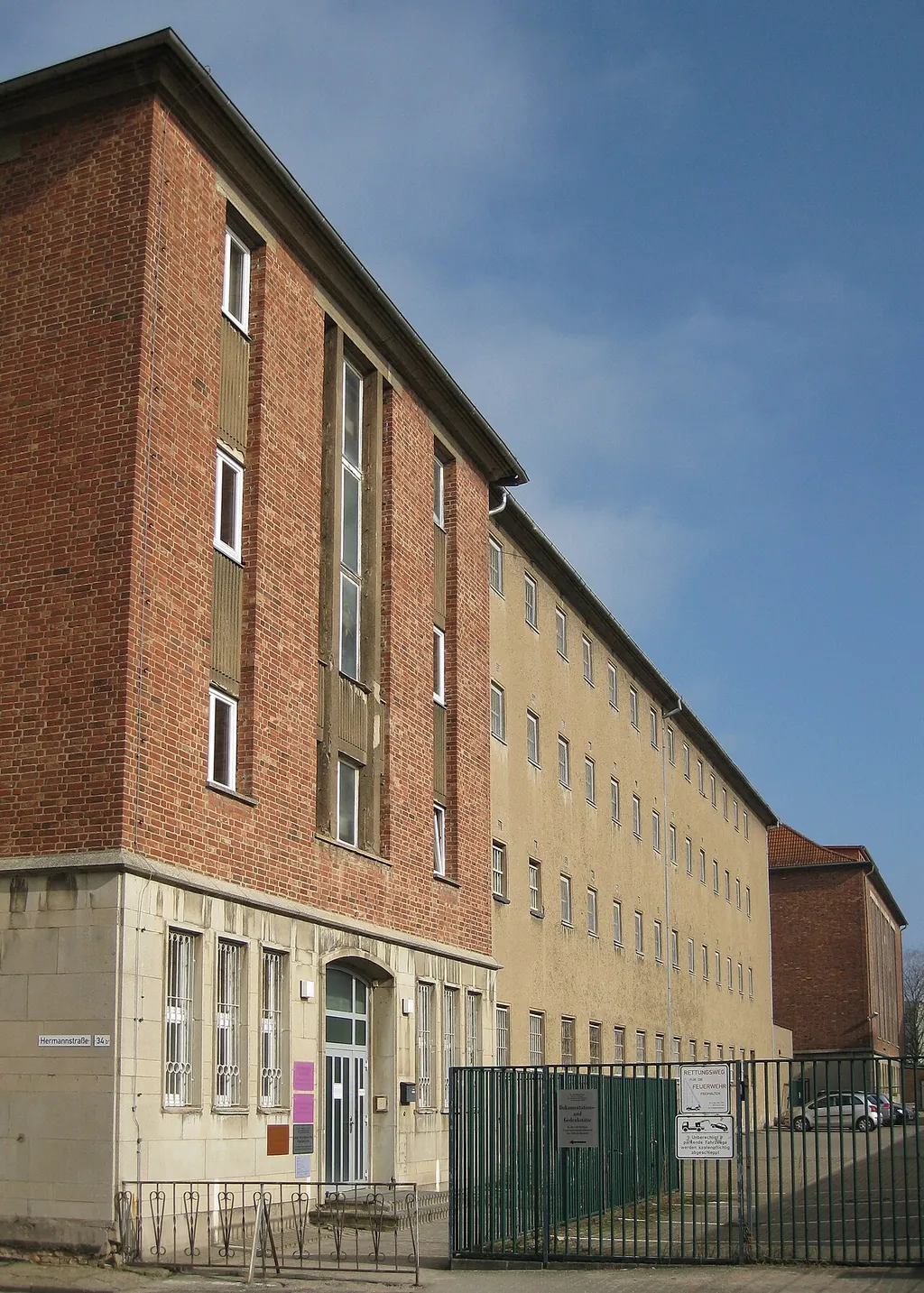
In the late 1950s, the Ministry for State Security (Stasi) had a remand prison built on the sealed-off grounds of its Rostock district administration; it took in its first prisoners in 1960. Until 1989, around 4,900 women and men were held in its roughly 50 cells on three floors, mostly for political reasons – for instance for "agitation," contacts with the West, or, increasingly, attempted escape. On average they spent five to six months in strict isolation and under constant interrogation before a court sentenced them.
In October 1999, the Federal Commissioner for the Stasi Records (BStU), together with the state of Mecklenburg-Vorpommern and the University of Rostock, opened a documentation center and memorial in the surviving cell block. More than 120,000 visitors came by 2017.
From 2017 to 2021, the listed building was extensively renovated. Since its reopening on July 2, 2021, the memorial has been run by the Landeszentrale für politische Bildung Mecklenburg-Vorpommern (state agency for civic education). An interim exhibition presents the historic site and the fates of the prisoners; there is also an exhibition on escape attempts across the Baltic Sea.
Highlights
- Original cell block of the Stasi remand prison
- Exhibition "Über die Ostsee in die Freiheit" (Across the Baltic to Freedom) with homemade escape devices
- Fates of political prisoners in the Rostock district
- Free audio guide via smartphone (German and English)
Permanent exhibitions
- Interimsausstellung zur Untersuchungshaft der Staatssicherheit – Presents the historic detention site and tells of opposition, political persecution, and the people who were held here.
- Über die Ostsee in die Freiheit – Exhibition created by the association of the same name about escape attempts on East Germany's Baltic coast, with homemade escape devices, life stories, and the border regime along the coast.
- Founded
- 1999
- Operated by
- Landeszentrale für politische Bildung Mecklenburg-Vorpommern
- Director
- Dr. Steffi Brüning
Admission & discounts
Admission is free.
Admission, audio guide, and public guided tours are free.
Accessibility
- Partially wheelchair accessible
- Elevator
- Accessible restroom: no information
- Accessible parking: no information
- Service dogs welcome: no information
- Tactile models & exhibits: no information
- Sign language tours: no information
- Easy-to-read materials: no information
- Audio description: no information
According to the operator, the exhibition is largely accessible; an elevator serves four floors, but the basement is not accessible.
Kids & families
Only partly suitable for kids
Memorial on political imprisonment in the GDR; educational programs are aimed at registered groups and school classes.
Getting there & parking
By public transit
Steintor (Straßenbahn) · 10-min walk
Tram to Steintor, then about a 10-minute walk; about a 15-minute walk from Rostock Hauptbahnhof (main station).
By car
Parking available
No parking lots of its own; nearby parking garage August-Bebel-Straße and public parking spaces on Hermannstraße.
Amenities & dining
The museum hasn’t published any information on this – please ask the museum directly.
Events & venue rental
The museum hasn’t published any information on this – please ask the museum directly.
Plan your visit
| Guided tours | yes |
|---|---|
| Audio guide | yes (DE, EN) |
| School programs | yes |
| Good to know | Audio guide via QR codes using your own smartphone and headphones. Public guided tours on Thursdays at 15:00 during the season (July to the end of October according to the German website, July to November according to the English website; except on public holidays). For registered groups, overview and themed tours as well as study days; English tours for 6 or more people on request. Exhibition texts are currently only in German. |