Darmstadt artist Ole Kleffmann portrays 21 endangered native animal species in pastel chalk and ink, complemented by fact sheets on their way of life and the threats they face.
About the museum
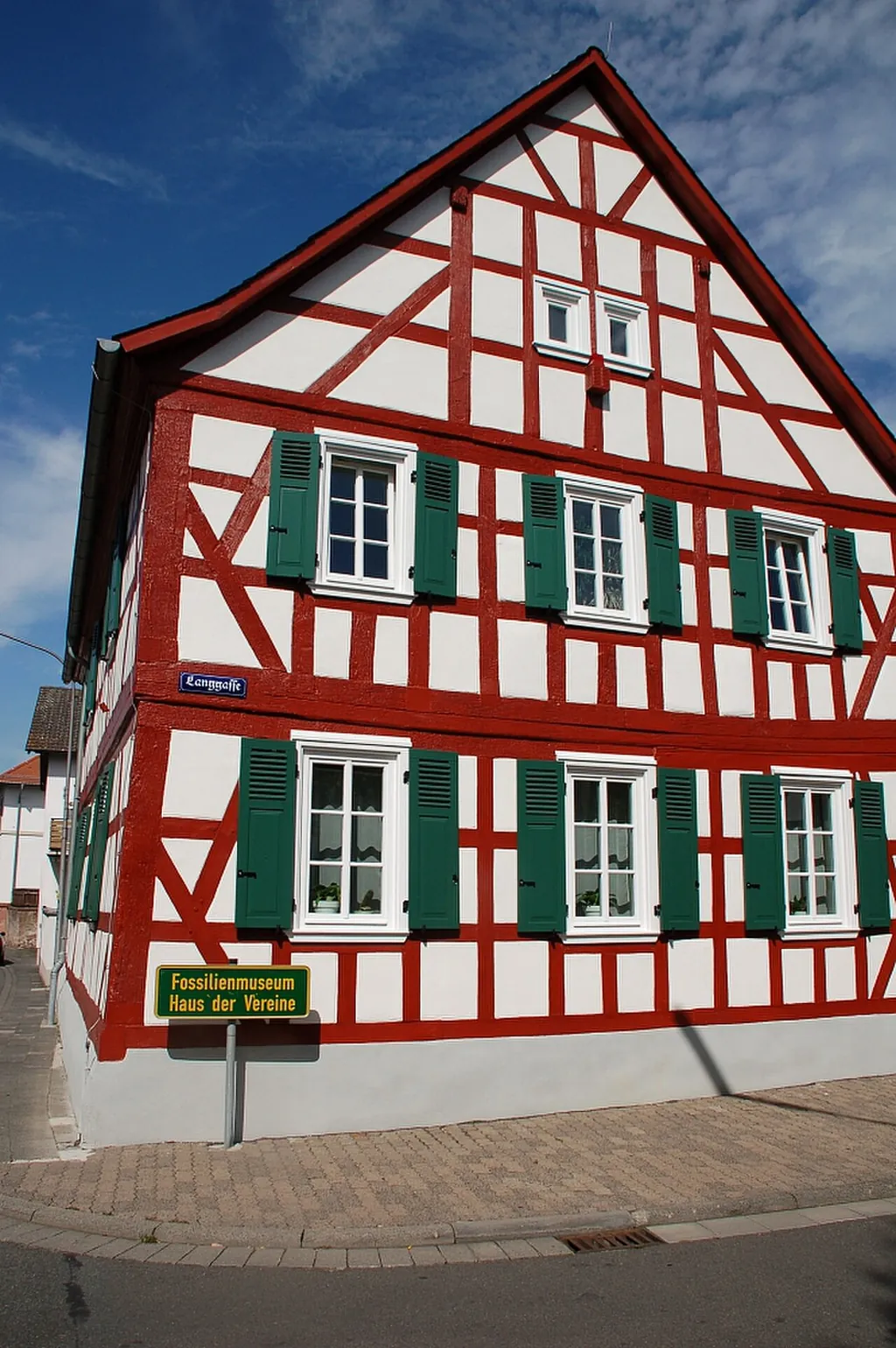
The Museumsverein Messel (museum association) was founded in 1978, at a time when amateur paleontologists were searching for fossils in the disused pit and local residents were fighting a large landfill planned there. In 1980, the association opened the Fossilien- und Heimatmuseum in a historic half-timbered house on Langgasse in the village center. The municipality of Messel is the museum's sponsor, while the association runs it with volunteers.
The core of the exhibition is a large collection of animal and plant fossils from the sediments of a maar lake around 48 million years old – today's Messel Pit (Grube Messel). Many pieces and casts come from excavations by private collectors in the early 1970s, before the pit was closed off in 1974. The site has been a UNESCO World Natural Heritage Site since 1995; the museum collaborates with Senckenberg and the Hessisches Landesmuseum Darmstadt.
A second focus is local and industrial history: Messel was first mentioned in records in the year 800. From 1884, the pit's oil shale was industrially processed into mineral oil products; at times the plants employed up to 800 people. After mining ended in 1962, the open-pit hole was to become a garbage dump – a citizens' initiative fought back successfully from 1971, and in 1988 a court overturned the plans. In an annex, another section tells the history of the Earth with fossils from around the world.
Highlights
Fossils from the Messel Pit UNESCO World Heritage Site, such as early horses, bats and turtles
Smartphone audio guide to selected fossils
History of the oil shale industry at the Messel Pit
Citizens' protest against the planned landfill
Earth history section with fossils from around the world
Permanent exhibitions
Schatzfunde im Ölschiefer – die Fossilien – Animal and plant fossils from the Messel Pit in exceptional preservation, illustrating life 48 million years ago.
1220 Jahre Bauern und Arbeiter in Messel – Orts- und Industriegeschichte – From farming village to the oil shale industry to the successful resistance against the planned landfill in the pit.
Founded
1980
Operated by
Museumsverein Messel e.V. (Träger: Gemeinde Messel)
Admission & discounts
Admission is free.
Children & teens
–Free admission for everyone.
Free admission.
Accessibility
The museum hasn’t published any information on this – please ask the museum directly.
Kids & families
The museum hasn’t published any information on this – please ask the museum directly.
Getting there & parking
By public transit
Messel Rathaus
Messel station (in the Grube Messel district) on the Darmstadt–Aschaffenburg line; from there by bus to Messel Rathaus or about a 30-minute walk.
By car
Parking available · 5-min walk to the entrance
Parking at the sports field in Messel; the Messel RV site (Am Sportplatz 1) is also there, about a 5-minute walk from the museum.