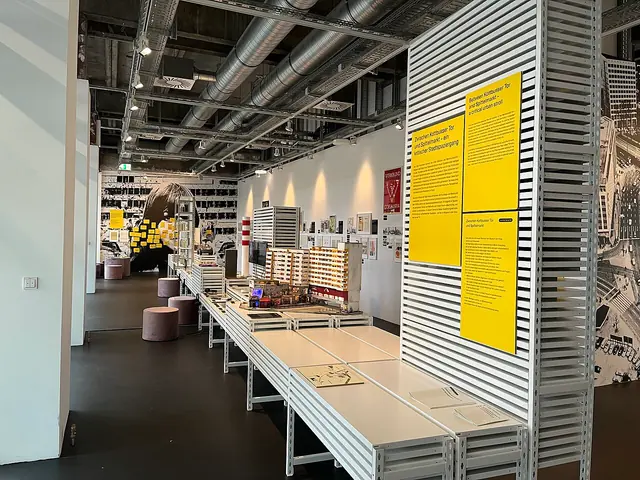
Spread across two floors, the exhibition shows the stories behind street names in the district and how renaming debates, for example over colonial references, are being fought out today; part of a series in twelve Berlin districts.
About the museum
The Kreuzberg Museum was founded in 1978 on the initiative of the Kunstamt Kreuzberg (district arts office) as a new kind of local museum focused less on traditional local lore than on everyday history and social change in the district. In Friedrichshain, the district cultural office set up its own district museum in the late 1980s.
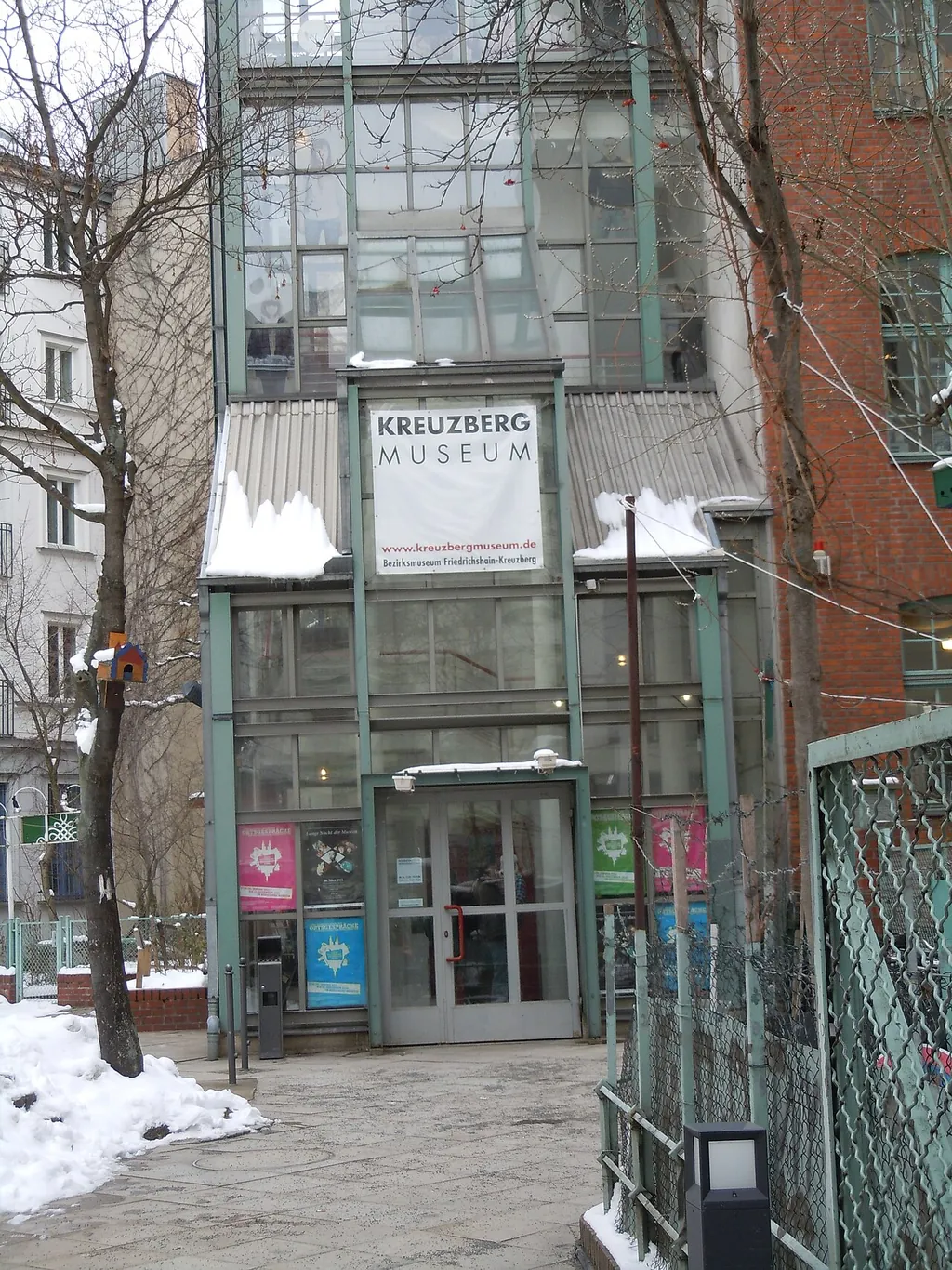
After the two districts merged, their collections were also combined in 2004; since 2013 the museum has been known as the FHXB Friedrichshain-Kreuzberg Museum. It is run by the district office (Bezirksamt). It is housed in a renovated former factory building on Adalbertstraße near Kottbusser Tor, which used to stand in a rear courtyard; after the neighboring buildings were demolished in the 1970s, it became freestanding beside a green space and received a glass elevator tower.
The museum sees itself as a forum and a memory for both parts of the district. Its topics include social movements, urban renewal and squatting, as well as industrial and migration history. It also has an archive with a library, the working print shop of Kreuzberg's last traditional letterpress printer, where printing projects with children also take place, and, since 2024, the historic pharmacy in the Bethanien, where Theodor Fontane worked as a pharmacist.
Highlights
Free admission to all exhibitions and events
Exhibition on demolition, protest and urban renewal at Kottbusser Tor
Open archive on anti-racist struggles in Germany
Historic letterpress print shop with working presses more than 100 years old
Theodor-Fontane-Apotheke pharmacy in the Bethanien as a branch site
Permanent exhibitions
Geschichte wird gemacht! Abriss und Aufbruch am Kottbusser Tor – A chronicle of the struggles over wholesale clearance redevelopment, squatting and careful urban renewal around Kottbusser Tor in SO 36.
Ver/sammeln antirassistischer Kämpfe – ein offenes Archiv – A growing archive documenting resistance and self-organization against racism in Germany, which invites visitors to contribute.
Die Museumsdruckerei Gerd Schneider – The installed workshop of Kreuzberg's last traditional letterpress print shop, from Ritterstraße, with presses and type cases that can still be used.
Founded
1978
Operated by
Bezirksamt Friedrichshain-Kreuzberg (Fachbereich Kultur und Geschichte)
Director
Natalie Bayer
Admission & discounts
Admission is free.
Children & teens
–Free admission
Seniors
–Free admission
Visitors with disabilities
–Free admission
Students & apprentices
–Free admission
Groups (10+ people)
–Free admission; groups of 10 or more please register in advance
Families
–Free admission
Exhibitions, collection and events are free.
Accessibility
Wheelchair accessible
Elevator
Accessible restroom
Accessible parking: no information
Service dogs welcome
Tactile models & exhibits: no information
Sign language tours: no information
Easy-to-read materials
Audio description: no information
Step-free entrance via the glass tower, elevator (door width approx. 1 m) to all floors, wheelchair-accessible restroom in the basement. Exhibition texts also in Easy Language, media stations with video and audio.
Kids & families
Playground / play area
The museum is located in a courtyard with a public playground. The printing workshop KINDERhandPRESSE works with daycare centers, schools, and initiatives from the district.
Getting there & parking
By public transit
Kottbusser Tor · 200 m
U1, U3, U8 and bus 140 to Kottbusser Tor; bus M29 to Adalbertstraße/Oranienstraße.
By car
No on-site parking at the museum.
No parking options in the immediate vicinity, and no accessible parking spaces either.
Entrance via a cobblestone inner courtyard; the courtyard gate sometimes has to be opened yourself.
Coat racks in the exhibitions; three lockers in the bookshop on request.
Events & venue rental
The museum hasn’t published any information on this – please ask the museum directly.
Plan your visit
Guided tours
yes
School programs
yes
Good to know
Short guided tours on request; public guided tours as listed in the events program. KINDERhandPRESSE print workshop with projects for schools, daycare centers and local initiatives from the district (inquiries by email).