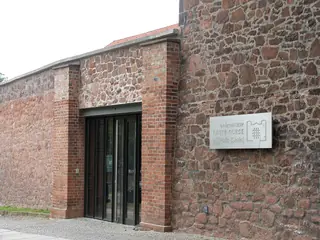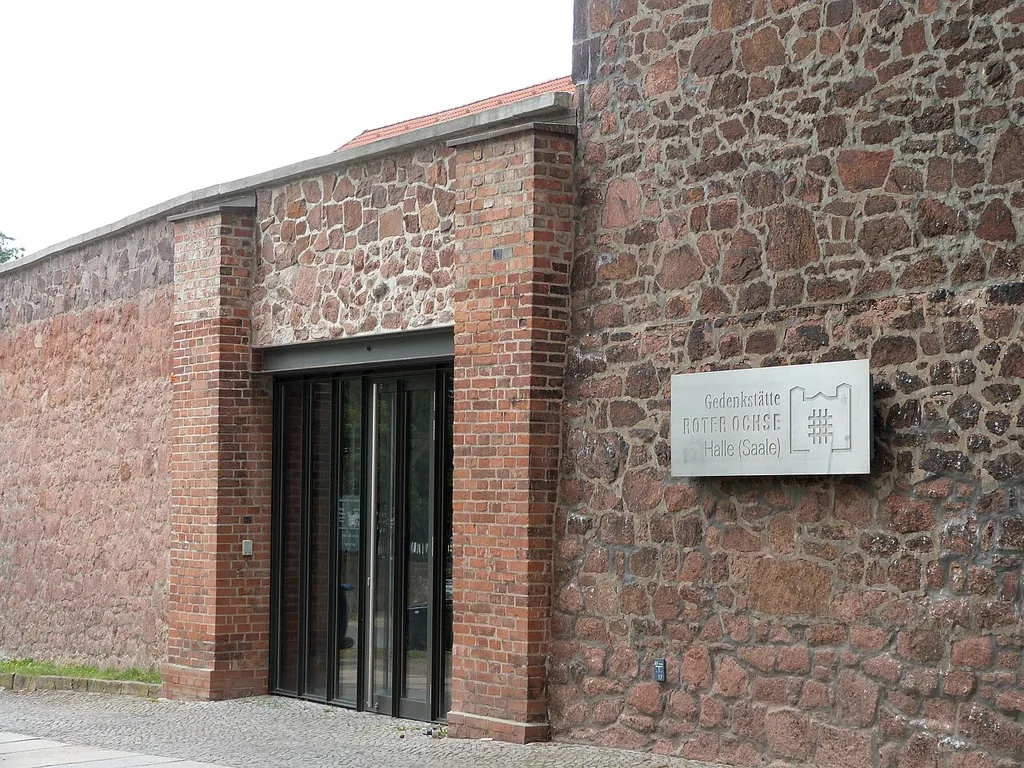
Gedenkstätte ROTER OCHSE
Memorial in the "Roter Ochse" prison in Halle on political justice under National Socialism, Soviet occupation and the GDR.
Have only individual sections read aloud
About the museum
The penal institution in Halle opened in 1842; it probably owes its nickname "Roter Ochse" (Red Ox) to the red bricks and porphyry of its walls. Political prisoners were held here as early as after the revolution of 1848/49. In the Nazi era the building served as a penitentiary and, from 1942, as an execution site: until the end of the war, 549 people from 15 European countries as well as from Tunisia were killed here by guillotine or hanging.
After liberation in April 1945, the Soviet occupying power used the prison for seven years; many people sentenced by military tribunals were taken to special camps or to the Gulag. From 1950 to 1989 the Ministry for State Security ran a remand prison in part of the complex, through which almost 10,000 people passed, while other areas served for the execution of sentences.
Since 1996 a memorial in the former execution building, which the Stasi had converted into an interrogation wing, has commemorated the victims of both dictatorships. The current permanent exhibition of 2006 extends over more than 800 square metres: the ground floor documents Nazi justice, including the uncovered remains of the execution site and a book of the dead, while the interrogation floor covers the Soviet occupation period and the work of the Stasi. The memorial belongs to the Saxony-Anhalt Memorials Foundation and is at once a place of learning, research and mourning.
Key themes
- Uncovered remains of the Nazi execution site and a book of the dead with the names of all victims
- Original interrogation floor of the Stasi remand prison
- Armoury and photo lab with original furnishings
- Eyewitness interviews at media stations
- Free admission
Permanent exhibitions
- Politische Justiz 1933–1945 – The ground floor shows prison conditions, courts and victims of Nazi justice; in the former execution room, remains of the execution site have been uncovered.
- Politische Justiz 1945–1989/90 – The preserved interrogation floor deals with the Soviet occupation period and Stasi remand custody, complemented by original furnishings and eyewitness accounts.
- Founded
- 1996
- Operated by
- Stiftung Gedenkstätten Sachsen-Anhalt
- Director
- Michael Viebig
Admission & discounts
Admission is free.
Admission is free; guided tours and project days are also free of charge.
Accessibility
- Wheelchair accessible
- Elevator
- Accessible restroom
- Accessible parking
- Service dogs welcome
- Tactile models & exhibits: not available
- Sign language tours: no information
- Easy-to-read materials: no information
- Audio description: no information
The building, exhibition and seminar rooms can be reached step-free or by lift; a few doors are narrower than 90 cm, and there are occasional thresholds. Visitors with reduced mobility can park in the courtyard. No Braille information, no tactile guidance system. English handout on the exhibition texts at the reception desk. Advance registration is requested if assistance is needed.
Kids & families
Only partly suitable for kids
Programmes are aimed at school classes and adult groups; the subject and exhibition are not very suitable for younger children.
Getting there & parking
By public transit
Hermannstraße
Tram line 7 to Hermannstraße or line 8 to Peißnitzstraße/Diakonie.
By car
No on-site parking at the museum.
Visitors with reduced mobility may drive onto the grounds and park in the memorial's courtyard (please call if the gate is locked).
- Accessible parking
By car via the A14/B100 to Paracelsusstraße, then via Wolfensteinstraße, Große Brunnenstraße and Burgstraße to the street Am Kirchtor.
Get directionsAmenities & dining
The museum hasn’t published any information on this.
Events & venue rental
The museum hasn’t published any information on this.
Plan your visit
| Guided tours | yes · approx. 1.5 hrs |
|---|---|
| School programs | yes |
| Good to know | Group tours (90–120 minutes) only after registration by phone or in writing, with the focus agreed in advance (general overview, 1933–1945 or 1945–1989/90). Project days (3–5 hours) and project weeks, with an eyewitness talk on request. The exhibition texts are in German. |
Museums nearby
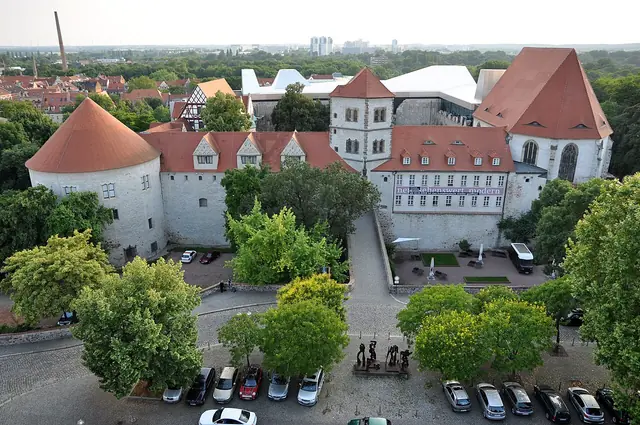
Kunstmuseum Moritzburg Halle (Saale)
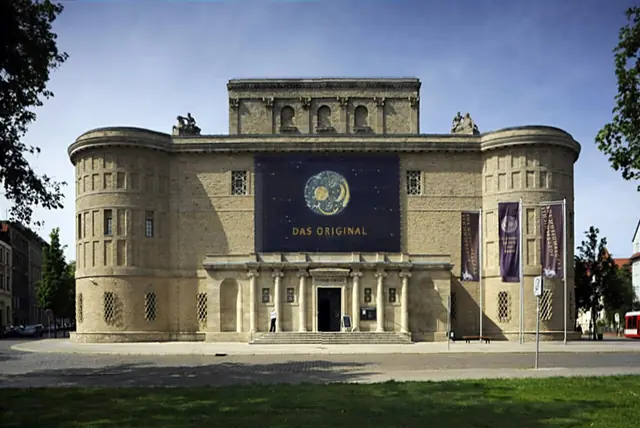
Landesmuseum für Vorgeschichte Halle
Zentralmagazin Naturwissenschaftlicher Sammlungen
Universitätsmuseum Halle
Archäologisches Museum der Martin-Luther-Universität Halle-Wittenberg
Geiseltalmuseum
All 21 museums in Halle (Saale) All museums in Saxony-Anhalt