Gedenkstätte und Museum Sachsenhausen
Memorial at the site of the Sachsenhausen concentration camp and the Soviet special camp in Oranienburg – numerous exhibitions, free admission.
About the museum
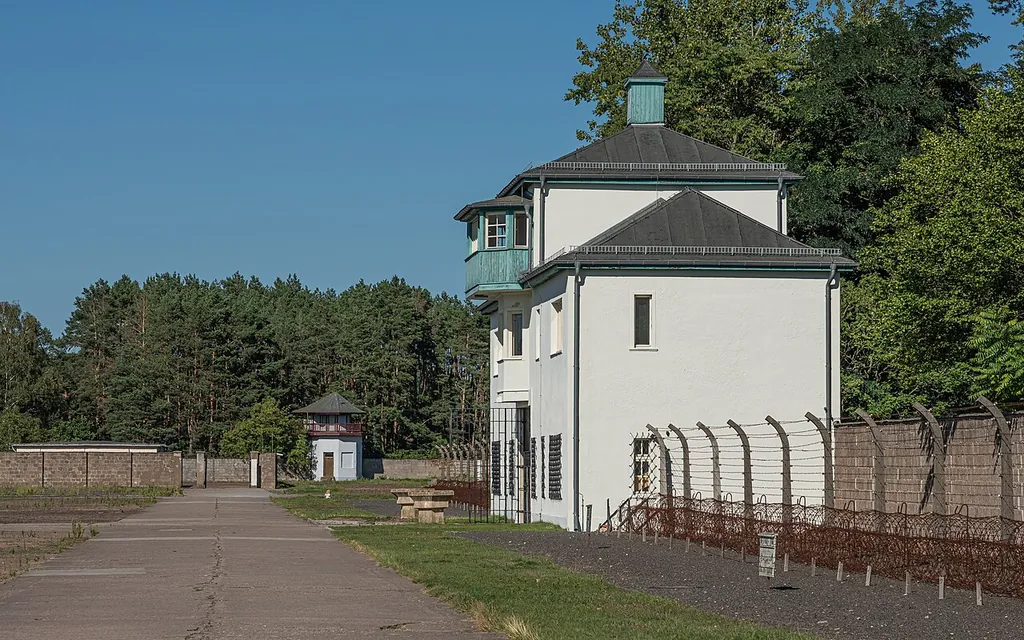
From 1936, the SS had the Sachsenhausen concentration camp built in Oranienburg, north of Berlin. From 1938, the SS authority that administered the entire network of concentration camps was also located in the immediate neighborhood. Until the liberation in April 1945, the prisoners suffered hunger, forced labor and violence; thousands were murdered, including around 13,000 Soviet prisoners of war in the autumn of 1941 alone.
After the end of the war, the Soviet secret service used the core area until 1950 as a special camp in which around 60,000 people were held; about 12,000 of them died. In April 1961, the GDR opened the Nationale Mahn- und Gedenkstätte Sachsenhausen (National Memorial Sachsenhausen) with its widely visible obelisk on a small part of the former camp grounds.
Since 1993, the memorial has belonged to the Stiftung Brandenburgische Gedenkstätten (Brandenburg Memorials Foundation), which is supported by the state and federal governments. In the following years, the surviving buildings were renovated, some GDR-era alterations were reversed and a decentralized exhibition concept was implemented. In 1992, an antisemitic arson attack had severely damaged Barracks 38 and 39; today a museum there shows the history of the Jewish prisoners.
At the authentic sites – from the commandant's house through the cell block and the infirmary to the prisoners' kitchen – the exhibitions link the history of each building with overarching themes. The institution sees itself as a cemetery, place of remembrance, place of learning and contemporary history museum, combining collection, archive and research with historical and political education.
Highlights
- Permanent exhibitions in original camp buildings
- "Station Z" memorial site with open-air documentation
- Museum in Barracks 38 on the Jewish prisoners
- Museum on the Soviet special camp 1945–1950
- Tactile models and bronze models of the camp
- Free admission, audio guide in eight languages
Permanent exhibitions
- Das KZ Sachsenhausen 1936–1945. Ereignisse und Entwicklungen – Overview exhibition in the former prisoners' kitchen that traces the development of the camp from 1936 to the liberation through key events; wall paintings from the camp period are preserved in the basement.
- Jüdische Häftlinge im KZ Sachsenhausen 1936 bis 1945 – In the rebuilt Museum in Barracks 38, the fate of the Jewish prisoners is shown through the life stories of individual inmates.
- Sowjetisches Speziallager Nr. 7/Nr. 1 (1945–1950) – A museum building opened in 2001 and two surviving stone barracks document the postwar use as a camp of the Soviet secret service and the fates of those imprisoned.
- Founded
- 1993
- Operated by
- Stiftung Brandenburgische Gedenkstätten
- Director
- Prof. Dr. Axel Drecoll
- Visitors per year
- approx. 500,000 (2025)
Admission & discounts
Admission is free.
| Children & teens | –Admission free for everyone. |
|---|---|
| Groups (8+ people) | –Group tours (8–25 people): German or simple language €90, reduced (e.g., schools) €50; foreign language €110, reduced €90. Workshops: German €140, reduced €75; foreign language €160, reduced €110 (prices per group). |
| Audio guide | €3.50Group rate for 10 or more devices €2.50 per device |
| Public tour (Saturdays) | €3reduced €2 |
Admission to the memorial and all exhibitions is free. Costs arise only for audio guides, public tours, and booked group tours and workshops.
Accessibility
- Partially wheelchair accessible
- Elevator
- Accessible restroom
- Accessible parking
- Service dogs welcome
- Tactile models & exhibits
- Sign language tours
- Easy-to-read materials
- Audio description: no information
Because of its protected status as a monument, the grounds are only partially accessible; wheelchair users and people with visual or mobility impairments should come accompanied. Loan wheelchairs at the visitor information center. Low-barrier restrooms in the visitor information center, in the café, in the former prisoners' kitchen, in the library and in the former infirmary. Three accessible parking spaces near the entrance; the path from the parking lot first leads over cobblestones. Three large tactile models stand in front of the visitor information center. Sign language interpretation on request, group tours in simple language with materials in Easy Language. Assistance dogs are allowed.
Kids & families
Only partly suitable for kidsRecommended for ages 12+
| Time needed | approx. 2 hrs |
|---|
- Baby changing facilities
The content and images in the exhibitions and on the grounds are not suitable for children under 12. Tours and educational programs are aimed at young people aged 14 and over. A baby changing table is located in the Café im Neuen Museum.
Getting there & parking
By public transit
Gedenkstätte
S-Bahn S1 or regional trains RE 5, RB 12, RB 20 and RB 32 to Oranienburg station; continue from the station forecourt by bus 804 (toward Malz) or 821 (toward Tiergarten) to the stop "Gedenkstätte" or walk about 20 minutes.
By car
Parking available
Parking lot directly at the entrance to the memorial (also for tour buses), three accessible parking spaces near the entrance. Do not leave valuables or luggage in the vehicle.
- Accessible parking
Get off regional trains in Oranienburg, not at Sachsenhausen station. By car from Berlin via the A 111 and A 10 to the Birkenwerder exit, then the B 96 to Oranienburg and follow the signs. Bicycle racks at the visitor information center.
Get directionsAmenities & dining
- Café
- Lockers
"Café im Neuen Museum" (daily 9:00–17:00) with drinks, sandwiches and cake, also in the inner courtyard from spring to autumn; you may eat food you have brought with you there. Lockers for medium-sized bags in the visitor information center; larger luggage cannot be stored.
Events & venue rental
The museum hasn’t published any information on this – please ask the museum directly.
Plan your visit
| Guided tours | yes · approx. 2 hrs |
|---|---|
| Audio guide | yes (DE, EN, ES, FR, IT, NL, PT, RU) |
| School programs | yes |
| Photography | Photography without flash and other lighting is permitted; recordings of tours as well as publications (journalistic or commercial) only with permission. |
| Good to know | Public tours every Saturday at 11:00 (English) and 14:00 (German), lasting about two hours, recommended from age 14; registration only on site at the visitor information center. Please request group tours and workshops several months in advance via the memorial's booking page. In the former prisoners' kitchen, an introductory film of about 30 minutes (German, English, French, Spanish) runs during opening hours. The free berlinHistory.app is also available for self-guided exploration. The large outdoor grounds require weatherproof clothing and sturdy footwear. Animals (except assistance dogs) and bicycles are not allowed on the grounds. |