Through October 31, 2026
Mykene – 150 Jahre Ausgrabung der Königsgräber
The exhibition on the top floor recalls Schliemann's 1876 excavation in the grave circle at Mycenae and presents the individual shaft graves and their finds.
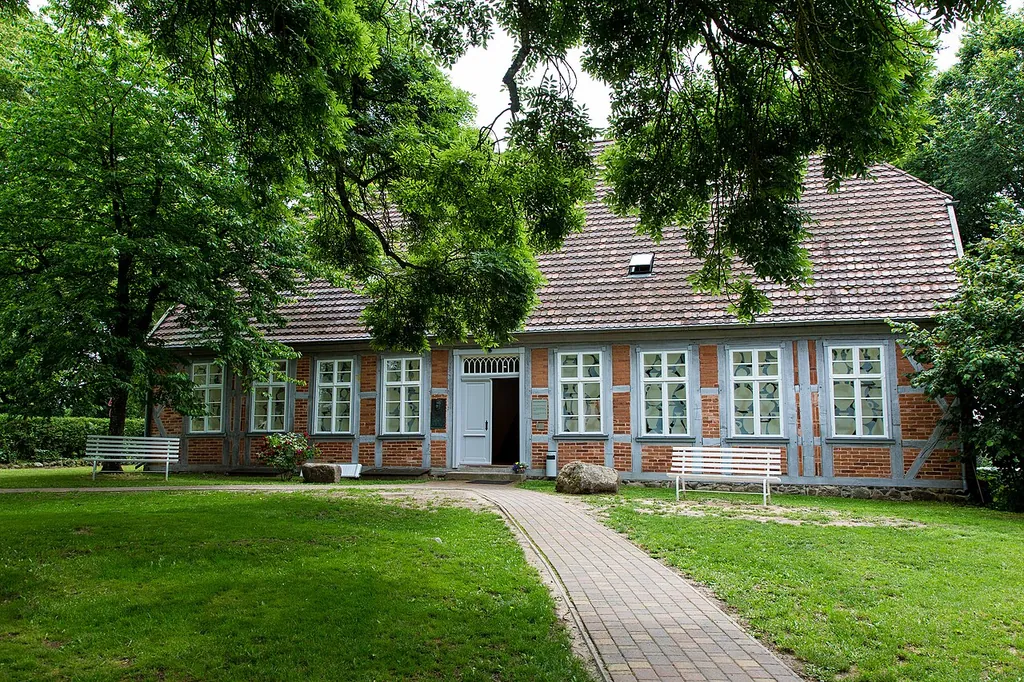
Museum in Heinrich Schliemann's childhood home in Ankershagen covering the life and excavations of the discoverer of Troy, with original finds from Troy.
Through October 31, 2026
The exhibition on the top floor recalls Schliemann's 1876 excavation in the grave circle at Mycenae and presents the individual shaft graves and their finds.
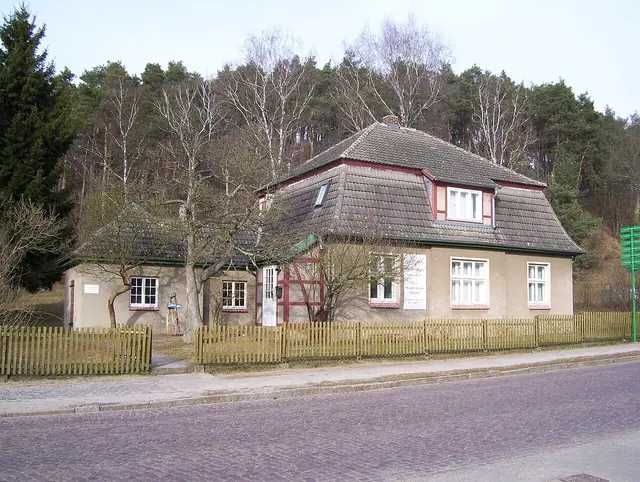
Heinrich Schliemann (1822–1890) grew up from 1823 to 1831 in the rectory of Ankershagen, where his father served as pastor. After a memorial plaque was put up in 1959, a citizens' initiative began campaigning for a memorial site in 1977. In 1980 a memorial opened in rooms provided by the parish, and a few years later it was expanded into a museum. Its initiator and first director was Wilfried Bölke.
The museum became a center of Schliemann research. From 1987 onward, donations from his descendants built up an archive of original family letters; it was supplemented by copies of more than 37,000 documents from his papers held at the Gennadius Library in Athens. Since 1991 the Heinrich-Schliemann-Gesellschaft has supported the museum, and in 2001 it was included in the federal government's Blaubuch (Blue Book) as a "Kultureller Gedächtnisort" (site of cultural memory).
After a modernization that began in 2017, the museum reopened in June 2019 with a new permanent exhibition. Ten themed rooms trace Schliemann's path from pastor's son to merchant and citizen of the world and finally to excavator of Troy, Mycenae, and Tiryns. On display are around 100 original finds from Troy, some on loan from Berlin's Museum für Vor- und Frühgeschichte, along with replicas of the famous gold finds.
The grounds include the former barn with the museum bistro, the spacious rectory garden, and a six-meter-tall Trojan Horse, set up in 1996 and renewed in 2019. Today the museum is run by MuSeEn gGmbH.
| Adults | €8 |
|---|---|
| Reduced | €6.50People with severe disabilities, students, apprentices, the unemployed, and school students aged 17 and over |
| Children & teens | €3.50Children's rate from age 6 to 16; no information for younger children. |
| Seniors | –No senior discount listed. |
| Visitors with disabilities | €6.50People with severe disabilities pay the reduced price. |
| Students & apprentices | €6.50 |
| Groups (15+ people) | €6.50 per personPrice per person. |
| Families | €19.50For 2 or more adults with 2 or more children up to age 16. |
| Project fee for school classes (per person) | €2.50 |
Admission includes the special exhibition. Guided tours: tour of the permanent exhibition €50, introduction €35, for school classes €10.
The permanent exhibition and shop on the first floor are step-free; the special exhibition and Schliemann's childhood bedroom on the upper floor are reachable only by stairs. Wheelchair-accessible restroom in the ground-level museum bistro. Audio stations in the permanent exhibition.
Great for kids & families
| Family ticket | €19.50 · For 2 or more adults with 2 or more children up to age 16. |
|---|
Children's museum trail with listening and knowledge stations and a quiz, interactive stations in Schliemann's former nursery. In the outdoor area, a walk-in Trojan Horse with a slide and a sandbox for excavations (tools against a deposit). Family days, holiday programs, and children's birthday parties (about 2.5 hours).
Nearest train station is Kratzeburg; continue by bus (MVVG) via Möllenhagen or about 30 minutes by bike. Ankershagen lies on the Berlin–Copenhagen cycle route.
Free parking
Free public parking lot near the museum.
Museum bistro in the former barn with outdoor seating in the park; museum shop with books on Schliemann and antiquity.
The museum hasn’t published any information on this – please ask the museum directly.
| Guided tours | yes |
|---|---|
| School programs | yes |
| Good to know | Request guided tours by email. Animals (including dogs) are not allowed in the museum. Exhibition texts also in English. |
Cookies help you use this website. We only load the map and statistics with your consent.