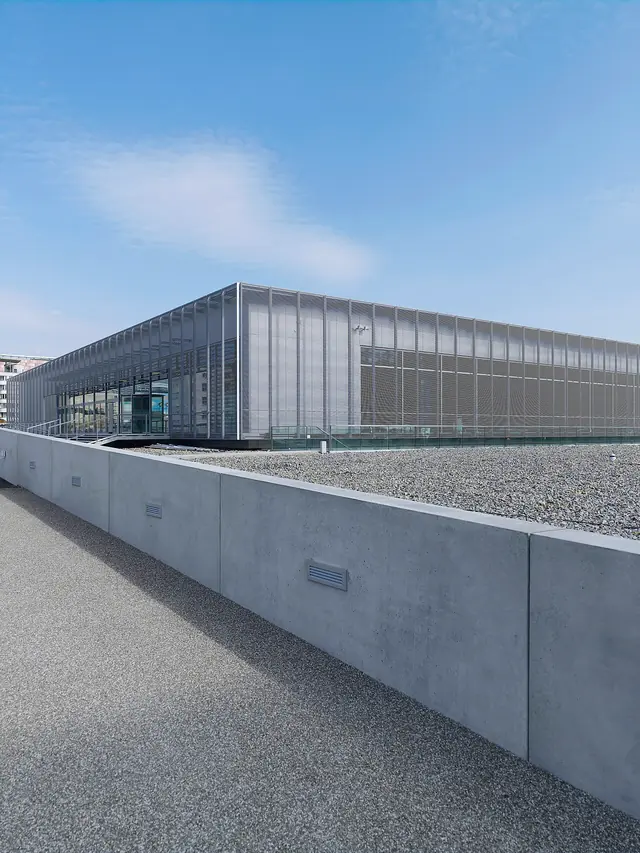
Libeskind building in Kreuzberg with a large permanent exhibition on Jewish history and the present in Germany, plus the ANOHA children's world – permanent exhibition free.
For the 25th anniversary, drawings and models document how Libeskind's design took shape around 1989 and shaped the debate on remembrance culture. Free admission.
Announced exhibition on the history of the Schlager (German popular song) from the 1920s to the 1980s from a Jewish perspective, told through the careers of Jewish artists.
About the museum
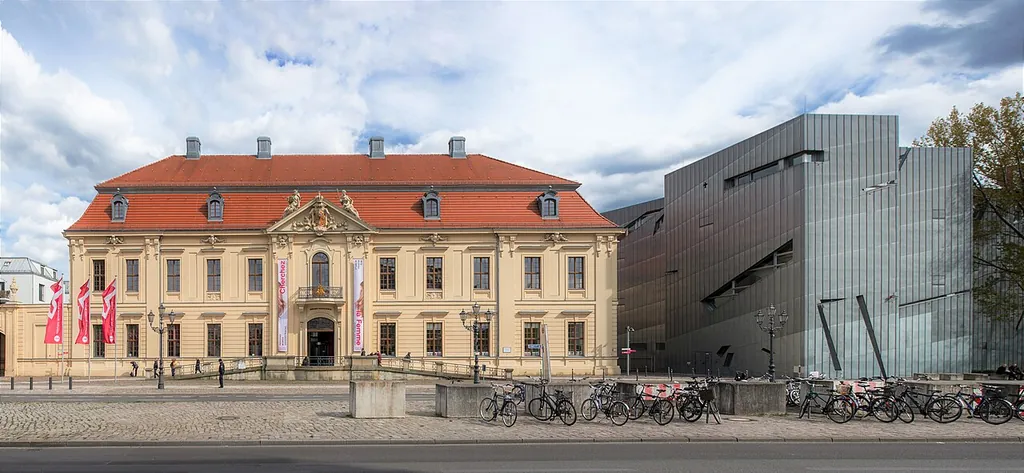
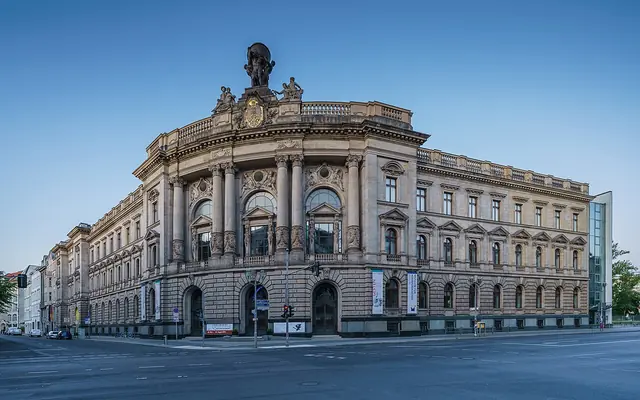
Plans for a Jewish museum emerged in West Berlin even before the fall of the Wall; at first, a Jewish department of the city-history Berlin Museum was envisaged. In 1989 the architect Daniel Libeskind won the competition for its extension. Founding director W. Michael Blumenthal pushed through the museum's independence: in 2001 it became a federal foundation and has since used the entire ensemble of the Baroque old building and the Libeskind building on Lindenstraße.
In September 2001 the museum opened with its first permanent exhibition. The zigzag-shaped new building, with its sloping axes, empty spaces (Voids), the Holocaust Tower and the Garden of Exile, quickly became a Berlin landmark and drew around 700,000 people a year. The glass courtyard designed by Libeskind was added in 2007, followed in 2012 by the Academy across the street, which today bears W. Michael Blumenthal's name.
After several years of reconception, the current permanent exhibition opened in August 2020, presenting Jewish history and culture in Germany from the Middle Ages to the present. It was followed in 2021 by the ANOHA children's world with a walk-in wooden ark. Hetty Berg has headed the museum since April 2020; it celebrates its 25th anniversary in 2026.
The collection includes works of art, ritual objects and everyday items, as well as an extensive archive with documents on the lives and fates of Jewish families from Germany.
Highlights
Libeskind building with axes, Voids, Holocaust Tower and Garden of Exile
Permanent exhibition “Jewish History and the Present in Germany” on around 3,500 m²
Installation “Shalekhet – Fallen Leaves” by Menashe Kadishman
ANOHA children's world with a wooden ark and around 150 play animals
Glass courtyard based on Libeskind's design of a sukkah (festive hut)
Permanent exhibitions
Jüdische Geschichte und Gegenwart in Deutschland – The interactive permanent exhibition in the Libeskind building combines a historical tour from the Middle Ages to today with themed rooms on religion, art and music.
ANOHA – Die Kinderwelt des Jüdischen Museums Berlin – Children's museum for ages 3 to 10, open since June 2021, centered on a giant wooden Noah's Ark with around 150 play animals.
Founded
2001
Operated by
Stiftung Jüdisches Museum Berlin
Director
Hetty Berg
Visitors per year
approx. 729,559 (2023)
Admission & discounts
Admission is free.
Children & teens
freefree up to age 17 · Permanent exhibition and ANOHA free for everyone; temporary exhibitions free for children and teens under 18.
Seniors
–No senior discount for temporary exhibitions.
Visitors with disabilities
–companion free · Permanent exhibition free; temporary exhibitions in the old building reduced for people with a severe disability of degree 50 or higher (€4 according to the price list, €3 according to the accessibility page). Companion with “B” marker admitted free.
Students & apprentices
–Permanent exhibition free; temporary exhibitions in the old building reduced to €4 for school students, university students, Federal Volunteer Service participants and the unemployed (ALG I).
Groups
–Admission to the permanent exhibition is free for groups too; group registration is mandatory. Guided tours for up to 15 people (60/90 min.): permanent exhibition €100/€150, temporary exhibition €80/€120 plus admission; reduced €50/€60 and €45/€50 respectively, school groups €35/€45. External guides pay a €120 license fee per group. Booking via visit@jmberlin.de.
Families
–No family ticket needed: the permanent exhibition and ANOHA are free, and children under 18 pay nothing in temporary exhibitions either.
The permanent exhibition, presentations in the Libeskind building and ANOHA are free; a timed ticket (online or at the ticket desk) is still required. Temporary exhibitions in the old building cost €10, reduced €4. Online bookings for ANOHA carry a booking fee of €3 per shopping cart (free at the ticket desk). Public themed tours €6, reduced €3. The Museumspass Berlin is valid for temporary exhibitions; reduced admission with a ticket from the Berlinische Galerie (and vice versa).
Accessibility
Wheelchair accessible
Elevator
Accessible restroom
Accessible parking
Service dogs welcome
Tactile models & exhibits
Sign language tours
Easy-to-read materials
Audio description
The entire exhibition area is wheelchair-accessible via ramps and elevators (with raised lettering); main entrance via a step-free path with a gradient of about 9%. Outdoor areas partly have historic paving – the group entrance and museum garden are not accessible. Loan wheelchairs in the foyer (reservation recommended). Two accessible restrooms, two accessible parking spaces near the entrance. Induction loops in two rooms of the permanent exhibition. Twelve tactile maps, tactile models and listening stations; the JMB app offers audio legends for the tactile maps and introductions in German Sign Language (DGS) and Easy Language (Leichte Sprache). Tours in DGS and plain language, as well as sound and touch tours for blind people. Quiet room for neurodivergent people. No tactile floor guidance system.
Kids & families
Great for kids & families
Kids’ admission
free up to age 17
Family tours & workshops
Hands-on stations
Stroller-friendly
Baby changing facilities
Playground / play area
According to the museum, the permanent exhibition is also suitable for children and teens and has interactive stations. Separate ANOHA children's world for ages 3 to 10 with a large wooden ark and around 150 animal figures (entrance on Enckestraße, free admission, book a time slot). Family workshops (ages 7 and up) and a bookable tour for ages 6 to 10. Strollers allowed in all exhibition rooms, bike trailers not; baby changing facilities in the old building and in the basement of the Libeskind building.
Getting there & parking
By public transit
Jüdisches Museum
U1, U3, U6 to Hallesches Tor (approx. 500 m); U6 to Kochstraße/Checkpoint Charlie (approx. 600 m); bus 248 to Jüdisches Museum, M29 to Lindenstraße/Oranienstraße, M41 to Zossener Brücke.
By car
Parking available
No museum parking lot; parking and stopping are prohibited directly in front of the museum. Limited parking in the surrounding streets. Around six bus parking spaces on the opposite side of Lindenstraße (cannot be reserved).
Café “Shalom’chen Berlin” with vegetarian and vegan Israeli cuisine (Tue–Sun 10:00–17:00, hot food 12:00–16:00, card payment only); café, shop, glass courtyard and garden also accessible without a ticket. JMB Shop in the foyer of the old building (Tue–Sun 10:00–18:00). No cloakroom, but lockers (50-cent/€1 deposit) that also fit carry-on suitcases. Free Wi-Fi (Telekom, up to 3 hrs). Food brought from home is allowed in the glass courtyard and garden.
Events & venue rental
Spaces for rent
Corporate events
Up to 500 guests.
Glass courtyard (657 m²) for up to 320 people at banquet seating or 500 for a standing reception – not available for rent from June 15 to August 31 for climate-protection reasons. Large hall in the old building for conferences of up to 200 people, auditorium for up to 80 people, museum garden for receptions. Contact: events@jmberlin.de.
Photography and filming for private purposes allowed, without tripod, flash or selfie stick; professional shoots only by arrangement with the press office.