Kloster Irsee
Baroque Benedictine monastery, now an education center of the Bezirk Schwaben (Swabian district), with a freely accessible exhibition on the history of the asylum and the Prosektur memorial site.
Show individual sections
About the museum
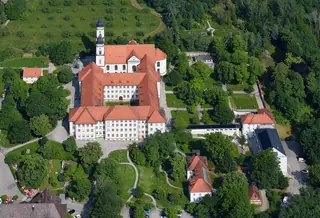
Between about 1180 and 1185, a community of hermits in the Eiberg forest became a Benedictine monastery. It was soon moved to its present site and was raised to imperial abbey status in 1692–94. Between 1699 and 1735, the complex was largely rebuilt with the involvement of Franz Beer, Magnus Remy and other artists. Highlights include the staircase with stucco by Franz Schmutzer and ceiling paintings by Franz Anton Erler, as well as the monastery church with the organ by Balthasar Freiwiß.
After secularization in 1802–03, the first Swabian district asylum opened in the convent building in 1849; until 1972 it operated as a department for chronically ill patients. During the Nazi era, patients were transported from here to killing centers. In Irsee itself, more than 800 people died between 1940 and 1945 from neglect, hunger or medication.
After a complete renovation, the site has served since 1981 as a conference, education and cultural center of the Bezirk Schwaben. Reminders of the asylum period include an information room with a permanent exhibition on the history of psychiatry, the Prosektur, which has been designed as a memorial site, the asylum cemetery with a memorial, and Stolpersteine (stumbling stones).
Highlights
- “Anstalt Irsee” information room with a permanent exhibition on the history of psychiatry (free admission)
- Prosektur memorial site and asylum cemetery with memorial
- Baroque staircase with stucco and ceiling painting
- Monastery church with the 1754 Freiwiß organ
- Group tours by appointment
- Operated by
- Bezirk Schwaben
Admission & discounts
Admission is free.
Admission to the information room and memorial sites is free. Group tours by advance registration by email to hotel@kloster-irsee.de.
Accessibility
- Wheelchair accessible
- Elevator
- Accessible restroom
- Accessible parking: no information
- Service dogs welcome: no information
- Tactile models & exhibits: no information
- Sign language tours: no information
- Easy-to-read materials: no information
- Audio description: no information
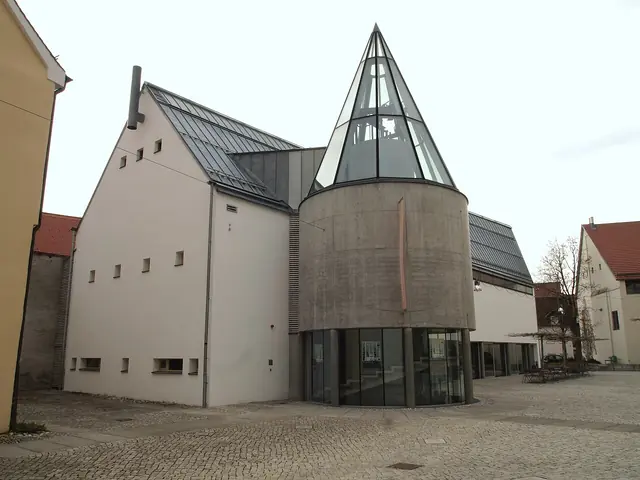
The main building and the studio building are barrier-free (step-free paths, elevators, accessible restroom facilities).
Kids & families
The museum hasn’t published any information on this.
Getting there & parking
By public transit
Kriegerdenkmal
Train to Kaufbeuren, then city bus (lines 5/6/7) to the Busbahnhof (Plärrer) and onward by bus to Irsee, stop Kriegerdenkmal; on Saturdays, Sundays and public holidays, shared on-demand taxi (Anrufsammeltaxi).
By car via the A96, exit Bad Wörishofen toward Kaufbeuren; Kaufbeuren is seven kilometers away.
Get directionsAddress & contact
Kloster IrseeKlosterring 4
87660 Irsee
Bavaria, Germany
Amenities & dining
- Café
- Restaurant
Café Kunstsommer in the convent building and a conference restaurant.
Events & venue rental
- Spaces for rent
- Private parties
- Corporate events
Conference and event rooms with hotel (convent building, Küferei (cooperage), studio building).
Plan your visit
| Guided tours | yes |
|---|---|
| Good to know | Group tours (monastery and church tours, history of the asylum) by advance registration. Information on the history of the asylum is also available via the app “Anstalt Irsee” at the media station. |
Visitor experiences
Loading experiences …